Connect with us

General News

PDP CRISIS DEEPENS AS BOT BACKS 11 NWC MEMBERS, INSISTS ON NEC MEETING

Published

on

Share

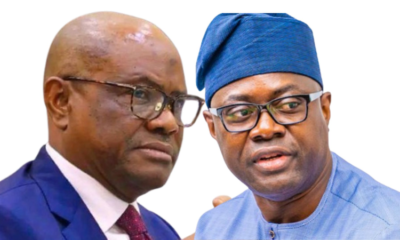
The crisis in the Peoples Democratic Party (PDP) has taken a new turn as the party’s Board of Trustees (BoT) has backed 11 National Working Committee (NWC) members, insisting that the National Executive Committee (NEC) meeting must hold on June 30 as scheduled. This decision contradicts the stance of the party’s acting national chairman, Umar Damagum, who had announced the postponement of the NEC meeting to a date yet to be determined.

In a statement, the BoT chairman, Adolphus Wabara, described Damagum’s actions as a “gross violation of party constitutional order,” declaring them null and void. “The unilateral cancellation of the 100th NEC meeting and pronouncements by the acting national chairman are a gross violation of the party’s constitutional order,” the statement read.
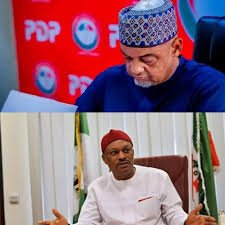
The BoT also rejected Damagum’s reinstatement of embattled National Secretary, Senator Samuel Anyanwu, insisting it contradicts the party’s constitution, a Supreme Court judgement, and a prior NEC resolution. “The decision of the NWC at its 600th meeting directing the deputy national secretary to act as national secretary remains valid, having not been set aside by the NWC or NEC,” the BoT said.
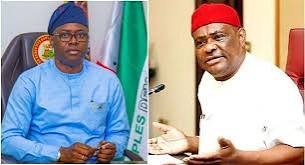
The party’s crisis has sharply divided key organs, including the NWC, BoT, and Governors’ Forum, into factions aligned with either Oyo State Governor Seyi Makinde or the Minister of the Federal Capital Territory, Nyesom Wike. Both leaders are battling for control of the party ahead of the 2027 presidential election.

The NEC meeting is expected to play a crucial role in determining the party’s direction and leadership. The BoT has urged members to disregard any conflicting directives and proceed with the scheduled meeting. “The 100th NEC meeting shall proceed as scheduled on Monday, June 30, 2025. All members of NEC are duly advised to disregard any contradictory notice or statement regarding the meeting,” the statement added.
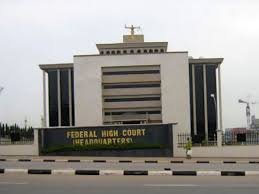
The crisis has also led to a court case, with a Federal High Court in Abuja scheduling a fresh hearing for September 22 in the suit over the authentic National Secretary of the party. The court will consider all pending motions, including an application to amend the originating processes filed by Senator Anyanwu.

See also  Appeal Court Upholds PDP Suspension of Anyanwu, Bature, Ajibade, Others

Meanwhile, sources close to the reconciliation committee chaired by former Senate President Bukola Saraki have revealed that the decision to support Anyanwu’s reinstatement was aimed at preventing the party’s total collapse. The committee reportedly believed that reinstating Anyanwu would enable the party to hold a properly convened NEC meeting, where his position could be deliberated and decided upon in accordance with the party’s constitution.
Continue Reading
Click to comment

Leave a Reply

Your email address will not be published. Required fields are marked *

General News

IPAC Slams Electoral Act 2026, Pushes for Immediate Review Before 2027 Polls

Published

on

Share


The Inter-Party Advisory Council (IPAC) has called for an urgent amendment of the Electoral Act 2026, warning that its current provisions could threaten the integrity of Nigeria’s 2027 general elections.

IPAC National Chairman, Yusuf Mamman Dantalle, made the position known on Tuesday during a meeting with the Independent National Electoral Commission (INEC) and political party leaders in Abuja.

He described the law as regressive, noting that it fails to reflect the expectations of Nigerians despite extensive public consultations during the reform process. According to him, the Act poses significant risks and could undermine democratic stability if not urgently reviewed.

Dantalle further expressed concern that the legislation has already been used as the basis for INEC’s 2027 election timetable, placing political parties—especially those outside government—under undue pressure to comply with challenging requirements.

Among the contentious issues raised by IPAC is the mandatory adoption of direct primaries for candidate selection. The council argued that the provision erodes the independence of political parties and called for the reinstatement of indirect primaries.

IPAC also faulted the requirement for parties to submit detailed membership registers, including National Identification Numbers (NIN), within a limited timeframe in April 2026. It described the directive as impractical and warned that it could exclude many Nigerians who have yet to obtain NIN.

On electoral transparency, the council stressed the need for the full and unconditional electronic transmission of results. It urged INEC to ensure that polling unit results are uploaded to the IReV portal immediately after announcement, referencing challenges experienced during the 2023 presidential election.

See also  FG APPROVES TAZKIYAH UNIVERSITY, NIGERIA'S FIRST FEMALE-ONLY UNIVERSITY

The body further raised concerns over what it termed weakened sanctions for vote buying in the new law, reiterating its demand for the establishment of an Electoral Offences Commission to prosecute electoral offenders.

IPAC disclosed that it has formally written to the National Assembly, seeking the repeal of the Electoral Act 2026, and appealed to international partners to support Nigeria’s democratic process through constructive engagement.

As preparations begin for upcoming governorship elections in Ekiti and Osun states, the council urged INEC to enhance its readiness, particularly in deploying critical technologies such as the Bimodal Voter Accreditation System (BVAS) and the IReV portal.

Dantalle emphasised that restoring public confidence in the electoral system is crucial, warning that voter apathy may persist without meaningful reforms.

The meeting also reviewed INEC’s proposed 2026 Regulations and Guidelines for Political Parties, which are yet to be officially released and are separate from the Electoral Guidelines.

Continue Reading

General News

Global Oil Prices Rise on Strait Disruptions, as Iran Rejects U.S. Dialogue, Supply Risks Persist

Published

on

Share

Global oil prices climbed sharply on Tuesday as ongoing supply disruptions in the Middle East and renewed geopolitical tensions between Iran and the United States rattled energy markets.


Benchmark crude prices rose above the $100 per barrel mark, with Brent crude gaining nearly $2 and U.S. West Texas Intermediate also posting significant increases. The surge comes amid persistent concerns over disrupted supply routes, particularly through the strategic Strait of Hormuz; a critical chokepoint that handles roughly 20% of global oil shipments.


Tensions escalated further after Iran denied claims by the U.S. officials that negotiations were underway to ease the conflict. The denial contradicted earlier remarks, suggesting progress in diplomatic engagement, adding to uncertainty in global markets.


The ongoing conflict has already disrupted energy infrastructure across the region, with reports indicating that dozens of oil and gas facilities have been damaged. Analysts warn that these disruptions could keep prices elevated for an extended period, even if hostilities ease in the near term.


Adding to market volatility are continued military exchanges and attacks on energy assets, which have heightened fears of a prolonged supply crunch. Oil prices have already surged significantly since late February as traders factor in the risk of further escalation.


Energy experts caution that if the disruption to shipping routes persists, prices could spike even higher, potentially exceeding previous record levels. The uncertainty surrounding diplomatic efforts and the ongoing damage to infrastructure continue to weigh heavily on global energy markets.


The developments underscore the fragile state of global oil supply chains, with markets reacting swiftly to both geopolitical tensions and conflicting signals on potential negotiations.

See also  CIVIL SOCIETY GROUP COMMENDS SENATOR AKPABIO FOR LEADING DELEGATION TO LATE POPE'S BURIAL
Continue Reading

General News

Court Adjourns El-Rufai’s Bail Hearing to March 31 After Arraignment

Published

on

Share

A Federal High Court sitting in Kaduna has adjourned the hearing of the bail application of former Kaduna State governor, Nasir El-Rufai, to March 31, 2026, following his arraignment on alleged corruption-related charges.

El-Rufai was on Tuesday brought before the court by the Independent Corrupt Practices and Other Related Offences Commission (ICPC) and arraigned before Justice Rilwan M. Aikawa.

During the proceedings, the former governor was docked on one count out of a 10-count charge filed by the anti-graft agency. The charge, according to his counsel, Ubong Akpan, relates to alleged deposits into a domiciliary account and the monetisation of earnings.

El-Rufai was arraigned alongside a co-defendant, Joel Adoga.

Despite pending applications earlier filed before the court, Justice Aikawa proceeded with the arraignment and subsequently adjourned the matter to March 31 to consider all outstanding applications, including the bail request.

No bail application was moved or granted during Tuesday’s session.

Speaking to journalists after the court sitting, Akpan maintained that there was nothing unusual about the proceedings, adding that the defence team was yet to be served with processes relating to other potential charges.

The case is expected to resume on the adjourned date for hearing of the bail application and other pending matters.

See also  China–Nigeria Women’s Carnival Deepens Cultural Diplomacy at Lantern Festival in Abuja
Continue Reading