General News
U.S. SURVEILLANCE FLIGHTS RESUME OVER NIGERIA’S NORTH-EAST TARGETING ISWAP
The United States has resumed intelligence, surveillance and reconnaissance flights over Nigeria’s North-East, focusing on militant activity in the Sambisa Forest. This comes just days after recent airstrikes against Islamic State fighters in Sokoto State.
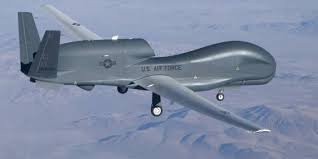
Security analysts disclosed that an American surveillance aircraft was sighted flying over parts of Borno State on Saturday, merely one day after the airstrikes. Flight-tracking data identified the aircraft as a Gulfstream V, a jet commonly modified for intelligence-gathering missions.
Analysts confirm the renewed operation is targeting the Islamic State West Africa Province (ISWAP), the terror group operating mainly in the North-East and the Lake Chad Basin. The surveillance flights reportedly resumed after a brief pause following Thursday night’s military action in Nigeria’s North-West.
Open-source intelligence analysts provided further context, stating the U.S. surveillance mission over Nigeria began in late November. These aircraft operate out of Ghana, which serves as a key logistics hub for American military activities in West Africa. “The same aircraft has reportedly flown over Nigerian airspace almost daily since the operation began,” one analyst noted.
This renewed ISR activity underscores a significant development in regional security dynamics. It occurs amid growing security cooperation between Nigeria and the United States, following recent high-level talks. The flights follow U.S. assurances of increased action against jihadist groups operating within Nigeria’s borders.
General News
Iran Launches Fresh Missile Attacks on Israel Amid Conflicting Claims Over Trump-Led Talks
Iran fired a new wave of missiles at Israel early Tuesday, escalating tensions in the Middle East just hours after US President Donald Trump claimed progress in efforts to end the conflict.
The renewed strikes came despite Tehran’s firm denial that any negotiations were underway with Washington, contradicting Trump’s assertion of “very good” talks aimed at halting hostilities.
According to Iranian state media, the missiles targeted locations in Israel, while Israeli emergency services confirmed damage to a building in the northern region but reported no casualties.
Trump’s remarks had earlier stirred global markets, easing fears temporarily as oil prices dipped. He revealed that his administration was in contact with a “top” Iranian figure and expressed optimism about reaching a deal within days. However, he warned that failure to secure an agreement could lead to intensified US military action.
Reports by Axios identified the alleged Iranian contact as Mohammad Bagher Ghalibaf, though Tehran swiftly dismissed the claim. Iranian officials, including foreign ministry spokesman Esmaeil Baqaei, insisted no formal discussions had taken place, accusing Washington of attempting to manipulate global oil markets.
Israel’s Prime Minister Benjamin Netanyahu acknowledged Trump’s optimism but maintained that Israel would continue its military operations against Iran and its allies, including Hezbollah in Lebanon.
“Israel will not relent in defending itself,” Netanyahu said, noting that any potential agreement would need to reflect recent military gains.
The conflict has expanded beyond Israel and Iran, with Lebanese authorities reporting multiple Israeli airstrikes on southern Beirut overnight. Israel has also intensified ground operations against Hezbollah, warning of prolonged fighting.
Tensions have significantly impacted global energy markets, particularly around the Strait of Hormuz, a critical route for about 20 percent of the world’s oil supply. Iran has threatened to disrupt traffic through the strait and target regional infrastructure in retaliation for attacks.
International Energy Agency chief Fatih Birol warned that a prolonged conflict could trigger an energy crisis surpassing previous global shocks, including those of the 1970s and the fallout from the Russia-Ukraine war.
Oil prices, which had surged above $100 per barrel amid the conflict, fell sharply following Trump’s comments, while global stock markets rallied.
Meanwhile, diplomatic efforts appear uncertain. Pakistan’s Prime Minister Shehbaz Sharif confirmed speaking with Iran’s President to explore pathways to peace, offering Islamabad’s support in de-escalating the crisis.
Despite the diplomatic signals, the situation on the ground remains volatile. Thousands of US troops are being deployed to the region, reinforcing Washington’s military presence amid speculation of possible expanded operations.
Casualty figures continue to rise, with reports indicating thousands of deaths in Iran, including civilians, although independent verification remains difficult due to restricted access.
The latest developments underscore the fragile state of diplomacy as military actions intensify, raising fears of a broader regional conflict with global economic consequences.
Energy
Dangote Warns of Looming Global Oil Crisis, Hails Tinubu’s UK Visit as Game-Changer for Nigeria
Aliko Dangote, Chairman of the Dangote Group, has sounded the alarm over potential global oil shocks that could exacerbate economic hardship across Africa, while praising President Bola Ahmed Tinubu for unlocking critical investment opportunities during his recent state visit to the United Kingdom.
Dangote made the comments following a courtesy visit to President Tinubu at his Lagos residence, explaining that the meeting was primarily to exchange Eid greetings, check on the President’s health, and pay respects.
“I just came to see His Excellency, Mr President, wish him Eid Mubarak, and also ask after his health. I haven’t seen him for a while, and wish him all the very best,” Dangote said.

He described Tinubu’s UK visit as a major diplomatic and investment breakthrough, stressing that modern diplomacy must focus on economic outcomes.
“I think it has opened ways. Today, diplomacy without the economic part of it is not complete. I believe his visit will open quite a lot of doors,” he said.
Dangote highlighted the £746 million UK-backed agreement targeting Nigeria’s infrastructure, especially the ports sector, as a strong signal of international confidence in the country.
“You can see the agreement signed for improving our infrastructure, especially in the ports and other areas, which is almost £746 million. It’s not easy dealing with the British and securing this kind of funding. But it shows confidence in Nigeria,” he stated, adding that the deal is likely to attract further foreign investment from countries such as Germany and others.
He encouraged Nigerian investors to leverage this momentum, particularly by tapping international credit facilities that have remained largely underutilized.
“For Nigerian investors, this shows we can also access these agencies for support. The agency is now open for business for Nigerians, and we should look to tap into it,” he said.
On the global energy outlook, Dangote warned that escalating tensions in the Middle East could drive oil prices higher, intensifying economic pressure, especially in Africa.
“If this crisis doesn’t de-escalate, we’ll end up paying big prices. Africa is already paying debts, and adding more shocks will increase hardship for governments and people alike,” he said.
He also highlighted the cascading effects of rising energy costs on daily life, particularly for small businesses and households that rely on fuel-powered generators.
“People like barbers, bread makers, and small industries who rely on generators will feel the heat if energy prices keep rising,” Dangote warned.
He pointed to global responses to energy pressures, such as reduced work schedules in some countries, drawing parallels to measures taken during the COVID-19 pandemic.
“Some countries are asking people to work from home or reduce workdays to cope. We did something similar during COVID-19,” he explained.
Despite the looming risks, Dangote expressed hope that the Middle East tensions would ease, urging collective prayers and international cooperation to prevent further escalation.
“We need to pray that this situation de-escalates. In Africa, many people depend on daily earnings, and if they don’t work, they won’t eat. All hands must be on deck to bring this to an end,” he concluded.
General News
Atiku Accuses Tinubu Of Driving Nigeria Toward Authoritarian Rule, Crushing Democracy
Former Vice President, Atiku Abubakar, has launched a scathing attack on President Bola Ahmed Tinubu, accusing his administration of dismantling democratic institutions and pushing Nigeria dangerously close to authoritarian rule.
In a strongly worded statement signed by the Atiku Media Office and issued on Monday in Abuja on March 23, 2026, Atiku condemned what he described as a “state-sponsored siege” carried out by operatives of the Department of State Services (DSS) on properties linked to former Attorney General of the Federation, Abubakar Malami.
According to the former vice president, the action—allegedly taken despite the matter being before the courts—amounts to a blatant abuse of power and a calculated attempt to intimidate perceived political opponents.
“This is not governance. This is intimidation. This is a regime weaponising state power to silence dissent,” Atiku stated.
He warned that Nigeria is witnessing a steady erosion of democratic norms, with security agencies increasingly being deployed for political purposes rather than national security.
“What we are seeing is the naked abuse of power—security agencies used not to protect citizens, but to settle political scores. This is how democracies collapse,” he said.
Atiku further alleged that the Tinubu administration is executing a broader strategy to weaken opposition figures ahead of the 2027 general elections, claiming that key political actors are being targeted and pressured.
He referenced figures such as Nasir El-Rufai and Malami, alleging attempts to coerce them into aligning with the ruling party.
“This is political coercion at the highest level—an attempt to force compliance through intimidation,” he said.
The former vice president warned that Nigeria risks becoming a one-party state if dissent continues to be suppressed and opposition voices silenced.
“When opposition is weakened and dissent punished, elections become mere formalities,” he added.
Drawing a historical parallel, Atiku cautioned against a repeat of authoritarian tendencies reminiscent of the Sani Abacha self-succession bid, urging Nigerians to remain vigilant.
He also accused the administration of weaponising anti-corruption agencies to pressure political actors into defection, describing the trend as a dangerous form of state capture.
“No individual has the right to dominate the political system or determine the destiny of millions for personal ambition. Leadership must remain accountable,” he stated.
Atiku concluded by emphasising that democracy depends on freedom of choice and political competition.
“Freedom of choice is the lifeblood of democracy. Once it is undermined, dictatorship takes over,” he said.