General News
US To Enforce Blockade On Iranian Ports As Talks Collapse

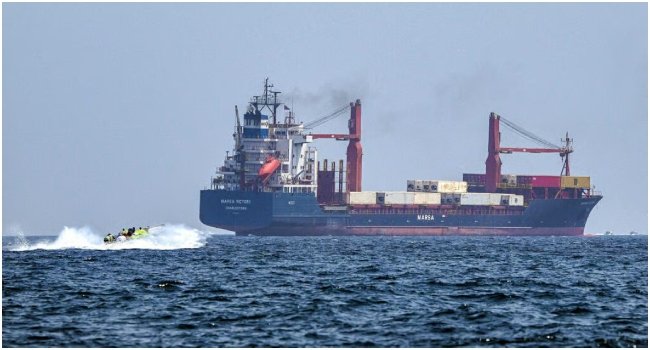
The United States military has announced plans to begin enforcing a blockade on Iranian ports starting Monday, following the breakdown of high-level negotiations between Washington and Tehran in Islamabad, Pakistan.
The move comes after talks aimed at ending the ongoing conflict failed, with US President Donald Trump accusing Iran of refusing to abandon its nuclear ambitions.
In a statement, US Central Command said the blockade would target vessels entering or leaving Iranian ports across the Arabian Gulf and Gulf of Oman. However, it clarified that ships transiting the Strait of Hormuz to and from non-Iranian ports would not be affected.
Earlier, Trump had suggested a broader shutdown of the strategic Strait of Hormuz, a critical route for global oil shipments. But his later remarks indicated a more limited operation focused specifically on Iranian ports.
The failed negotiations the highest-level contact between both countries since the 1979 Islamic Revolution dashed hopes of ending a war that has claimed thousands of lives and disrupted the global economy since late February.
US Vice President JD Vance had led the American delegation in Islamabad but left after discussions stalled. Washington officials said Iran rejected what they described as a “final and best offer,” particularly over its insistence on maintaining a nuclear programme.
Iranian officials, however, blamed the failure on what they called US “maximalist demands” and shifting conditions. Foreign ministry representative Abbas Araghchi said an agreement had been within reach before the talks collapsed.
Tensions escalated further as Iran’s Revolutionary Guards warned they maintain full control over the Strait of Hormuz and would respond forcefully to any military challenge.
Despite a fragile two-week ceasefire brokered with the help of Pakistan, analysts warn that the planned blockade could trigger renewed hostilities and effectively mark a continuation of the war.
The conflict, which began with joint strikes by the US and Israel on Iran, has since spread across the region, including Lebanon, where clashes involving Hezbollah and Israeli forces continue.
Global markets reacted swiftly, with oil prices surging by about eight percent on Monday, pushing Brent and WTI crude above $100 per barrel amid fears of supply disruptions.
Meanwhile, diplomatic efforts are expected to continue, as mediators push both sides to return to the negotiating table and uphold the ceasefire agreement.