Business
Dangote Refinery Becomes World’s Largest Jet Fuel Exporter Amid Global Supply Disruptions


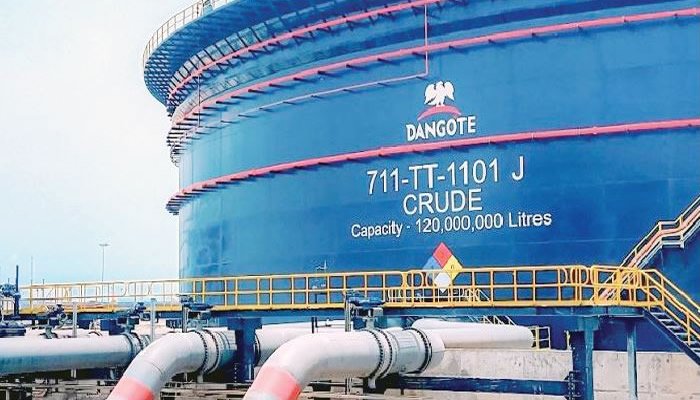
Dangote Refinery has emerged as the world’s largest exporter of jet fuel in April 2026, following major disruptions in global fuel supply chains triggered by tensions in the Middle East.
The development was revealed in a recent S&P Global Energy report quoting the refinery’s Chief Executive Officer, David Bird, who said the company rapidly expanded aviation fuel exports as international markets searched for alternative suppliers.
According to the report, the refinery switched into what Bird described as “max jet mode” after the Middle East conflict disrupted established fuel trade routes and tightened global supply chains.
S&P Global Commodities at Sea data showed that the Lekki-based refinery became the world’s single largest exporter of aviation fuel during the period, benefiting from soaring international demand and rising jet fuel prices.
The refinery, which has now reached its full production capacity of about 650,000 barrels per day, reportedly maintained near-peak output levels while deploying a flexible blending system that allows it to optimise gasoline and aviation fuel production.
Bird explained that the refinery currently imports feedstocks such as GTL naphtha and Bonny condensate to improve fuel yields and operational efficiency.
He added that the company is gradually transitioning from a locally focused refinery into a global merchant refining operation actively trading crude oil and refined products across international markets.
According to the report, the refinery is expanding beyond Nigerian crude and now has the capacity to process around 40 crude grades, including heavier blends, with plans to increase that number significantly in the future.
Bird disclosed that the long-term target is to increase production capacity to about 1.4 million barrels per day, a move that would require sourcing crude supplies from the United States, the Middle East, and parts of South America.
The refinery is also pursuing long-term supply agreements with governments, airlines, and national oil companies while expanding infrastructure projects across Africa, including proposed logistics and storage facilities in Namibia, Zambia, Central Africa, and East Africa.
The rise in Dangote Refinery’s jet fuel exports comes amid global market volatility caused by the conflict involving the United States, Iran, and Israel, particularly around the Strait of Hormuz, a strategic shipping route responsible for roughly 20 per cent of global oil and fuel trade.
The supply disruption pushed up aviation fuel prices globally and increased pressure on Nigeria’s airline industry.
In response, the Federal Government earlier introduced benchmark pricing and a 30-day credit facility for airlines under the supervision of the Nigerian Midstream and Downstream Petroleum Regulatory Authority to stabilise the domestic aviation fuel market.
Earlier this month, Dangote Refinery reduced the ex-depot price of Jet A1 aviation fuel from N1,750 to N1,650 per litre and announced the transition of Jet A1 transactions from dollar-denominated sales to naira-based pricing to ease pressure on domestic operators.