
Environment
ENVIRONMENT DAY 2026 AND THE NECESSITY FOR ECONOMIC AND ENVIRONMENTAL SOVEREIGNTY

By AVM (RTD) AKUGBE IYAMU MNSA fsi
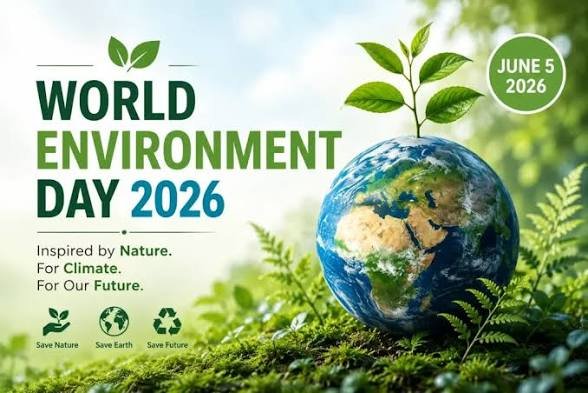
World Environment Day is celebrated annually on June 5th. The day was established by the United Nations General Assembly in 1972 during the Stockholm Conference on the Human Environment. This milestone conference led to the creation of the United Nations Environment Programme (UNEP) with the day first celebrated in 1973.
The establishment of the World Environment Day was a direct response to growing global concerns about human impacts on natural habitats, climate change and toxic pollution. It was officially instituted to mark the opening of the UN Conference on the Human Environment, a pivotal summit held in Stockholm, Sweden, from June 5 to June 16, 1972.
The first World Environment Day was celebrated in 1973 under the theme “Only One Earth”. Since its inception, the day has evolved into the largest global platform for escalating environmental outreach, accelerating worldwide awareness including political action on critical issues like ozone depletion, global warming, and land degradation.
World Environment Day 2026 is hosted by Azerbaijan withe official theme: #NowForClimate (or Climate Action), focusing on the urgent signals the Earth is sending and the rapid global climate responses needed. Despite these clarion calls, the management of the environment in Nigeria is still an ancient madness with its peculiar methods of greed, poverty, inequality and hunger. Nigeria need to understand that Environments when destroyed are not commanded to be restored in 24hrs nor are they n restored abruptly.
The world is changing fast and management of the environment by application of environmental sovereignty is not optional. Environmental sovereignty (often referred to as ecological sovereignty) is a country’s right and responsibility to protect, regulate, and manage its natural environment, biodiversity, and climate policies. On the otherhand, Economic sovereignty is a state’s absolute power to control its domestic economic affairs, financial systems, and natural resources without external interference.
Economic and environmental sovereignty refer to a state’s ultimate authority to independently manage its financial policies and natural ecosystems without undue external interference. These concepts protect a nation’s right to self-determination but are increasingly viewed as shared responsibilities in a globalized, climate-conscious world. While foundational to international law, total economic sovereignty is practically limited by global market interdependencies and participation in regional/international trade blocs like ECOWAS.
Nigeria’s environmental and economic sovereignty centers on the nation’s constitutional mandate to control its natural resources and ecological policies balanced against the realities of global trade constraints, reliance on petroleum exports, and the need to protect vulnerable environments across its 36 states from external exploitation. Nigeria have to decide whether she want to trade the environment for political and economic expediency or the prioritise sustenance that will benefit all the citizens because the wrong tumble as seen from the manhandled green spaces the FCT are actions that will destroy the livability of the territory.
Abuja need to redouble efforts in discarding as a bad dream the continuous destruction of the green spaces. It is very concerning that for only Mauritius and Seychelles, Nigeria and other countries are way behind in the attainment of the 17 sustainable development goals SDGs set by the United Nations. The weak foundation of management of the environment and SGGs by Nigeria has prevented her from benefiting from the globalisation trend of the 21st century. Nigeria has to prioritize environmental protection and climate change actions over political and other sundry considerations.
AVM (RTD) AKUGBE IYAMU MNSA fsi
PRESIDENT ASSOCIATION OF ENVIRONMENTAL PROTECTION AND CLIMATE CHANGE PRACTITIONERS AND CONSULTANT ON CLIMATE CHANGE AND ANALYST ON ENVIRONMENTAL POLICIES