
International
Trump, Republican Senator Engage in Heated Shouting Match Over Iran War

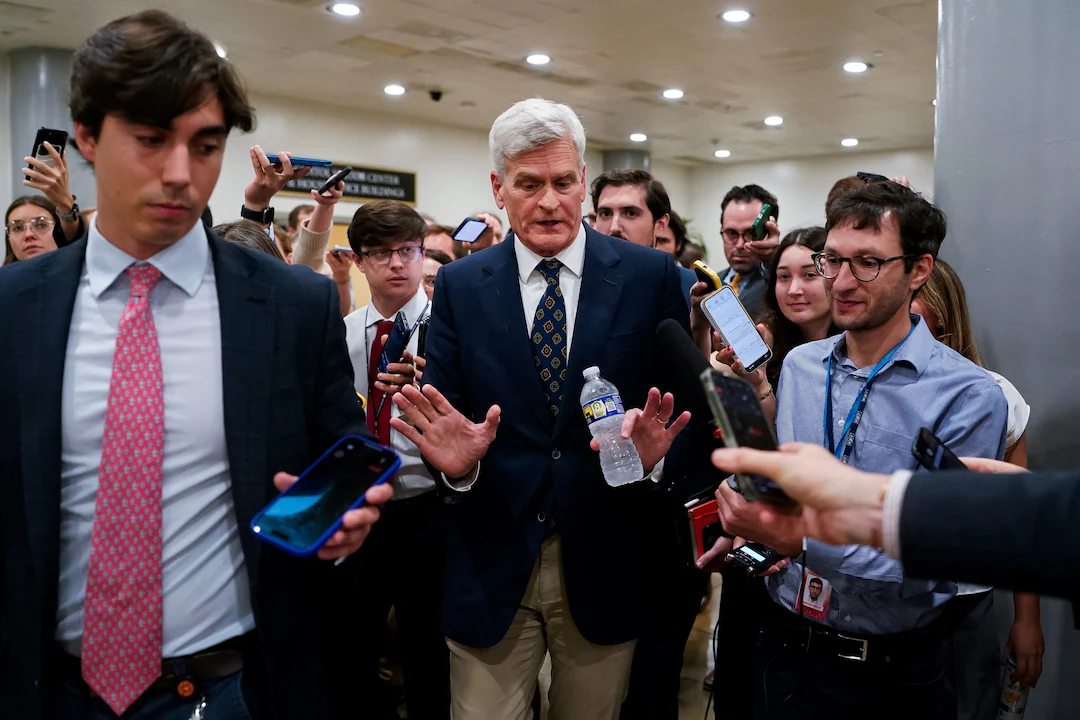
A closed-door meeting between President Donald Trump and Senate Republicans reportedly descended into a heated shouting match this week, highlighting growing divisions within the Republican Party over the administration’s military campaign against Iran.
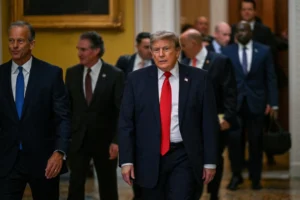
According to multiple U.S. media reports, the confrontation occurred during a meeting at the U.S. Capitol where Trump sought to rally Republican senators behind his Iran policy and discourage support for congressional efforts aimed at limiting presidential war powers.
The most intense exchange reportedly involved Republican Senator Bill Cassidy, who challenged administration officials over what he described as a lack of clarity regarding U.S. objectives in Iran. Witnesses said the discussion quickly became confrontational as Cassidy pressed for more details about the long-term strategy, costs, and risks associated with the military operation.
Sources familiar with the meeting told reporters that Trump repeatedly interrupted Cassidy and criticized lawmakers who had supported efforts to impose greater congressional oversight on military actions against Iran. The exchange reportedly escalated into a shouting match that was witnessed by several Republican senators. News organizations including NBC News, CNN, Reuters, and other Capitol Hill correspondents reported on the tense encounter based on accounts from lawmakers and aides.
The dispute comes amid an ongoing debate in Congress over presidential authority to conduct military operations without explicit congressional approval. A bipartisan group of senators has argued that any prolonged military engagement with Iran should require authorization from Congress under the U.S. Constitution’s war powers provisions.
Cassidy had previously voted in favor of a measure designed to reassert congressional oversight of military action against Iran. However, following the contentious Capitol meeting and subsequent briefings from senior administration officials, he later changed his position and voted against a subsequent version of the proposal.
The White House has defended Trump’s approach, arguing that the administration’s actions are necessary to protect American interests, military personnel, and allies in the Middle East. Administration officials maintain that the president possesses sufficient constitutional authority to respond to threats posed by Iran and affiliated groups operating across the region.
The confrontation has exposed rare public cracks within Republican ranks. While many GOP lawmakers continue to support Trump’s foreign policy, some conservatives and libertarian-leaning Republicans have expressed concern about the possibility of the United States becoming entangled in a lengthy and costly conflict.
Political analysts say the disagreement reflects broader concerns among lawmakers regarding the scope of executive authority during military operations. The debate has intensified as Congress reviews requests for billions of dollars in additional funding connected to the Iran conflict and seeks greater transparency from the administration regarding military objectives.

Despite the heated exchange, Republican leaders have attempted to project unity, emphasizing that internal debates are a normal part of policymaking. However, the incident underscores the challenges facing the administration as it seeks support for both its military strategy and related funding requests.
The Iran conflict has increasingly become one of the defining foreign policy issues in Washington, generating debate not only between Republicans and Democrats but also within the Republican Party itself. Lawmakers are expected to receive additional intelligence briefings in the coming weeks as Congress considers future military funding and oversight measures.
Observers say the Capitol confrontation may prove significant because it highlights growing pressure on the administration to explain its long-term plans in the region at a time when public concern about military involvement and government spending continues to rise.