
International
Merz Calls State Election Result a ‘Disaster’ for CDU, Vows to Stay on as Chancellor

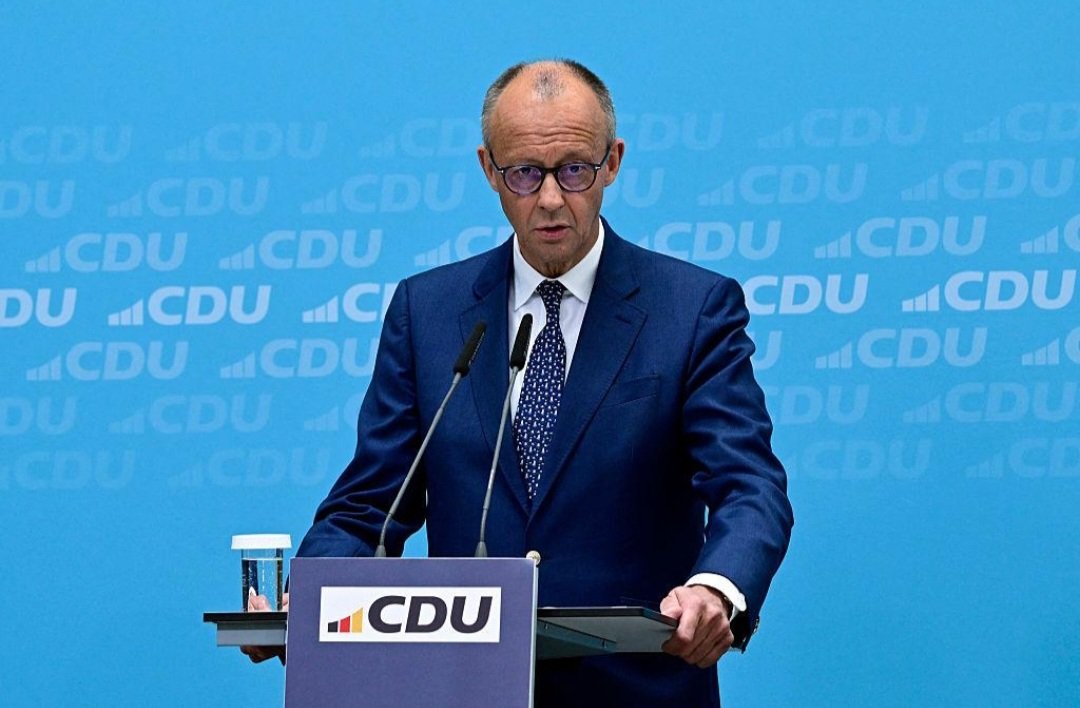
German Chancellor Friedrich Merz has vowed to remain in office and continue his government’s reform programme after his Christian Democratic Union (CDU) suffered a historic setback in state elections in Mecklenburg-Western Pomerania and Berlin.
Merz described the result in Mecklenburg-Western Pomerania as a “disaster” for the CDU but rejected speculation that the poor performance could force him to step down as party leader or chancellor.
“What needs to be done now requires backbone, steadfastness and patience,” Merz said after the results emerged. He added that he would demonstrate those qualities “as CDU party chairman and, above all, as chancellor of our country.”
The CDU’s result in Mecklenburg-Western Pomerania was particularly damaging. The party received about 4.9% of the vote, falling below the 5% threshold required to enter the state parliament. It was the CDU’s worst result in a German state election since the Second World War.

The Alternative for Germany (AfD) finished first in the northeastern state with about 38.3%, ahead of the centre-left Social Democratic Party (SPD), which took about 35.4%, according to projections reported by Reuters.
The results in Berlin delivered another setback for Merz’s party.
The Left Party, known as Die Linke, finished first with about 25.3%, while the CDU received around 19%. The AfD also increased its support in the capital, recording about 16.3%.
The result means the CDU is set to lose control of Berlin’s state government, where it had governed in coalition with the SPD. Coalition negotiations will now determine the next administration.
Die Linke’s lead candidate, Elif Eralp, campaigned heavily on housing costs and proposed bringing some privately owned housing associations under public ownership.
Despite the electoral losses, Merz said the results would not cause him to abandon his economic programme.

His government has been pursuing measures involving pensions, taxation, healthcare and reducing bureaucracy, arguing that structural changes are necessary to revive Germany’s economy.
The chancellor’s position had already come under pressure following the CDU’s defeat by the AfD in Saxony-Anhalt earlier this month. The latest results have intensified questions about the government’s ability to maintain public and political support for its reform agenda.
Merz nevertheless argued that the election results should strengthen rather than weaken his determination to pursue reforms.
The CDU’s losses also come as the AfD continues to make gains in eastern Germany. Other major parties have so far maintained a policy of refusing to form governing coalitions with the AfD, meaning that its strong election performances do not automatically translate into control of state governments.
The elections do not immediately threaten Merz’s position as chancellor, but they represent another significant political challenge for his governing coalition as it attempts to address Germany’s economic difficulties and declining support for the traditional parties.