
International
Italy Moves to Ban Burqas and Niqabs in Schools, Limit Foreign Students Per Class

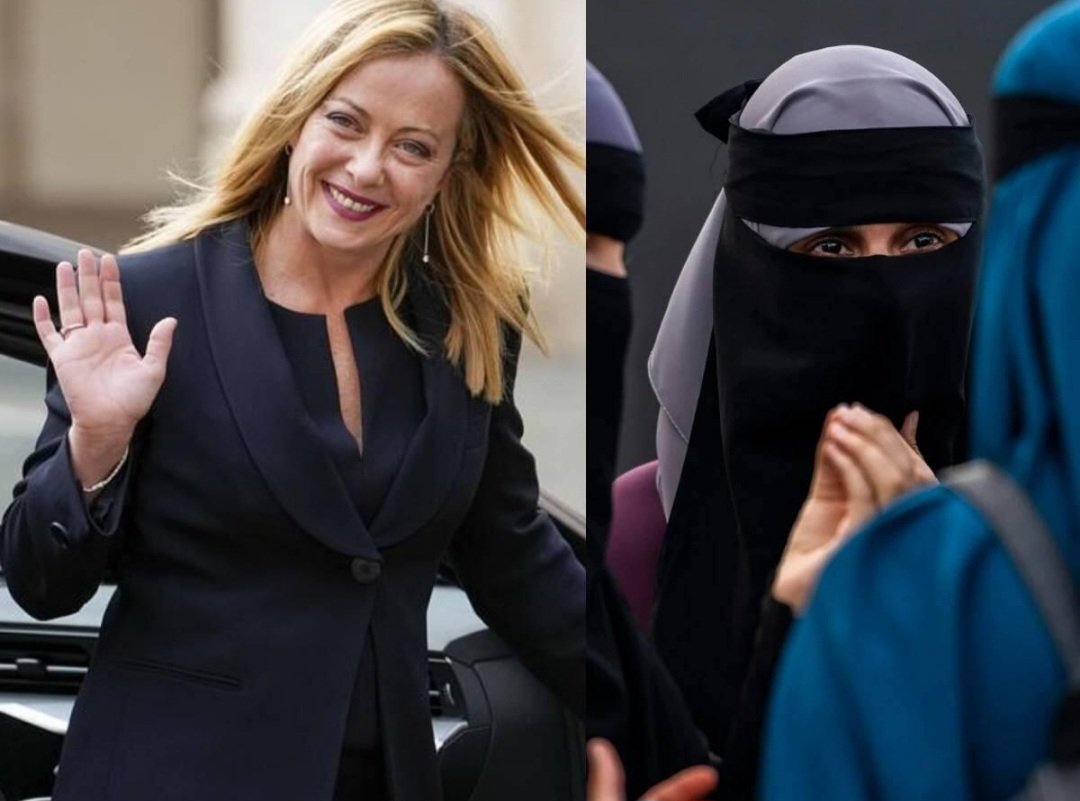
Italian Prime Minister Giorgia Meloni has announced plans to introduce measures banning the wearing of burqas and niqabs in schools and limiting the number of foreign students who can be placed in individual classrooms.
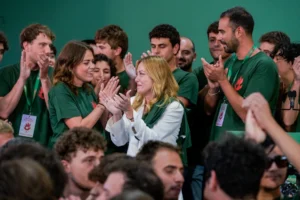
Meloni announced the proposals on Sunday, September 20, at an event organised by the youth wing of her Brothers of Italy party in Rome.
She said the measures would soon be presented to the Council of Ministers and would form part of the government’s approach to immigration, language learning and integration in Italian schools.
Under the proposed legislation, a maximum number of foreign students would be allowed in each class. However, Meloni did not specify what that maximum would be.
The government also plans to require parents of foreign students experiencing serious difficulties integrating into the Italian school system to learn Italian.
Meloni argued that integration becomes more difficult when large numbers of students do not understand Italian.
She said students coming to Italy should learn the language, understand Italian culture and respect the country’s rules, presenting the measures as part of what she described as a serious approach to integration.
The proposed school restrictions would specifically target the burqa and niqab, which cover most or all of a woman’s face.
Meloni said students should attend school with their faces uncovered, arguing that no tradition should require a young woman to conceal her face in an Italian classroom.
The proposal does not, according to AP and Reuters reports, include a ban on the hijab, which covers the hair but leaves the face visible.
The issue had already been under discussion within the Italian government. Education Minister Giuseppe Valditara said in August that he supported a school ban on the burqa, arguing that it would reinforce what he described as women’s dignity and equality.
Italy’s proposed classroom cap comes amid a wider debate over how the country’s education system should respond to growing numbers of pupils from immigrant backgrounds.
Reuters reported that students who are not Italian citizens account for about 11.6% of school enrolment in Italy, according to research institution Fondazione ISMU.
Meloni said the government did not want Italian children to become a minority in their own classrooms, arguing that schools must be able to provide effective language instruction and integration.
The government has yet to announce the precise threshold for foreign students in a classroom or explain how the proposed limit would be applied across different schools and regions.
The measures announced by Meloni are proposals and are not yet in force.
According to AP, after government approval, the measure would still require parliamentary approval within 60 days to become law.
The announcement comes as migration and integration remain significant political issues in Italy ahead of the country’s next general election.
Meloni’s government has pursued stricter immigration policies since taking office, while also presenting integration, language acquisition and respect for Italian laws and institutions as priorities.
The latest proposals are expected to generate further debate over immigration, religious expression, equality and the role of schools in integrating children from migrant families.