
General News
Obasanjo Warns Nigeria Against Another Civil War, Says Causes of 1967 Conflict Remain Unresolved

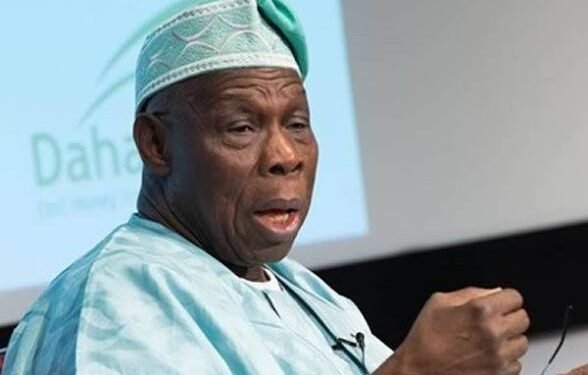
Former President Olusegun Obasanjo has warned that Nigeria must not be allowed to slide into another civil war, cautioning that many of the underlying issues that led to the 1967–1970 conflict remain unresolved.
Obasanjo made the remarks while receiving a historical documentation on the Asaba Massacre from the Isama Ajie of Asaba, Chief Chuck Nduka-Eze, at the Olusegun Obasanjo Presidential Library in Abeokuta, Ogun State.
The documentation, titled Asaba Massacre, comprises a published transcript and an audiovisual documentary compiled from eyewitness accounts, recorded interviews, archival materials, audiovisual evidence and extensive historical research.
Speaking during the presentation, Obasanjo, who served as a military commander during the Nigerian Civil War, said he had deliberately refrained from commenting extensively on the Asaba Massacre because the area was under the command of the late Murtala Muhammed at the time.
He commended Nduka-Eze for documenting the tragic events, describing the work as an important contribution to preserving Nigeria’s history and ensuring that such atrocities are never repeated.
“We pride ourselves that we preserve the past, we capture the present and we inspire the future. We capture the past, and this is the past; we want to capture it, we want to know about it,” Obasanjo said.
Reflecting on his role during the civil war, the former president admitted he could not provide detailed accounts of the Asaba Massacre.
“I must confess, and you know that I was involved in the civil war. When people talk about the Asaba Massacre, I always confess that I cannot give details of it,” he stated.
Obasanjo also recalled intervening to stop a soldier from attempting to rape a woman in Asaba during the war, noting that such misconduct would have attracted consequences under the principle of command responsibility.
Expressing concern over Nigeria’s current situation, he warned that several of the grievances that fuelled the civil war had not been adequately addressed, stressing the need for leaders and citizens to learn from history in order to preserve national unity and peace.
Earlier, Chief Chuck Nduka-Eze said the publication was the product of years of painstaking research based on eyewitness testimonies, recorded interviews, archival records, audiovisual documentation and established historical scholarship.
According to him, the evidence indicates that after federal troops entered Asaba, then a civilian population centre in the former Mid-West Region during the civil war, residents were assembled in public places and instructed to demonstrate their loyalty to Nigeria by declaring, “One Nigeria.”
Obasanjo’s remarks come amid renewed public discourse on national unity, historical reconciliation and the importance of addressing longstanding grievances to prevent future conflict.