
General News
Register Your Child for Free, NPC Urges Nigerians as 43% of Births Remain Unrecorded …as Commission unveils nationwide digital VitalReg platform


The National Population Commission (NPC) has urged Nigerians to take advantage of its free birth registration services, warning that nearly half of all children born in the country are still not officially documented.
The Commission disclosed that although Nigeria records about five million births every year, only 57 per cent are officially registered, while fewer than 20 per cent of deaths are captured in the national civil registration system.
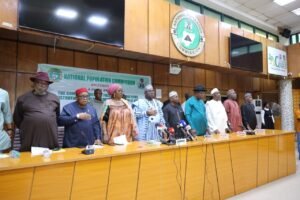
To address the gap, the NPC has launched a nationwide digital registration platform, VitalReg, under the Electronic Civil Registration and Vital Statistics (e-CRVS) system, aimed at improving the registration of births and deaths across the country.
Speaking at a press briefing in Abuja on Wednesday, NPC Chairman, Dr. Aminu Yusuf, said the platform became fully operational on July 1, 2026, across the 36 states and the Federal Capital Territory.

He described the initiative as one of the most significant reforms in Nigeria’s civil registration history, saying it would provide every Nigerian with a legal identity while strengthening national planning through reliable demographic data.
“Nigeria records an estimated five million births annually, yet millions of these births and deaths go unregistered. Birth registration coverage currently stands at about 57 per cent nationwide, while death registration remains below 20 per cent. These gaps deprive many Nigerians of legal identity and limit the availability of reliable data needed for effective national planning,” Yusuf said.
According to him, the Commission has established 4,011 functional registration centres across the country’s 774 local government areas and plans to increase the number to about 8,000 to make registration services more accessible.
He explained that the VitalReg platform offers faster registration, round-the-clock online access, automated data validation, reduced paperwork, shorter waiting time and a more secure national civil registration database. The platform is also designed to integrate with other agencies within Nigeria’s digital identity ecosystem.
Yusuf further announced a partnership involving the Association of Local Governments of Nigeria (ALGON), the National Identity Management Commission (NIMC), UNICEF and Barnfort Technologies Limited to decentralise birth registration services and expand access at the grassroots.
While disclosing that fees for specialised administrative services such as record modifications, certificate reissuance, attestations and verification requests had been reviewed, the NPC chairman stressed that birth registration and birth notification services remain highly subsidised.
He also reassured Nigerians that birth registration for children aged zero to five years remains free, urging parents and guardians to register their children promptly.
“Let me assure Nigerians that this review is not intended to create barriers to access. Birth registration and birth notification services remain highly subsidised, in line with the Commission’s commitment to achieving universal registration,” he said.
Also speaking, the Federal Commissioner representing Oyo State, Dr. Eyitayo Oyetunji, described the transition to a fully digital registration process as a landmark achievement for the Commission.
He noted that for the first time since civil registration began in Nigeria in 1988, registration is no longer paper-based.
“From July 1, 2026, civil registration is no longer being done manually using paper forms. The new system also allows Nigerians living abroad to access self-service registration from anywhere in the world,” Oyetunji said.
He called on the media to intensify public awareness on the initiative, reiterating that birth registration for children aged zero to five years and death registration are free government services designed to guarantee legal identity for every Nigerian and strengthen the country’s demographic database.
The Commission urged Nigerians to visit the nearest registration centre and ensure births and deaths are promptly registered, describing civil registration as essential for national development, social planning and access to government services.