
War
Iran Strikes Military Bases in Gulf After New U.S. Offensive

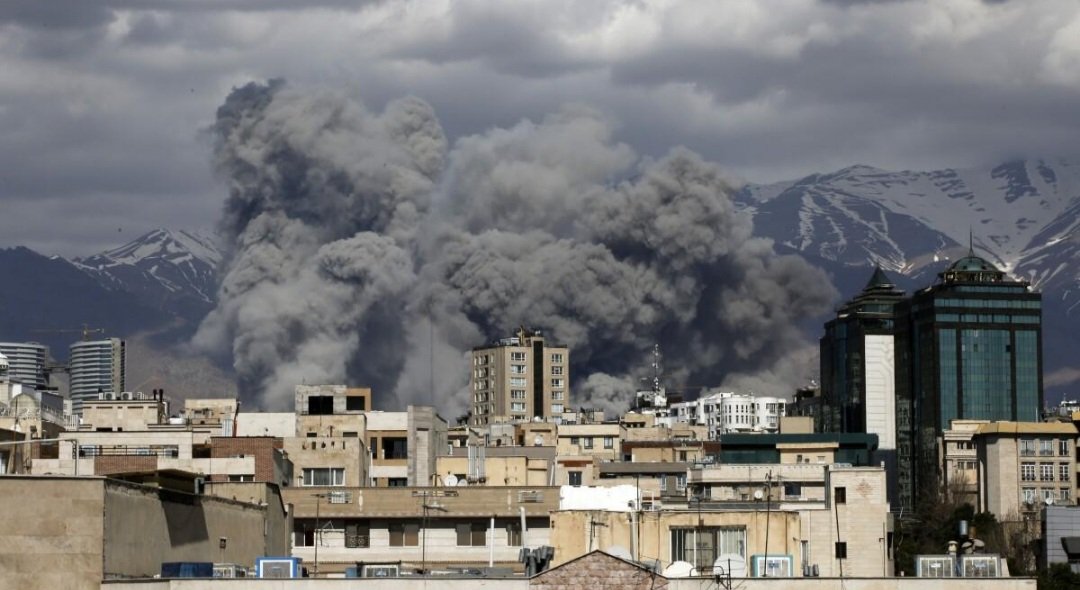
The military confrontation between the United States and Iran intensified dramatically on Thursday as American forces carried out a fresh wave of airstrikes across Iran, prompting Tehran to retaliate with missile and drone attacks on military installations hosting U.S. forces in neighboring Gulf countries. The latest exchange has heightened fears of a broader regional conflict and further disrupted security in the strategically important Strait of Hormuz.


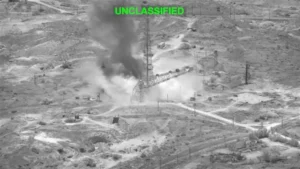
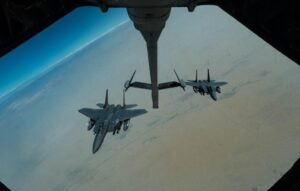
According to the U.S. Central Command (CENTCOM), American aircraft struck a series of Iranian military targets, including command centers, air-defense systems, missile and drone facilities, coastal surveillance sites, and positions around Bandar Abbas, Iran’s principal port on the Strait of Hormuz. Additional strikes reportedly targeted coastal defense installations on Greater Tunb Island, with U.S. officials saying the operation was intended to degrade Iran’s ability to threaten commercial shipping.
The latest strikes followed Washington’s decision to tighten its naval blockade around Iranian ports after accusing Tehran of attacking international merchant vessels operating in the Strait of Hormuz. U.S. officials said the campaign is aimed at restoring freedom of navigation through one of the world’s busiest maritime trade routes, through which roughly one-fifth of global oil and liquefied natural gas shipments normally pass.
Iran responded by launching missiles and drones toward military facilities used by U.S. forces in Bahrain, Jordan, and Kuwait. Iranian state media described the attacks as part of what officials called an “existential war” against the United States, warning that further American attacks could trigger even broader military action across the region. Air-defense systems in the targeted countries intercepted many of the incoming projectiles, although assessments of damage remain ongoing.
Iranian leaders also renewed warnings over the Strait of Hormuz, describing the waterway as a “red line” and vowing to resist any attempt to weaken Tehran’s influence there. Officials from the Islamic Revolutionary Guard Corps (IRGC) warned that additional attacks on Iranian infrastructure could be met with strikes against energy facilities and military assets across the Gulf.
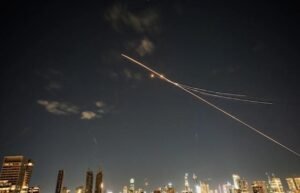
The renewed fighting comes after a fragile ceasefire between Washington and Tehran collapsed earlier this month. Since then, both sides have exchanged repeated attacks, with the United States accusing Iran of threatening international shipping and Iran accusing Washington of conducting illegal military operations against its territory and economic infrastructure.
The conflict is already having significant economic consequences. Global oil prices climbed during the week as investors grew increasingly concerned that prolonged hostilities could disrupt crude exports from the Middle East. Shipping companies have also become more cautious about operating through the Strait of Hormuz, while insurers have increased premiums for vessels transiting the region.
Despite the escalating military exchanges, there were tentative signs that diplomatic channels remain open. U.S. President Donald Trump said a peaceful resolution is still possible, while Iran’s release of an American detainee has been viewed by some analysts as a potential goodwill gesture. However, mediation efforts by regional governments have yet to produce a breakthrough, and military operations continue on both sides.
Security analysts warn that the conflict has reached one of its most dangerous stages since fighting resumed. With both governments signaling their willingness to continue military operations, concerns are growing that a miscalculation could draw additional countries into the confrontation and further destabilize the Middle East.