
Sports
Spain’s World Cup Win Sparks Nationwide Festivities and National Pride

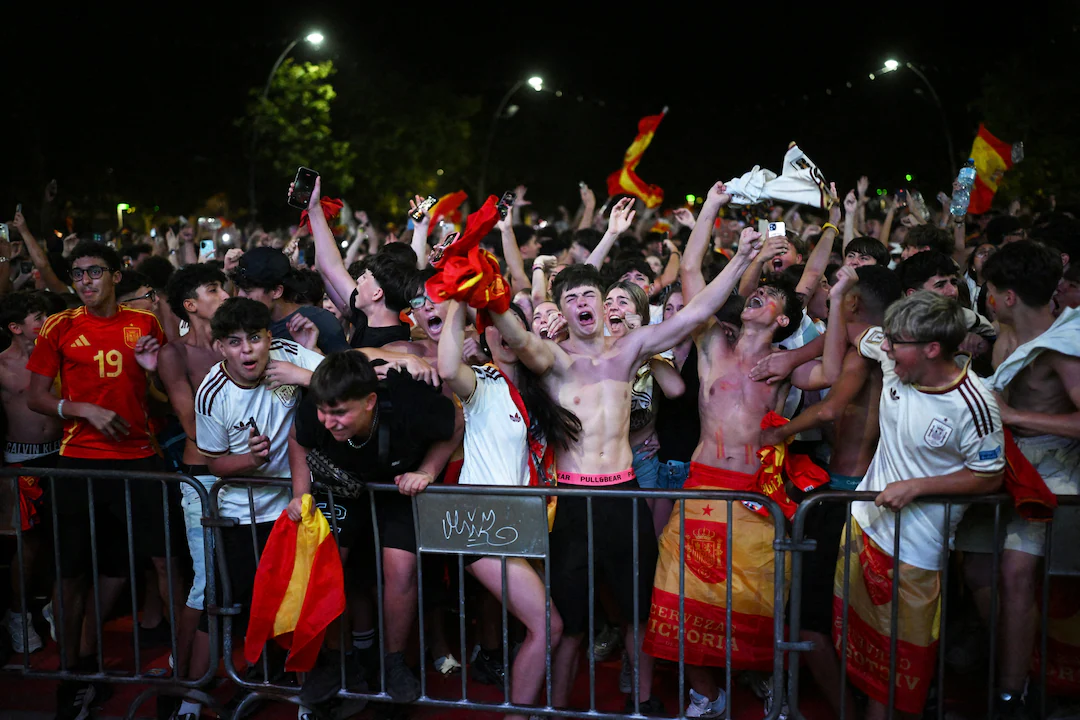
Spain erupted in celebration after the national team secured its second FIFA World Cup title, defeating Argentina 1-0 after extra time in a dramatic final that sparked scenes of jubilation across the country. From Madrid and Barcelona to Valencia, Seville and Bilbao, millions of Spaniards poured into streets, squares and fan zones to celebrate a victory many are already describing as one of the greatest moments in the nation’s sporting history.
The triumph, achieved through Ferran Torres’ extra-time winner in the final at the New York/New Jersey Stadium, ended a 16-year wait for another World Cup crown following Spain’s historic first title in South Africa in 2010. The victory also cemented Spain’s status as one of world football’s elite powers and crowned a remarkable tournament campaign in which the team conceded just one goal.
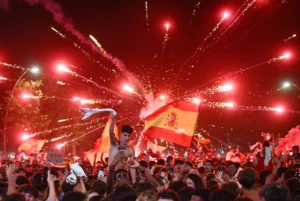
As the final whistle sounded, celebrations erupted throughout Spain. In Madrid, thousands gathered at Plaza de Cibeles and Puerta del Sol, waving Spanish flags, singing football chants and setting off fireworks. Similar scenes unfolded in Barcelona, where supporters flooded Las Ramblas, while city centers across the country became seas of red and yellow as fans celebrated deep into the night.
Spanish Prime Minister Pedro Sánchez congratulated the team, describing the victory as a moment that united the country and showcased the talent, determination and resilience of Spanish football. Messages of congratulations also poured in from political leaders, former players and sports organizations around the world.
Much of the praise centered on captain Rodri, who was named the tournament’s Golden Ball winner after orchestrating Spain’s midfield throughout the competition. Goalkeeper Unai Simón received widespread acclaim for a string of crucial saves, while young defender Pau Cubarsí emerged as one of the tournament’s breakout stars. Ferran Torres, whose goal secured the title, instantly joined the list of Spain’s football heroes.
The victory carried added significance because it represented the culmination of a new generation’s rise following years of rebuilding after Spain’s golden era of the late 2000s and early 2010s. Under coach Luis de la Fuente, Spain blended experienced leaders with emerging talent, producing a disciplined and tactically sophisticated team that many analysts considered the tournament’s most complete side.
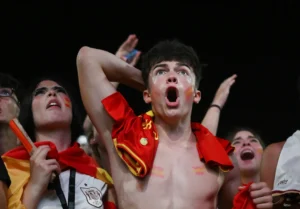
Attention is now turning to the team’s return home, where a massive victory parade is expected to draw hundreds of thousands of supporters. Spanish authorities are preparing celebrations in Madrid, with the squad expected to present the World Cup trophy to fans and meet members of the royal family, including King Felipe VI and Queen Letizia.
For many Spaniards, the victory transcended football. In a country often marked by regional differences and political debates, the World Cup win provided a rare moment of shared national celebration. As fireworks illuminated city skylines and supporters continued singing long after midnight, Spain once again found itself united by the beautiful game and the achievement of a team that has written a new chapter in the nation’s sporting history.