
General News
Obasanjo Rebuts Osoba, Denies Deceiving Afenifere Ahead of 2003 Elections

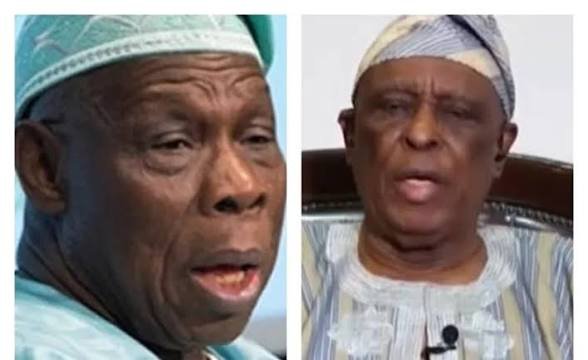
Former President Olusegun Obasanjo has rejected allegations by former Ogun State Governor, Chief Olusegun Osoba, that he deceived leaders of the Alliance for Democracy (AD) and Afenifere in the build-up to the 2003 general elections.
In a detailed letter dated July 23, 2026, and made available to journalists through his media aide, Kehinde Akinyemi, Obasanjo described Osoba’s claims as inaccurate and misleading, insisting that his political actions were guided by national interest, integrity and the pursuit of Nigeria’s unity.
The former President maintained that he never misled Afenifere or AD leaders, arguing that his engagement with political stakeholders before and after assuming office was aimed at fostering dialogue and national reconciliation rather than advancing partisan or ethnic interests.
Obasanjo disclosed that before joining the Peoples Democratic Party (PDP), he consulted widely with influential political leaders from the South-West, North and South-East. He also said prominent Yoruba leaders had encouraged him to contest the presidency following his release from prison, contrary to suggestions that his emergence was orchestrated by political interests.
Responding to claims that he sought an alliance with the Alliance for Democracy because of political weakness, Obasanjo said his outreach to AD leaders was intended to integrate the South-West into the national political mainstream and promote unity after years of political division.
The former President also made fresh allegations against his former Vice President, accusing him of secretly supporting moves to impeach him and plotting to assume power through what he described as anti-democratic means. He claimed some AD governors were drawn into the alleged plot without his knowledge.
Obasanjo further dismissed suggestions that Afenifere influenced or dictated the policies of his administration, insisting that no regional political organisation could determine the decisions of a democratically elected President.
Reaffirming his long-held opposition to ethnic politics, he argued that Nigeria’s leaders must always place national unity above sectional or regional interests.
Despite his disagreement with Osoba, Obasanjo acknowledged the former governor’s role in the establishment of the Olusegun Obasanjo Presidential Library (OOPL) through the allocation of land for the project in Abeokuta.
He described the presidential library as a lasting legacy for Ogun State and called on political leaders to embrace dialogue, humility and enduring relationships instead of bitterness and political divisions.
Obasanjo’s response comes amid renewed public debate over political alliances, party realignments and the events leading to the 2003 general elections.