
General News
Governors Pledge State Agro-Industrial Revolution After Benin Tour, Back Tinubu’s Processing Zone Drive

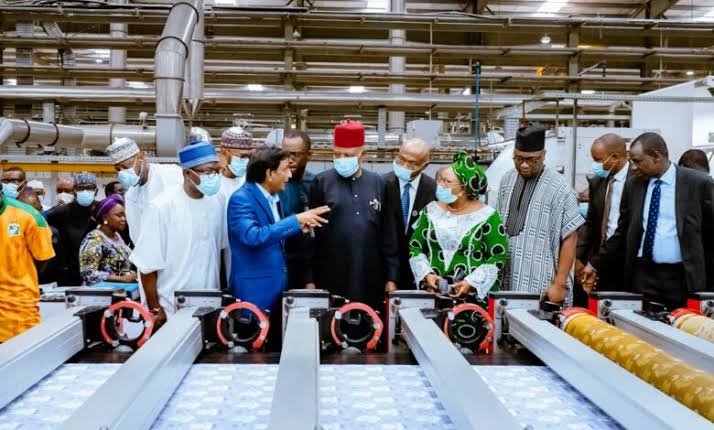
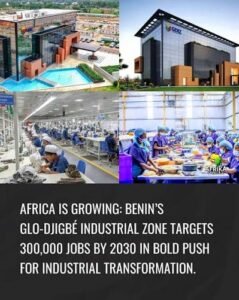
Six state governors have pledged to replicate key elements of the Glo-Djigbé Industrial Zone (GDIZ) model in the Republic of Benin as Nigeria accelerates plans to establish Special Agro-Industrial Processing Zones (SAPZs) aimed at boosting local manufacturing, creating jobs and adding value to agricultural produce.


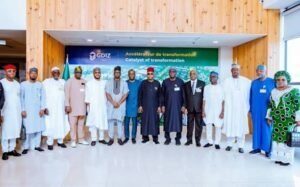
The governors made the commitment after accompanying Vice President Kashim Shettima on an inspection of the integrated industrial zone near Cotonou, where commodities such as cotton, cashew nuts and soybeans are processed into finished and semi-finished products.
The delegation included Governors Hope Uzodimma (Imo), Dauda Lawal (Zamfara), Caleb Mutfwang (Plateau), AbdulRahman AbdulRazaq (Kwara), Dikko Umar Radda (Katsina) and Umar Namadi (Jigawa).
The governors said the Benin model demonstrated how deliberate government policies, reliable infrastructure and private-sector investment could transform agricultural value chains, reduce dependence on raw commodity exports and stimulate industrial growth.
Kwara State Governor AbdulRahman AbdulRazaq described the visit as an opportunity for African countries to learn from one another’s industrial successes and challenges.
He noted that Nigeria was preparing to establish industrial processing zones across the country and had previously undertaken a similar study tour to Ethiopia.
According to him, the delegation examined cotton, cashew and soybean value chains, describing the Benin experience as a major success that would provide practical lessons for Nigeria’s implementation of the Special Agro-Industrial Processing Zones Programme.
AbdulRazaq added that participating states were collaborating with the Federal Government and development partners, including the African Development Bank (AfDB), the Islamic Development Bank (IsDB) and the International Fund for Agricultural Development (IFAD), to provide infrastructure for the processing zones, with the programme’s first phase covering seven states and the Federal Capital Territory.
Jigawa State Governor Umar Namadi said the visit reinforced his state’s determination to add value to agricultural production and expand employment opportunities through industrialisation.
He expressed optimism that implementing the SAPZ programme would enable Jigawa to process more of its agricultural products locally and generate sustainable jobs.
For Zamfara State Governor Dauda Lawal, the tour rekindled memories of the state’s once-thriving textile industry, which he said employed thousands of workers through textile factories, cotton ginneries and oil mills.
Lawal recalled that the Zamfara Textile Industry once operated three shifts with about 2,000 workers per shift, while the state also had about 23 ginneries and an oil mill that processed cotton seeds into edible oil.
He said the visit had strengthened his resolve to revive cotton production and textile manufacturing as part of his legacy for the state.
Imo State Governor Hope Uzodimma urged African countries to deepen cooperation by learning from one another and developing industries based on their comparative advantages.
He commended President Bola Ahmed Tinubu for directing Vice President Shettima to lead the delegation, describing the visit as a practical step towards implementing the administration’s industrialisation agenda under the Renewed Hope programme.
Katsina State Governor Dikko Umar Radda said the production model showcased at GDIZ was achievable in Nigeria, particularly in states with strong agricultural value chains.
He noted that Katsina’s comparative advantage in cotton and soybean production positioned it to benefit significantly from adopting similar processing systems that would create jobs and expand wealth creation.
Plateau State Governor Caleb Mutfwang described the industrial zone as proof that vision, political commitment and effective management could transform ambitious ideas into thriving industrial ecosystems.
He said Nigeria possessed even greater economic potential but must deliberately focus on processing agricultural produce rather than exporting raw commodities.
According to Mutfwang, the visit aligned with President Tinubu’s ambition of building a $1 trillion economy through increased production, value addition and industrial development.