
International
Car Bomb Hits Southwest Colombia a Day After New President Takes Office

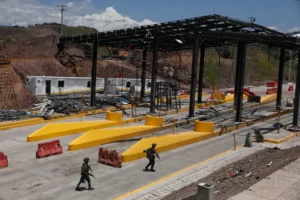
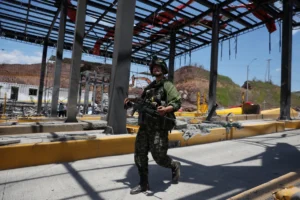
A car bomb exploded at a toll plaza in southwestern Colombia on Saturday, injuring two security guards and damaging infrastructure along a major highway, in an attack that came just one day after newly inaugurated President Abelardo de la Espriella assumed office.
The explosion occurred at a toll station on the Pan-American Highway near Cali, one of the country’s main transport corridors. The blast caused significant damage to the toll facility and nearby properties, with residents reporting shattered windows from the force of the explosion.
Colombia’s army attributed the attack to dissident factions of the Revolutionary Armed Forces of Colombia (FARC), the former guerrilla organisation that signed a historic peace agreement with the government in 2016. Some armed factions rejected the agreement and continued operating, particularly in parts of southwestern Colombia.
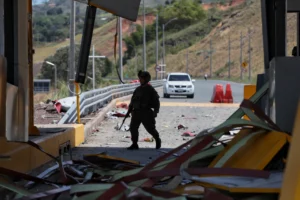
According to authorities cited by The Associated Press, two security guards were injured in the blast.
The explosion also caused extensive damage to the toll plaza and surrounding area. Residents near the site were affected by the shock wave, with broken glass reportedly damaging homes.
The incident has raised fresh concerns over security along the Pan-American Highway, an important route connecting southwestern Colombia with other parts of the country.
The highway passes through areas where armed groups and criminal organisations have historically competed for territorial control and illicit economies.
The timing of the bombing has placed Colombia’s security challenges at the centre of attention just as de la Espriella begins his administration.
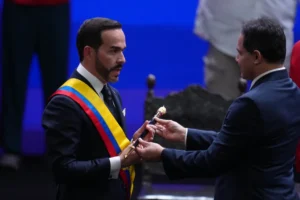
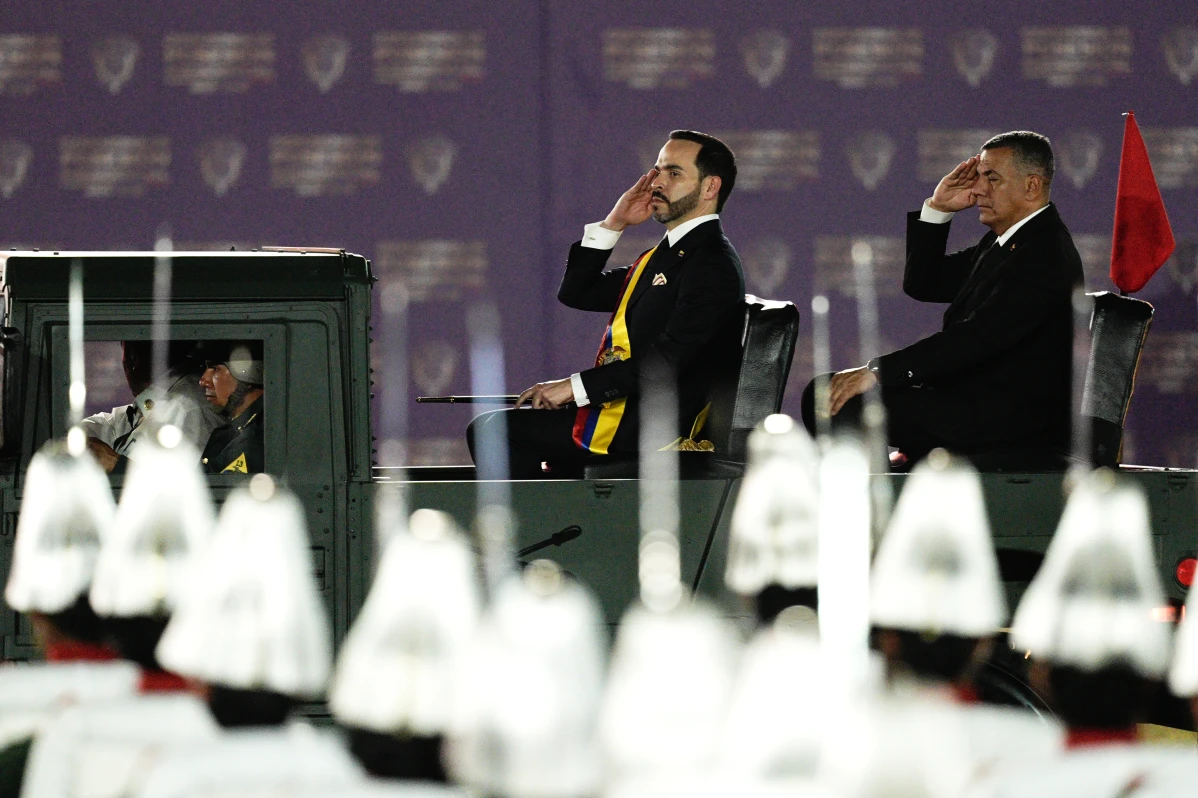
The conservative lawyer and businessman was sworn in as president on Friday in Cali, breaking with the traditional practice of holding the inauguration in Bogotá. His administration has promised a tougher approach to guerrilla groups, drug trafficking organisations and other armed groups operating across the country.
De la Espriella’s rise to the presidency represents a significant political shift for Colombia after the left-wing administration of outgoing President Gustavo Petro.
During his campaign, de la Espriella positioned himself as a law-and-order candidate, arguing that Colombia needed a more aggressive response to armed groups and drug trafficking.
His election campaign attracted support from Colombians concerned about worsening security conditions in several parts of the country.
Although the 2016 peace agreement resulted in the formal demobilisation of the FARC, the organisation’s disappearance did not bring an end to armed conflict in Colombia.
Several dissident factions emerged, refusing to surrender their weapons or accept the peace agreement. Other armed organisations, including the National Liberation Army (ELN) and criminal groups, have also maintained significant influence in parts of the country.
Southwestern Colombia, particularly the departments of Cauca and Valle del Cauca, has remained one of the areas most affected by the activities of armed groups.
Authorities have repeatedly linked violence in the region to struggles over territory, drug trafficking routes and control of rural communities.
The latest bombing therefore comes against a broader backdrop of persistent insecurity rather than as an isolated incident.
Cauca Governor Jorge Octavio Guzmán suggested that the bombing could be connected to a broader strategy by armed groups seeking to isolate the region and strengthen their territorial control.
The destruction of infrastructure along major roads can have consequences beyond the immediate physical damage.
Attacks on toll stations, bridges and highways can disrupt transportation, limit access to communities and place pressure on government forces attempting to maintain control over contested territories.
Colombia’s Transportation Minister Elsa Noguera said authorities would work to restore the damaged infrastructure and would not allow violence to paralyse the country’s transportation network.
The bombing occurred as the new administration was already signalling a tougher security posture.
On his first day in office, de la Espriella ordered the transfer of 117 prisoners associated with previous peace negotiations and armed groups to maximum-security prisons.
The move was presented as part of an effort to disrupt criminal networks and prevent imprisoned members of armed organisations from continuing to coordinate activities from inside detention facilities.
The administration’s approach marks a clear departure from the previous government’s emphasis on negotiations with armed groups.
Analysts have warned that the shift could have significant consequences for Colombia’s fragile peace process, particularly because several armed organisations remain active and territorial disputes continue in remote regions.
The bombing is likely to intensify pressure on de la Espriella to demonstrate that his promised security strategy can deliver results.
The new president has inherited a country where armed groups remain entrenched in several rural areas despite years of peace efforts.
A recent analysis by the Peace Research Institute Frankfurt noted that Colombia’s post-FARC landscape has been characterised by the fragmentation and reorganisation of armed violence, with FARC dissidents, the ELN, the Clan del Golfo and other groups competing for territory, populations and illicit economies.
That fragmented security environment presents a difficult challenge for a government promising a decisive military response.
The latest incident also follows another car bombing in Colombia earlier this month.
On August 1, at least 11 people were wounded in a car-bomb attack in Cúcuta, near the Venezuelan border. The bombing occurred only days before de la Espriella’s inauguration and underscored the security challenges awaiting the incoming administration.
The government subsequently blamed another major rebel organisation for that attack.
The incidents demonstrate that Colombia’s armed conflict remains complex, with different groups operating in different regions and pursuing competing political, territorial and criminal interests.
The bombing on the Pan-American Highway is unlikely to be judged solely by the physical damage it caused.
Coming just 24 hours after the inauguration of a president who campaigned on restoring security, the attack carries considerable political symbolism.
It provides an early test for de la Espriella’s promise to confront armed groups with greater force, while also demonstrating the ability of dissident factions to strike important infrastructure despite the government’s security measures.
For communities in southwestern Colombia, however, the consequences are more immediate.
Every attack on a highway, police facility or public infrastructure increases fears among residents already living under the shadow of armed groups.
The new administration now faces the difficult task of restoring security while preventing an escalation that could further endanger civilians and undermine the country’s already fragile peace efforts.
For de la Espriella, the bombing offers an early and stark reminder that the security crisis he promised to confront did not disappear with the change of government.