
Opinion
The Touré Brothers — From Ivory Coast Legends to Football Leadership: Why Yaya Toure’s First Six Games Tell A Very Different Story From Kolo’s First Nine

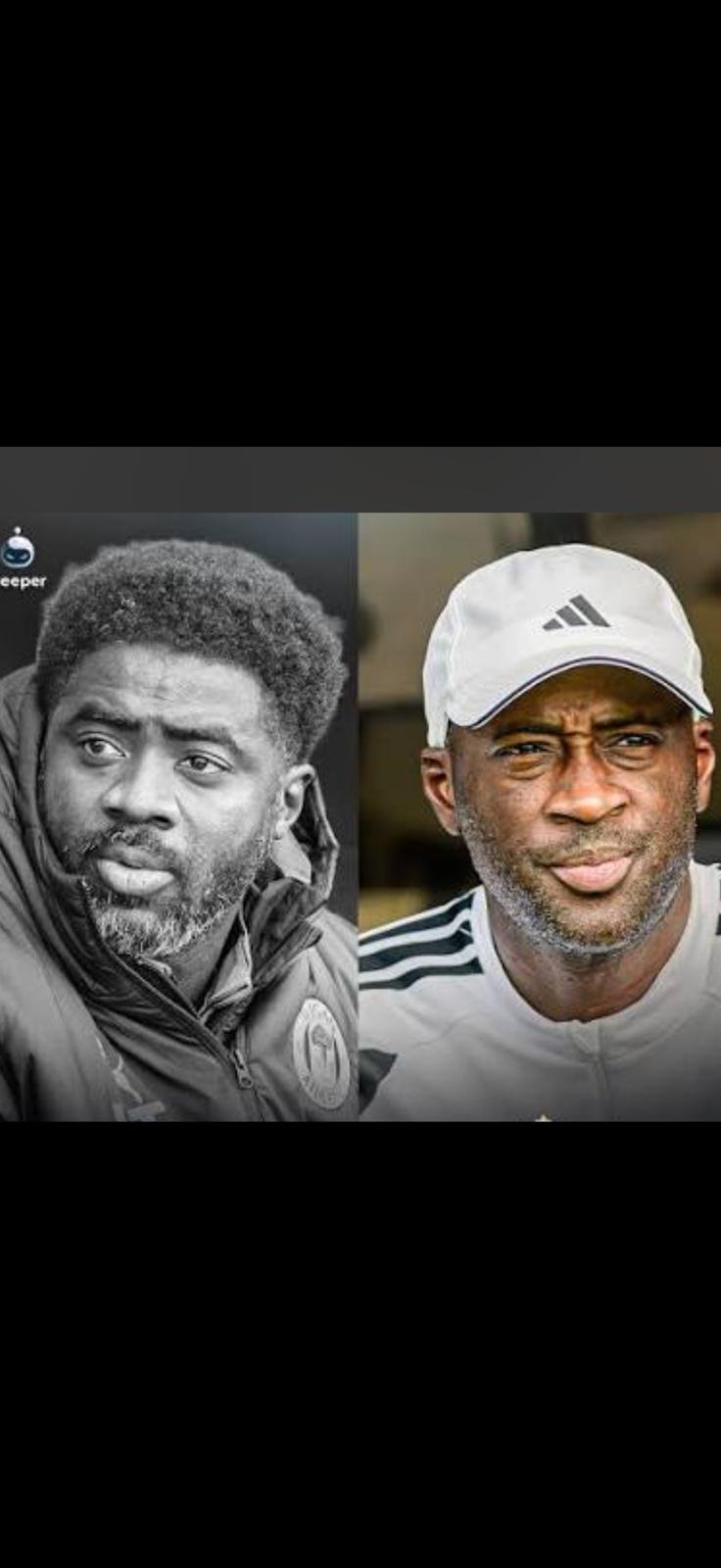
By Paul Lucky Okoku
Two brothers conquered African and European football as players. Their first experiences at the top of coaching could hardly look more different—but the numbers alone do not tell the whole story.
Yaya Touré has opened his first senior managerial assignment with five wins from six games. Kolo Touré began his with nine matches without victory. The contrast is striking, but the deeper story is about preparation, opportunity, failure, recovery and the demanding journey from playing football to leading it.
They were brothers in blood, teammates for club and country, champions of Africa, and members of one of the most celebrated generations in Ivorian football history.
Now Kolo Touré and Yaya Touré are discovering something every great footballer eventually confronts when he moves into coaching:
The medals come with you. The results do not.
A photograph circulating on social media presents an irresistible comparison.
Kolo Touré: Nine games. Zero wins.
Yaya Touré: Six games. Five wins.
At first glance, it appears to be a simple story of one brother failing where another is succeeding.
It is not that simple.
Statistics become misleading when separated from circumstances. Kolo inherited one type of challenge. Yaya inherited another. Their clubs were operating from different competitive positions, their preparation routes were not identical, and the environments surrounding their first managerial opportunities were very different.
So the meaningful question is not whether Yaya is already a better coach than Kolo.
Six games against nine cannot answer that.
The more useful question is this:
What can two accomplished African footballers, taking different routes into management, teach us about the transition from playing greatness to football leadership?
That is where this story becomes much bigger than five wins against none.
BEFORE LEADERSHIP, THEY HAD ALREADY CONQUERED THE PITCH
The Touré surname did not arrive in coaching searching for football credibility.
Kolo and Yaya had already earned that.
Kolo, the elder brother, travelled from ASEC Mimosas in Côte d’Ivoire to Arsenal and became part of Arsène Wenger’s legendary 2003–04 Invincibles, the team that completed an entire Premier League season without defeat.
He later represented Manchester City, Liverpool and Celtic, establishing himself across some of British football’s most prominent clubs.
At Manchester City, Kolo became a Premier League champion again. He and Yaya were teammates when City won the 2011 FA Cup and the 2011–12 Premier League title.
Yaya’s journey was different but no less distinguished.
Barcelona took him onto one of football’s grandest stages, where he became a UEFA Champions League winner. Manchester City then provided the setting in which he developed into one of the most influential African midfielders of his generation.
During eight seasons at City, Yaya won three Premier League titles, three League Cups and an FA Cup. He was also named CAF African Footballer of the Year four consecutive times—2011, 2012, 2013 and 2014.
Their shared story extended beyond club football.
Both brothers represented Côte d’Ivoire during the country’s celebrated golden generation. They knew the disappointment of coming close to continental success before eventually reaching the summit.
At the 2015 Africa Cup of Nations, Yaya captained Côte d’Ivoire while Kolo remained an important senior member of the squad. The Elephants defeated Ghana on penalties after a goalless final, ending a 23-year wait for another African championship.
They had climbed together.
Their coaching journeys would be very different.
KOLO’S FIRST TEST OF LEADERSHIP
Kolo Touré’s first opportunity as a senior manager came at Wigan Athletic in November 2022.
It lasted only 58 days.
Nine matches.
No victories.
Three draws.
Six defeats.
Wigan terminated his appointment on January 26, 2023.
Those numbers cannot be softened.
They were poor.
But they should not be stripped of context either.
Kolo did not inherit a dominant club requiring only continuity. Wigan were already battling serious competitive difficulties in the Championship and were eventually relegated at the end of the season.
That does not remove managerial responsibility. A head coach accepts accountability when he accepts the job.
But there is an important difference between saying:
Kolo failed in his first managerial appointment
and saying:
Kolo Touré is a failed coach.
The first statement is supported by the record.
The second is a permanent judgment that the evidence cannot sustain.
What happened after Wigan is therefore an important part of the story.
WHEN LEADERSHIP REQUIRES RETURNING TO LEARN
Kolo did not respond to his dismissal by demanding another managerial position because he had been an Arsenal Invincible, Premier League champion or Africa Cup of Nations winner.
He returned to development.
Manchester City brought him into its academy structure. During the 2024–25 season, he worked as an assistant with the club’s Under-18 side alongside lead coach Oliver Reiss.
That team won the Under-18 Premier League North title and reached the national final.
Kolo then moved into Pep Guardiola’s first-team coaching setup during Manchester City’s 2025 FIFA Club World Cup campaign.
In July 2025, City made his first-team appointment permanent.
The man represented in the viral comparison simply as “nine games, zero wins” therefore did not disappear after Wigan.
He rebuilt.
That is important.
Kolo has already experienced the responsibilities that accompany the head coach’s chair: selection, tactical decisions, expectations, defeat, criticism and dismissal.
He can now study those experiences while working inside one of the most demanding elite football environments in the world.
If another senior managerial opportunity comes, he will not return as the same coach who walked into Wigan in 2022.
That is why failure should neither be hidden nor turned into a life sentence.
Sometimes a setback becomes part of the education.
YAYA CHOSE A LONGER APPRENTICESHIP BEFORE TAKING THE LEADERSHIP CHAIR
Yaya Touré took a different route.
His opening six games as a senior manager should not create the impression that he retired from football and immediately stepped into a successful head-coaching position.
He spent years preparing for it.
His coaching development included work with Olimpik Donetsk in Ukraine, Akhmat Grozny in Russia, Tottenham Hotspur’s academy, Standard Liège in Belgium and the Saudi Arabian national-team setup.
He therefore experienced different football cultures, different levels of responsibility and different coaching environments before becoming the principal decision-maker.
Most recently, he spent roughly two and a half years working with Saudi Arabia before accepting the Slovan Bratislava position.
Then, in June 2026, Slovan handed him his first senior head-coaching assignment on a three-year contract.
It was a significant opportunity.
It also carried expectations.
Slovan had won the Slovak championship eight consecutive times before Yaya’s arrival.
He was not inheriting a club hoping merely to survive.
He was entering an institution where domestic success had become normal.
That creates its own pressure.
A manager taking over a struggling side is asked to repair decline.
A manager taking over a dominant side is expected not to create one.
Yaya also inherited European ambitions.
Slovan wanted progress in UEFA Champions League qualifying, meaning his early work would be measured not only domestically but against opponents from beyond Slovakia.
At his unveiling, Yaya spoke about controlling matches, dominating opponents and entertaining supporters while building upon the success already established at the club.
The early results have supported that ambition.
FIVE WINS FROM SIX — AND EUROPEAN PROGRESS
As of August 13, 2026, Yaya Touré’s competitive managerial record with Slovan Bratislava stands at:
Six matches.
Five victories.
One draw.
Zero defeats.
Most importantly, those results have produced something tangible.
Slovan have advanced into the UEFA Champions League play-off round.
They defeated Swedish champions Mjällby 2–1 away in the first leg of their third qualifying-round tie and then won 2–0 in Bratislava, completing a 4–1 aggregate victory.
That moved Slovan within one qualifying tie of the Champions League league phase and preserved Yaya’s unbeaten beginning.
It is an excellent start.
The appropriate word, however, is promising.
Football management is not judged over six matches.
The real examinations come over time: when opponents understand your system, injuries alter your plans, influential players become unhappy, supporters grow impatient, transfer targets do not arrive or a series of defeats tests the confidence of everyone around you.
Yaya has started exceptionally well.
The rest of the examination is still ahead.
BEYOND THE SCOREBOARD: WHY THE 5–0 COMPARISON CAN MISLEAD
The viral comparison works because it is visually powerful:
Yaya: five wins.
Kolo: none.
But the brothers did not start from comparable positions.
Kolo inherited a Championship club moving toward a relegation battle.
Yaya inherited the dominant contemporary force in Slovak football.
One entered an environment where survival was becoming the problem.
The other entered one where winning was already institutionalized.
That distinction matters.
It does not diminish Yaya’s accomplishment. Taking over a serial champion produces a different kind of pressure because there is little room to hide.
Win, and people may say the club was already winning.
Lose, and people immediately ask what you have damaged.
Fail in Europe, and domestic dominance may not be enough.
So Yaya possesses a stronger competitive platform than Kolo had at Wigan, but he also carries an expectation of continuity.
That is why the intelligent comparison is not:
Which brother is better?
It is:
How has each brother responded to the circumstances he was given?
At Wigan, Kolo could not reverse the club’s decline quickly enough.
At Slovan, Yaya has so far preserved domestic momentum while advancing in Europe.
Those conclusions are supported by the evidence.
Anything further remains premature.
THE AFRICAN QUESTION: WHAT HAPPENS AFTER THE APPLAUSE STOPS?
There is another reason this story matters.
African football has produced generations of outstanding players.
Retirement, however, presents an entirely different challenge.
A footballer can spend twenty years mastering the game as a player without automatically mastering coaching, administration, governance, technical direction or institutional leadership.
The Touré brothers illustrate what a serious post-playing pathway can involve:
academy football, assistant coaching, technical education, mentorship, responsibility, setbacks, adaptation and eventually leadership.
That should matter across Africa.
There is also a broader development worth welcoming.
For generations, African football has opened its doors to European and other foreign coaches. National teams, clubs and development programmes across the continent have regularly entrusted major responsibilities to professionals arriving from abroad.
There is nothing inherently wrong with that.
Football should exchange knowledge across borders.
But opportunity should also be capable of travelling in both directions.
It is encouraging to see African coaches increasingly receiving serious opportunities outside the continent—not because they are African and not simply because they were famous players, but because they have prepared themselves for those responsibilities.
Yaya being entrusted with Slovan Bratislava and Kolo working inside Manchester City’s first-team coaching structure represent something larger than two famous brothers finding employment.
They reflect a gradual widening of opportunity for African football professionals within influential coaching environments abroad.
Africa has long welcomed expertise from outside Africa. It should be equally normal for African expertise to be welcomed, tested and trusted outside Africa.
That is not a demand for preferential treatment.
It is a case for genuine football mobility:
Qualify. Prepare. Compete. Get the opportunity to prove yourself.
The same principle should apply when former internationals pursue football leadership generally.
Playing the game should not automatically qualify anyone to run it.
But playing experience should not be dismissed as though it carries no value.
The answer is preparation, not exclusion.
Playing experience is knowledge.
Coaching education is knowledge.
Administration is knowledge.
Leadership is knowledge.
Data analysis, financial management and governance are also forms of knowledge.
The strongest football institutions combine these competencies instead of treating them as mutually exclusive.
A former international should not say:
I played, therefore give me the job.
Football institutions should not respond:
You only played, therefore you have nothing to contribute.
Both positions waste human capital.
FROM THE MIDFIELDER’S EYE: LEADERSHIP LESSONS FROM THE TOURÉ BROTHERS
The Touré story offers lessons that extend far beyond the brothers themselves.
Reputation may open the door, but competence keeps it open.
The name on the back of yesterday’s jersey cannot manage tomorrow’s match.
Playing greatness can create credibility and opportunity, but leadership ultimately has to be demonstrated through preparation, judgment, communication and results.
Apprenticeship should not be mistaken for weakness.
Perhaps one of the most important lessons in both journeys is the willingness to learn.
Yaya spent years working below the level of head coach before accepting his first senior managerial responsibility.
Kolo, after already becoming a manager, was willing to return to academy and assistant coaching.
There is humility in both pathways.
For accomplished former players, accepting the role of learner again may be particularly difficult. They have spent much of their adult lives being celebrated as experts at what they do.
Leadership requires enough confidence to take responsibility and enough humility to know that there is still more to learn.
That is not a retreat from leadership. It is preparation for it.
Failure should be evaluated, not romanticized or weaponized.
Kolo’s record at Wigan was poor. Any serious analysis has to acknowledge that.
But an unsuccessful appointment represents one period of a career. It does not automatically become a permanent verdict on the individual.
The response to failure matters.
Early success deserves the same analytical discipline as early failure.
Yaya deserves full credit for his unbeaten beginning, five victories from six matches and progress in Champions League qualifying.
But the same discipline that prevents us from permanently condemning Kolo after nine matches should prevent us from declaring Yaya a managerial success after six.
Let the work breathe.
THE BIGGER PICTURE: FROM GREAT PLAYERS TO RESPONSIBLE LEADERS
The transition from elite footballer to coach can appear deceptively short.
The technical area is only a few metres from the pitch.
Professionally, the distance is enormous.
As a player, responsibility is concentrated primarily on performing a role within a team.
As a head coach, responsibility expands.
You choose.
You communicate.
You prepare.
You manage personalities.
You explain defeats.
You protect players.
You make unpopular decisions.
You live with consequences that cannot be transferred to someone else.
That is why playing success deserves respect without being confused with managerial qualification.
The Touré brothers entered this second football life carrying extraordinary experience.
But they still had to begin again.
Kolo encountered the harsh side first.
Yaya is currently experiencing the encouraging side.
Neither journey is complete.
FINAL WHISTLE: SAME BLOOD, SEPARATE JOURNEYS
There is something compelling about watching these brothers navigate their second football lives.
They shared Côte d’Ivoire’s colours.
They shared Manchester City’s dressing room.
They celebrated Premier League success together.
They became African champions together in 2015.
Leadership has now placed them on separate paths.
Kolo reached the head coach’s chair first, stumbled badly and returned to learning.
Today he works within Pep Guardiola’s first-team coaching structure at Manchester City.
Yaya waited longer before accepting his first senior head-coaching responsibility.
Today he is unbeaten after six competitive matches with Slovan Bratislava, has won five of them and has taken the Slovak champions into the Champions League play-off round.
There is no need to ridicule one brother to celebrate the other.
There is no need to diminish Yaya’s beginning in order to protect Kolo.
Football leaves room for both truths.
Kolo’s first managerial appointment failed.
Yaya’s first managerial appointment has begun impressively.
Neither sentence determines what happens next.
Football careers rarely travel in straight lines.
Failure can become education.
Apprenticeship can become preparation.
A celebrated player can become an inexperienced coach.
An inexperienced coach can eventually become an accomplished leader.
But none of those transitions is guaranteed by fame.
The Touré brothers conquered football once as players.
Now, separately, they are attempting something different.
The distance from the pitch to the technical area may be only a few metres.
The journey from player to leader is much longer.
The boots may earn you a place in football history. They do not earn you tomorrow’s result.
Leadership begins when reputation ends and preparation is asked to speak.
Be humble enough to start all over again, because there is no disgrace in beginning anew—only another opportunity to prepare, perform and rise.
Sometimes humility is the first step upward, and performance is what eventually lifts you.