
International
Spain Asks EU for Help Processing Migrants in Ceuta After Mass Influx

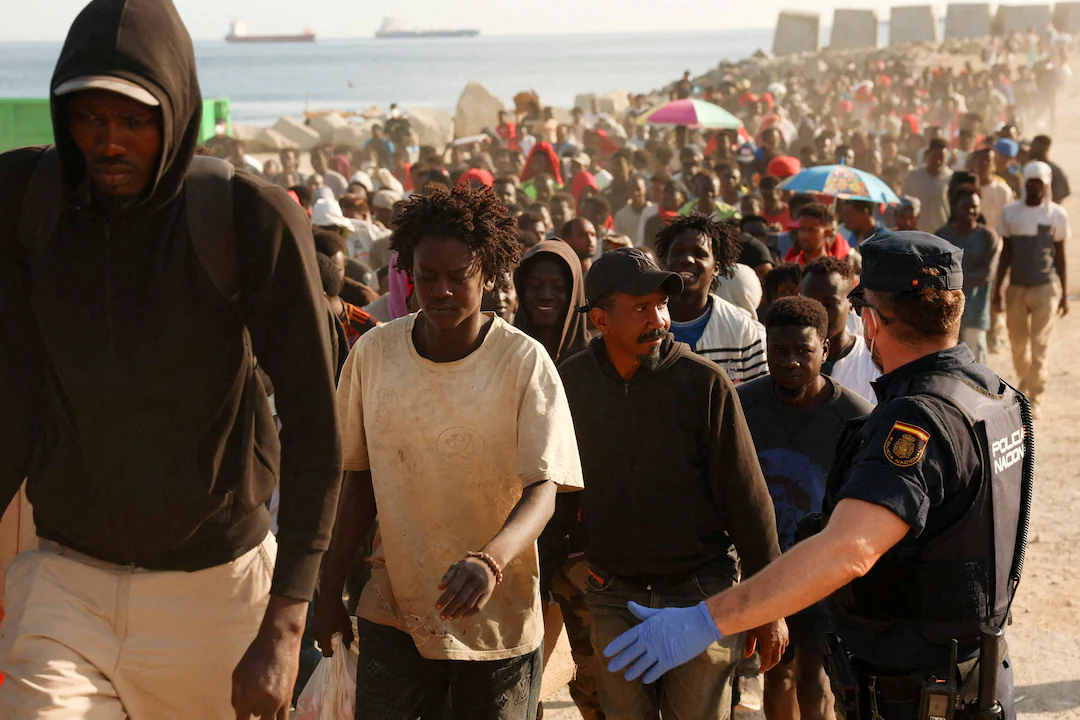
Spain has formally asked the European Union for additional support to help identify, process and manage thousands of migrants still stranded in the Spanish enclave of Ceuta, following an unprecedented influx from Morocco late last month.
Spain’s Interior Ministry has requested assistance from Frontex, Europol and the EU Agency for Asylum (EUAA) to speed up the identification and initial assessment of migrants who remain in Ceuta. The request is aimed at determining who is seeking international protection, who may be returned and who requires special assistance.
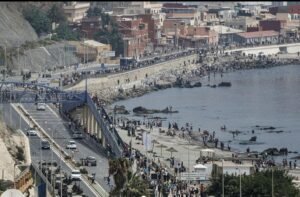
The appeal comes nearly a month after tens of thousands of people entered Ceuta from Morocco in one of the biggest migration crises the territory has experienced.
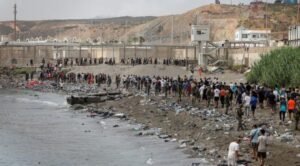
Spanish authorities say around 72,000 people crossed into Ceuta on July 30 and 31, although other reports have put the figure at roughly 80,000. Most have since returned to Morocco, but thousands remain in the territory awaiting identification and processing.
The migrants who remain include children and other vulnerable people. Spanish authorities have warned that the scale of the influx has placed enormous pressure on the small territory’s reception facilities and public services.
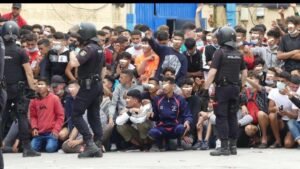
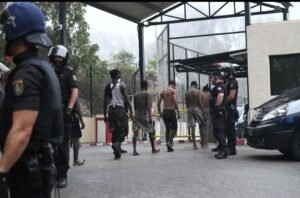
Spain has already expanded its processing capacity. The Interior Ministry says a temporary reception and processing centre at El Tarajal is being equipped with additional police workstations, while specialist officials have been deployed to accelerate asylum procedures.
Madrid is seeking 10 additional Frontex officers to assist with identification and processing, while also asking for continued support for returns and border surveillance.
The EU asylum agency could provide interpreters and help conduct interviews, including remotely. Europol is also being asked to strengthen cooperation against migrant-smuggling networks.
Spain has additionally requested more than €32 million in emergency European funding to help deal with the consequences of the crisis.
The crisis has created mounting tensions inside Ceuta, where local authorities and residents have struggled to cope with the number of people needing accommodation, food and medical assistance.
Recent reports have also described confrontations between local protesters and migrants, with some temporary migrant camps attacked and fires reported. Spanish authorities have called for calm and condemned violence.
Spain’s Defence Minister Margarita Robles has apologised to Ceuta residents who felt abandoned or inadequately supported during the crisis, while the central government has defended its response as necessary to manage an extraordinary situation.
Spain seeks broader European solidarity
The crisis has also reignited debate across Europe about responsibility for migration management.

Spain has argued that the scale of the Ceuta influx demonstrates the need for greater European solidarity, particularly when individual member states face sudden and exceptional migration pressures.
European Commission President Ursula von der Leyen previously praised Spain and Morocco for their handling of the initial crisis while stressing the importance of cooperation among EU members.

For Spain, however, the immediate challenge remains clearing the backlog of people still in Ceuta while ensuring that asylum claims, returns and protection procedures comply with Spanish and European law.
The government says the additional EU assistance will help authorities process migrants more quickly while identifying vulnerable people, including unaccompanied minors and potential victims of trafficking.