
Entertainment
Notting Hill Carnival Turns London Streets Into a Sea of Colour as Revelers Celebrate Caribbean Culture

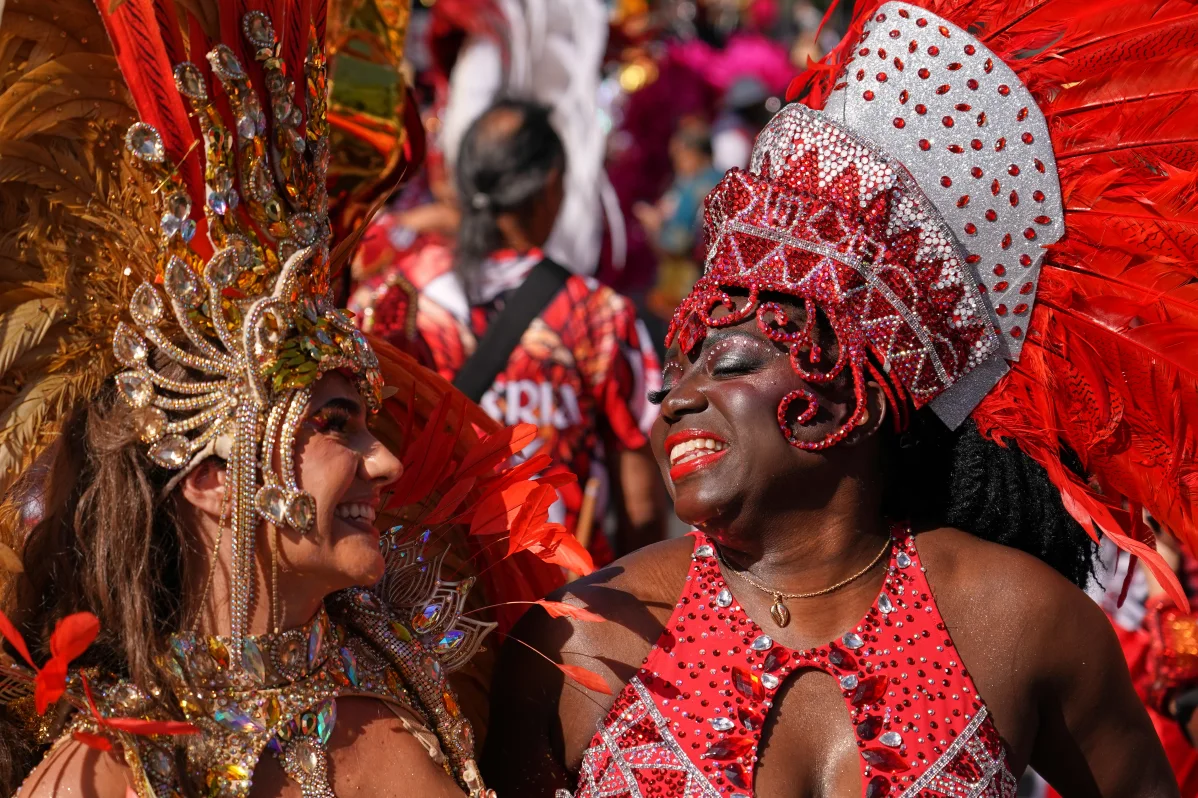
The streets of west London erupted in colour, music and celebration on Monday as thousands of revelers dressed in elaborate costumes gathered for the climax of the 60th Notting Hill Carnival, one of the world’s largest celebrations of Caribbean culture.
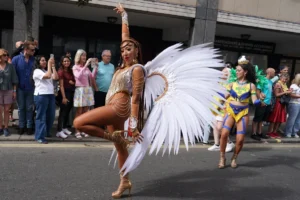
Feathers, sequins, elaborate headdresses and brightly coloured costumes transformed the streets of Notting Hill as dancers and masqueraders moved through the famous parade route, accompanied by steel bands, sound systems and the rhythms of Caribbean music.
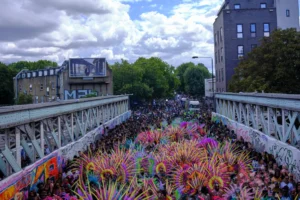
The annual celebration, which takes place over London’s August Bank Holiday weekend, is expected to attract around two million people, making it one of the largest street festivals in Europe.
This year’s carnival carries particular significance as it marks 60 years since the first Notting Hill Carnival in 1966.
The event grew out of London’s Caribbean community and has become an important symbol of Black British identity, cultural expression and community resilience.
Its origins are closely associated with Trinidadian activist and journalist Claudia Jones, who organised an indoor Caribbean carnival in London in 1959. The event later developed into the outdoor Notting Hill celebration that has become a fixture of Britain’s cultural calendar.
Over six decades, the carnival has grown dramatically, bringing together Caribbean communities and people from across Britain and around the world.
Monday’s Adults’ Day featured some of the carnival’s most spectacular displays, with masqueraders wearing elaborate costumes designed around different themes and colours.
Sound systems played reggae, soca, calypso, dancehall and other Caribbean-influenced music, while food vendors served dishes reflecting the region’s diverse culinary traditions.
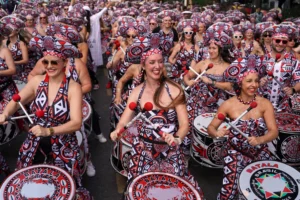
The festival’s sound-system culture is particularly significant. Jamaican-style sound systems became an important part of Caribbean immigrant life in Britain, providing spaces for music, socialising and cultural expression at a time when many Caribbean communities faced discrimination and exclusion.
Today, more than 30 static sound systems are part of the carnival, alongside live performances, steel bands and the famous street parade.
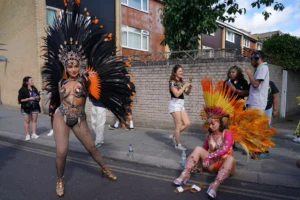
Beyond the costumes and music, the Notting Hill Carnival carries a history rooted in resistance and the experience of Britain’s Caribbean community.
The festival emerged during a period of racial tension in post-war London, following the 1959 murder of Antiguan immigrant Kelso Cochrane.
The tradition of “playing mas” wearing elaborate costumes and performing in the streets, also has roots in Caribbean history, where enslaved Africans used performance and satire as forms of cultural resistance.
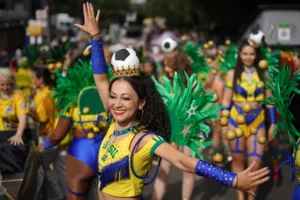
That history continues to give the carnival significance beyond its reputation as a huge street party.
The celebration also came with a major security operation.
More than 7,000 police officers were deployed across the carnival weekend as authorities sought to manage crowds and prevent crime. Police reported hundreds of arrests during the event, although officials said the overwhelming atmosphere remained positive and celebratory.
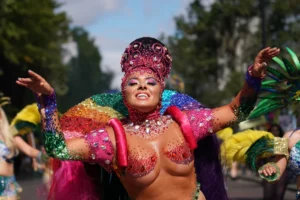
The safety measures reflect longstanding concerns surrounding the carnival, including previous incidents involving knife crime and serious violence.
Despite those concerns, organisers have strongly defended the event, stressing that crime represents only a tiny proportion of the experience for the millions who attend.
For many participants, however, the carnival is ultimately about much more than the size of the crowds.
It is an opportunity to celebrate Caribbean heritage, pass traditions to younger generations and showcase the contribution of Caribbean communities to British society.
As dancers moved through Notting Hill in spectacular costumes and spectators danced alongside the parade, the 60th anniversary provided a powerful reminder of how a community celebration born from difficult circumstances has grown into a defining part of London’s cultural identity.
Six decades after its beginnings, Notting Hill Carnival remains a celebration of Caribbean culture, creativity, resilience and community, bringing the streets of London alive one August weekend every year.