
General News
Petrol Hits N1,400/Litre As Dangote Price Hike Deepens Cost Of Living Crisis

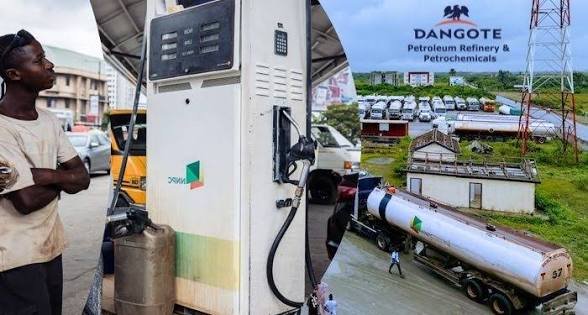
Nigerians may face another wave of increases in transport fares, food prices and business operating costs following the latest hike in the price of Premium Motor Spirit, popularly known as petrol, by the Dangote Petroleum Refinery.

The refinery raised its petrol gantry price from N1,265 to N1,350 per litre on Saturday, September 12, representing an N85 increase. The latest adjustment brings the refinery’s reported cumulative price increase since August 21 to N185 within 22 days.
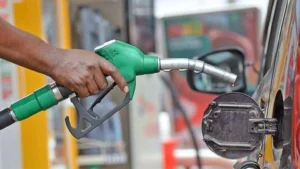
Despite the refinery’s new gantry price, some motorists reported buying petrol at about N1,400 per litre, heightening concerns over the impact of rising energy costs on households and businesses already grappling with the cost of living crisis.
The latest increase comes amid elevated international crude oil prices, with Brent crude trading around $104.60 per barrel after earlier movements above $107. The development has also renewed debate over Nigeria’s post-subsidy petroleum pricing regime and the extent to which domestic refining can shield consumers from global oil market volatility.
Petroleum economist, Prof. Wumi Iledare, said crude oil prices alone could not be used to determine the justification for the latest petrol increase, noting that refined product costs, logistics, margins, distribution expenses and exchange rate movements also influence pump prices.
He explained that petrol prices could rise faster than they decline because of asymmetry in the transmission of costs across the supply chain, warning that excessive market concentration could also give a dominant supplier significant influence over prices.
Energy economist, Dr Ayodele Oni, said the latest increase was consistent with the operation of a deregulated petroleum market, where pump prices respond to crude oil prices and other market fundamentals.
However, Oni warned that the consequences for consumers could be severe because higher petrol prices directly affect transportation, which in turn drives up the cost of food and other essential goods.
He urged the Federal Government to deploy targeted interventions, including transport support, cash transfers for vulnerable Nigerians and increased investment in compressed natural gas and liquefied petroleum gas conversion programmes to reduce dependence on petrol.
Similarly, energy expert, Prof. Dayo Ayoade, said the price increase was expected under a deregulated market, arguing that refiners could not reasonably be expected to sell below their market costs.
He, however, acknowledged growing pressure on consumers and called on the government to expand alternatives such as subsidised transportation and CNG-powered mass transit to cushion the impact of rising petrol prices.