
General News
BRICS Expands Global South Influence, Opens New Pathways For Development

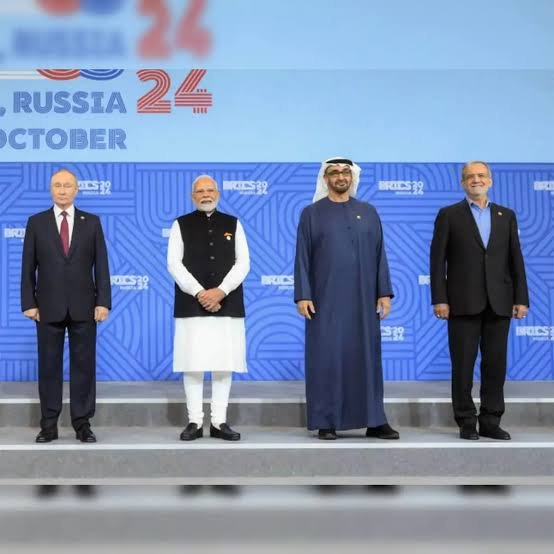
The BRICS cooperation mechanism is entering a new phase of expansion and deeper collaboration, creating greater opportunities for countries of the Global South to pursue shared development and strengthen their collective voice in global affairs.

Established in 2006, BRICS has evolved through successive rounds of expansion, broadening its economic, technological and development cooperation as emerging economies assume a larger role in the global economy.
Ahead of this year’s BRICS Summit in New Delhi, India, the grouping is increasingly positioning itself as a platform for emerging economies to respond collectively to growing protectionism, economic fragmentation and other challenges confronting the global economy.
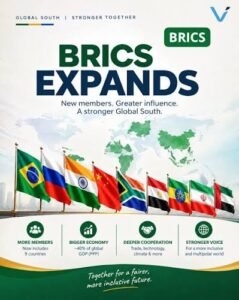
BRICS countries now account for about 40 per cent of global GDP based on purchasing power parity and nearly half of the world’s population. According to data released by UN Trade and Development in March, merchandise trade among BRICS members has increased more than 13-fold since 2003, with exports reaching $1.17 trillion in 2024.
Beyond trade and economic strength, BRICS cooperation is increasingly focused on practical development priorities, including infrastructure, clean energy, digital transformation, renewable energy and technological innovation.
A major component of this effort is the New Development Bank (NDB), headquartered in Shanghai, which provides financing for infrastructure and sustainable development projects. By the end of the first quarter of 2026, the bank had approved $42.9 billion in financing for 140 projects.
The financing, which covers areas including infrastructure, clean energy and digital transformation, aligns with the priorities of the forthcoming BRICS Summit, themed “Building for Resilience, Innovation, Cooperation and Sustainability.”
BRICS has also expanded cooperation in science, technology and industrial development. The BRICS Partnership on New Industrial Revolution Innovation Center in Xiamen, established in 2020, provides a platform for cooperation in digitalisation, advanced manufacturing and technological innovation.
These initiatives, according to the commentary, demonstrate that BRICS is moving beyond its traditional economic focus by creating practical avenues for developing countries to access financing, technology and partnerships tailored to their development needs.
China, as a founding BRICS member, has played a role in developing platforms for practical cooperation and promoting broader participation in the expanded grouping.
The commentary rejected descriptions of BRICS as an emerging rival bloc seeking to construct a parallel international order, arguing that the grouping is based on openness, inclusiveness and mutual benefit rather than confrontation and exclusion.
As BRICS marks two decades of cooperation, the mechanism is expected to enter what the commentary describes as its third “golden decade,” with its expanding membership and areas of cooperation offering new possibilities for greater solidarity, economic opportunity and development across the Global South.