
General News
Obasanjo Tackles Tinubu Over Borrowing, Says Debt Destroys Generations

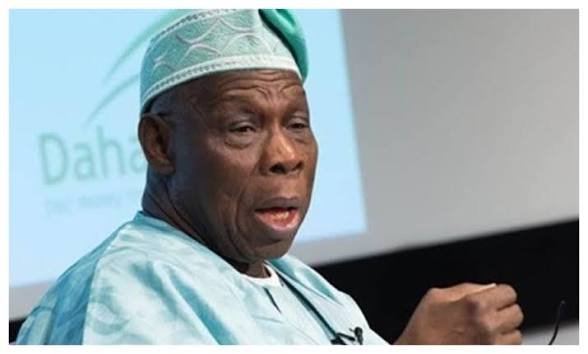
Former President Olusegun Obasanjo has criticised President Bola Tinubu’s position on government borrowing, describing debt as a burden capable of destroying generations.
Obasanjo, who spoke at a symposium in Abeokuta, Ogun State, described as “absolute nonsense” the argument that borrowing should not be viewed negatively as long as the government has the capacity to repay.
He declared that debt was worse than leprosy, warning that excessive borrowing could undermine the economic future of generations yet unborn.

Tinubu had, in April, defended government borrowing, arguing that taking loans was not inherently wrong provided the government had the capacity to repay them.
However, Obasanjo challenged that position, questioning the country’s economic performance and the long-term consequences of its borrowing decisions.
The former president recalled that when he established his farm 47 years ago, the naira exchanged at approximately one naira to $1.85.
He questioned how the Nigerian currency had depreciated to about N1,500 to the dollar, asking what the country had achieved economically over the decades.

Obasanjo challenged political leaders to account for the country’s economic trajectory, particularly the decline in the value of the naira and the implications for Nigerians.
The symposium focused on leveraging Artificial Intelligence (AI) to address grassroots challenges and accelerate national development.
Meanwhile, the guest speaker, historian and public policy scholar, Dr Umar Ardo, warned that Artificial Intelligence could deepen Africa’s dependence on foreign powers if the continent failed to develop and control its own technology and digital infrastructure.
Ardo said Africa risked becoming a consumer of technologies developed elsewhere rather than using AI as an instrument for economic transformation and independent development.
He identified investments in semiconductor chip fabrication, data centres, African-owned datasets and stronger continental cooperation as critical to ensuring that the continent benefits from the emerging technology.
According to him, without deliberate investments in these areas, AI could become another instrument for managing Africa’s affairs rather than empowering Africans to determine their own technological and economic future.