
Opinion
Ghana’s Football Blueprint: How FIFPRO Membership is Strengthening Player Representation And The Full Working Life of A Footballer

By Paul Lucky Okoku


About a month ago, I examined Ghana’s football electorate and the way voting power is distributed across its Congress. What stood out was not that Ghana had created a perfect system, but that it had built a broader structure in which clubs, regional associations, players, coaches, referees, women’s football and other stakeholders all have defined representation.
Ghana may be smaller than many of Africa’s major football nations by population, but it continues to raise an important question: how is a smaller football country getting so many structural things right?
That earlier examination focused on who has a voice in football governance.
This one focuses on the people whose livelihoods depend on the game every day: the professional players.
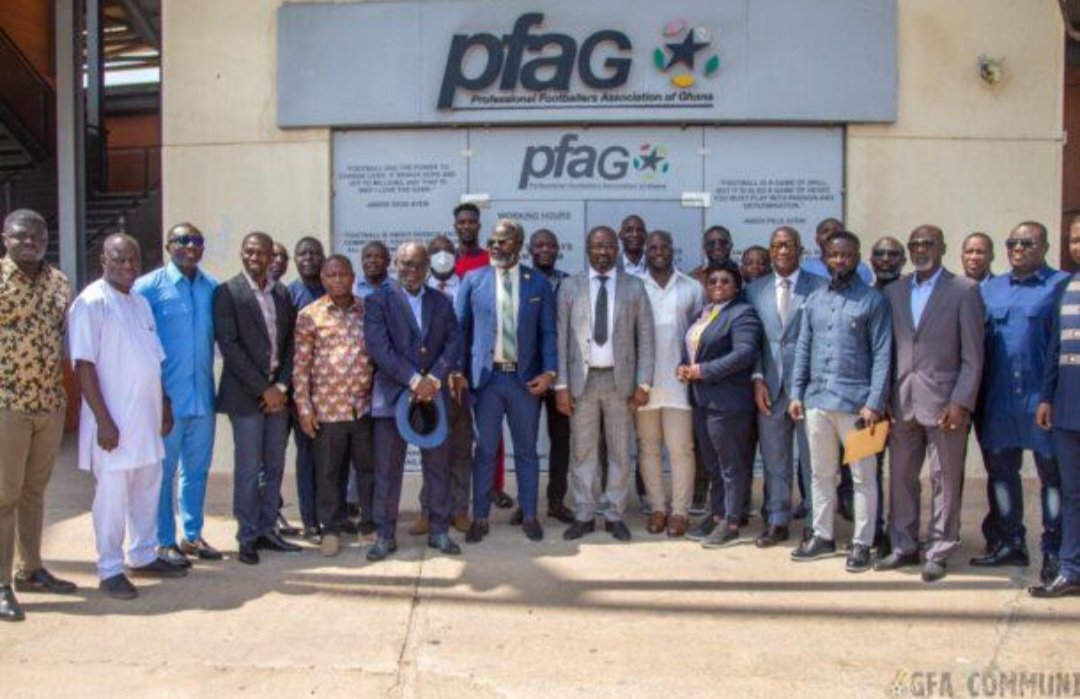
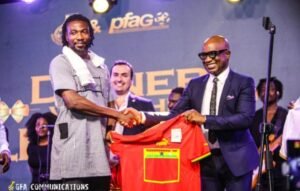
At the centre is the Professional Footballers Association of Ghana, PFAG.
Former Ghana international Anthony Baffoe began discussions with FIFPRO Division Africa officials during the 2008 Africa Cup of Nations. PFAG was founded in May 2009, officially launched in Accra on 21 May 2010, and subsequently became a full member of FIFPRO. Baffoe has described attaining full FIFPRO membership as one of the organisation’s proudest achievements.
The significance is not simply that Ghana has a players’ association.
It is what that structure is increasingly doing across the full working life of the footballer.
FIFPRO MEMBERSHIP CONNECTS GHANAIAN PLAYERS BEYOND THEIR BORDERS
A national players’ union can address domestic problems. FIFPRO membership adds an international layer of expertise, advocacy and legal support.
Ghanaian defender Nicholas Opoku provides a strong example.
Opoku terminated his contract with Tunisia’s Club Africain in 2018 following unpaid salaries. PFAG took his case to FIFA’s Dispute Resolution Chamber. When part of his claim was rejected, PFAG, with FIFPRO’s support, pursued the matter before the Court of Arbitration for Sport.
CAS ultimately ruled in Opoku’s favour, awarding compensation for breach of contract and an additional six months’ compensation because of the circumstances surrounding the case. Four months after the CAS decision, Club Africain paid what was due.
Ghanaian forward Benjamin Acheampong received similar international assistance in his dispute with Egyptian club Zamalek. FIFPRO supported PFAG in representing Acheampong before CAS, which awarded him approximately $1.1 million following contractual breaches. FIFPRO later intervened again after questions arose over a purported settlement that Acheampong said he had not authorised.
That is one tangible benefit of belonging to an international players’ network: a dispute does not necessarily become unreachable because it crosses a national border.
THE PLAYER IS AN EMPLOYEE: CONTRACTS, PAY AND WORKING CONDITIONS
Player representation must also address everyday employment.
From the 2025/26 season, Ghana introduced a Standard Player Contract developed through collaboration between the Ghana Football Association, PFAG and other stakeholders.
It now serves as the official template for professional players in the Premier League, Women’s Premier League and Division One League, covering such matters as duration, compensation, payment obligations, termination and dispute resolution.
That reform was followed by minimum net monthly salaries of GHS 1,500 for Premier League players and GHS 700 for Division One and Women’s Premier League players. Existing contracts move under the minimum structure from the 2026/27 season.
Working conditions also involve rest.
For the 2025/26 season, the GFA mandated a break from 9 June through 8 July 2025 for Premier League, Division One and Women’s Premier League clubs and prohibited pre-season from beginning before 9 July. The federation specifically linked that policy to player health and welfare.
The player, in other words, is not simply somebody selected on Saturday afternoon.
The player is an employee whose contract, remuneration, workload and recovery conditions matter.
HEALTH, INJURY, MENTAL HEALTH AND SOCIAL PROTECTION
Football careers can change through one injury.
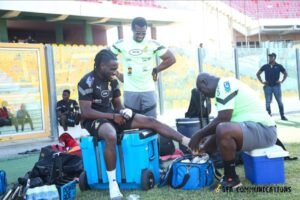
PFAG has therefore worked on medical assistance, rehabilitation, social-security awareness and preparation for the consequences of injury.
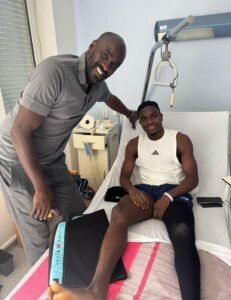
Ghana international Samuel Sarfo has described how PFAG helped him when he suffered an injury in 2017. The association arranged access to a German specialist, after which he was treated and returned to football. Sarfo also said PFAG later assisted him with decisions concerning his future.
PFAG’s welfare approach also includes mental health and life after football. Human Resource and Administrative Manager Catherine Brenya has spoken about the importance of contractual security, education and preparing players for the psychological and practical realities that can follow the end of a career.
Physical health, mental health and social protection are different needs, but all belong within the same working life.
LEGAL PROTECTION CAN DETERMINE WHETHER A CAREER CONTINUES
The Ashanti Gold–Inter Allies case demonstrates another part of player representation.
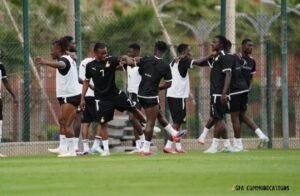
Following the 7–0 match between the clubs, the GFA suspended all 28 participating players in May 2022, with sanctions ranging from two to four years.
PFAG and FIFPRO examined the evidence and supported 21 players in appeals to CAS. One was Alex Aso, who had received a 24-month ban and later described believing his professional career was finished.
The appeals succeeded. FIFPRO said its review found procedural-rights violations and insufficient evidence connecting those players to match manipulation.
Another Ghanaian, Ofosu Appiah, received PFAG and FIFPRO support after the Latvian Football Federation banned him for one year over alleged match manipulation. CAS annulled that sanction in March 2022.
For a professional footballer, access to due process is not an abstract legal principle.
It can determine whether the player is allowed to work.
WHEN THERE IS DISAGREEMENT, WHAT HAPPENS TO THE PLAYERS’ VOICE?
There is another important part of Ghana’s story.
The available record shows that Ghana has not always had only one player-representation body in the institutional conversation.
The Ghana Football Association previously identified PFAG and RENFAG in relation to player representation. Its strategic programme stated that the two bodies should discuss sharing the two Congress positions reserved for players and that the GFA would facilitate talks aimed at creating a harmonious relationship in the supreme interest of Ghanaian players.
That history is important.
It shows that differences in representation are not unique to one football country.
What matters is what happens next.
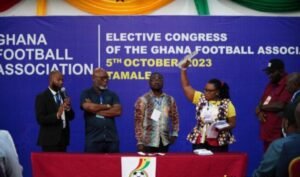
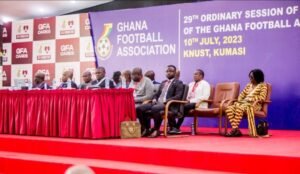
Ghana’s current 2025 Statutes are clear: the GFA Congress consists of 124 delegates, two of whom represent PFAG, and each Congress delegate has one vote.
I have not found sufficient public documentation to claim exactly how every disagreement between PFAG and RENFAG was resolved, and it would be wrong to invent that history.
What can be documented is the institutional outcome: the current statutes provide a defined place for professional-player representation.
That is an important lesson in itself.
Disagreement does not have to become permanent fragmentation. Structures, statutes, dialogue and clearly defined representation can provide a route forward.
DO ACTIVE PLAYERS THEMSELVES HAVE A VOICE IN THEIR UNION?
Representation raises an important question:
Who gives the representative the mandate, and who holds that representative accountable?
FIFPRO’s own governance principles are clear. A national players’ association seeking membership must be representative, democratically organised and independent, and FIFPRO requires its member unions to have a mandate from the players they represent domestically. Each country is represented by only one member players’ association within FIFPRO.
That makes the voice of the active professional player especially important.
These are the players currently signing contracts, negotiating salaries, facing injuries, changing clubs, dealing with disciplinary matters and working under the conditions that player unions are established to address.
In Ghana, PFAG operates through its own Congress process.
At its Congress on 23 November 2021, former Ghana international Samuel Osei Kuffour was elected PFAG President. Representatives and captains from Ghana’s men’s and women’s professional teams participated in the process.
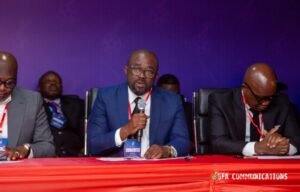
At PFAG’s 23 December 2024 Annual General Congress, professional-player representatives again gathered to review the organisation’s work, discuss shared concerns, consider reforms and vote on amended statutes.
That structure matters because representation should not flow only from the top down.
Players should know their contractual and employment rights, but they should also understand their rights inside the organisation that represents them — including how leaders are selected, how policies are debated and how representatives can be held accountable.
FIFPRO itself describes legitimate player representation as something that must be built from the players upward, through collective structures that provide independence, legitimacy and accountability.
There is also a generational dimension that deserves attention.
Former players can bring experience, institutional memory and leadership to a players’ association. But the daily consequences of employment policy are borne primarily by today’s active professionals.
They are the ones whose salaries may be delayed.
They are the ones negotiating contracts now.
They are the ones exposed to current workloads, injuries, transfer rules and working conditions.
They are the ones whose rent, family responsibilities and careers depend on the employment protections available today.
That does not diminish the importance of retired players. It simply means that a players’ organisation must remain closely accountable to the people who are currently living the working conditions it exists to represent.
A former player may have moved into coaching, business, administration or another profession. The active professional does not have that distance.
For him or her, player representation is not historical.
It is present-tense employment protection.
That is why informed participation matters.
If active players believe their representation is not meeting their needs, they should understand the democratic mechanisms available to them — to question, participate, vote, organise and seek change within the structures that represent them.
That is consistent with FIFPRO’s wider philosophy: player representation derives its legitimacy from the players themselves, not merely from the existence of an organisation.
WHEN THE CONTRACT ENDS, THE PLAYER SHOULD NOT DISAPPEAR
PFAG’s Out-of-Contract programmes address another vulnerable stage of the career: unemployment between clubs.
Players receive structured training and professional preparation while searching for new opportunities. The objective is to preserve fitness, visibility and employability rather than allowing the loss of one contract to become the end of a career.
And when the playing career truly does end, PFAG’s mandate extends into education and career transition.
Its founding objectives explicitly include equipping footballers with skills for life after playing.
Former players may also retain unresolved contractual rights arising from their active careers. Retirement does not automatically erase an unpaid salary, compensation claim or other legitimate employment entitlement.
The footballer may stop playing.
The rights earned while playing do not necessarily stop with him.
THE FULL WORKING LIFE OF THE FOOTBALLER
Ghana’s experience is not evidence of a perfect football system.
No country has one.
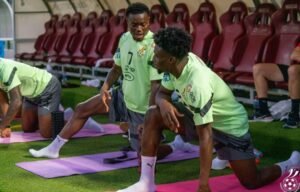
What makes the Ghana example worth examining is the range of issues increasingly being connected around the player:
contracts;
minimum salaries;
working conditions;
rest and recovery;
medical treatment;
mental health;
social protection;
legal representation;
international assistance through FIFPRO;
representation inside football governance;
accountability within the players’ organisation;
support between contracts;
and preparation for life after football.
The common thread is the player.
Not simply the player scoring on Saturday.
Not simply the player wearing the national colours.
But the player as employee, union member, rights-holder, human being and eventually former professional.
That is where the value of representation should ultimately be visible.
In the protection available when the player is working.
In the voice available when the player needs to be heard.
And in the support that remains when the final whistle on the playing career has sounded.