
International
From Quarantine Units to Luxury Cabins: China’s Prefab Homes Go Global

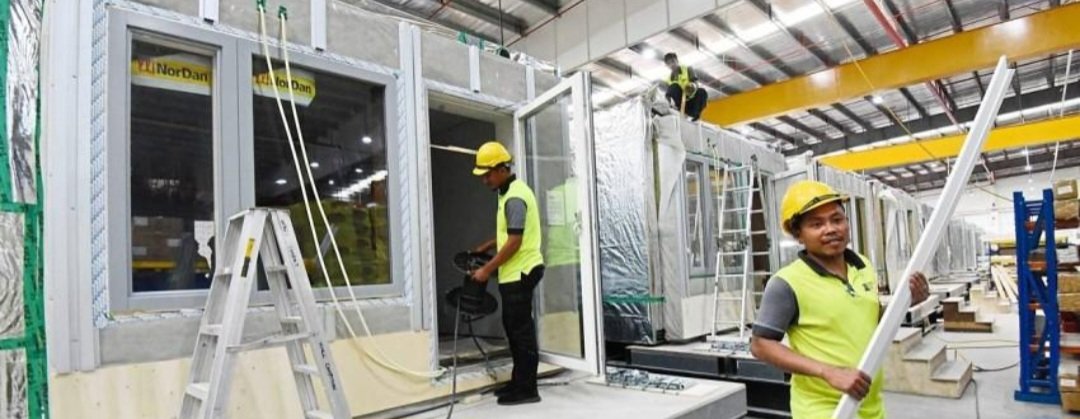
Chinese manufacturers of prefabricated homes are increasingly looking overseas for customers as a prolonged property downturn weighs on domestic demand, transforming factories that once produced temporary structures into exporters of stylish modular houses and luxury cabins.


The shift has become particularly visible in northern China, where manufacturers have moved from producing container-style accommodation and pandemic-era quarantine units to making expandable homes, capsule houses and high-end cabins for tourism and holiday properties.
One example is Hebei Shengtai Integrating Housing in Hengshui, which opened in 2022 as China’s property sector was entering a prolonged downturn. According to Reuters, the company has since redirected its focus towards overseas markets, where demand for factory-built accommodation has been growing.
The change reflects a wider transformation in China’s prefab housing industry. Chinese prefabricated building exports rose to $4.3 billion in 2025, from about $1.7 billion in 2020, with the United States, Southeast Asia, Australia and Western Europe among the major markets.

The products being exported are increasingly different from the basic container units traditionally associated with prefabricated housing.
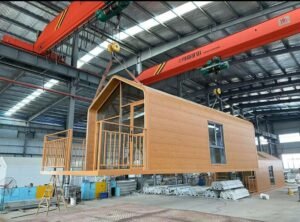
Manufacturers now offer compact homes, A-frame cabins, expandable houses and futuristic “capsule” structures designed for resorts, campsites, holiday accommodation and other tourism projects.
Industry suppliers also advertise factory-built units that can be transported as complete structures or shipped in components for assembly at the destination.
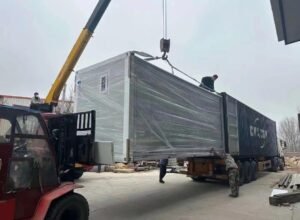
The appeal is partly linked to speed. Reuters reported that some Chinese factories can produce a home in roughly 15 to 25 days and arrange overseas delivery within about three months, although the overall timeline depends on the design, destination and installation requirements.
Chinese manufacturers also benefit from extensive domestic supply chains. Steel frames, insulation panels, doors, windows and other components can be sourced close to production centres, while major ports provide access to international shipping networks.
The overseas expansion comes as China’s domestic property market continues to struggle.
Reuters reported this week that Chinese new-home prices fell again in August, while property sales, investment and new construction remained under pressure during the first eight months of 2026.

For prefab manufacturers, that weakness has created an incentive to seek customers outside China.
But the export opportunity has also brought intense competition. Reuters reported that China has more than 1,000 prefab-home factories, with around 30 operating in Hengshui alone. Manufacturers have consequently been cutting prices to compete for orders.

At one factory, the price of a popular double-wing expandable house had reportedly fallen by more than half to below 20,000 yuan, leaving the producer with a profit of only about 1,000 to 2,000 yuan per unit, according to Reuters.
Some industry operators therefore fear that the same manufacturing capacity that makes Chinese homes competitive internationally could eventually become a problem if domestic overcapacity continues to push prices down.
The expansion is nevertheless creating a new outlet for China’s manufacturing base.
Chinese prefab companies are marketing their products for uses ranging from tourism resorts and holiday homes to worker accommodation, mining camps, offices and emergency housing. Some manufacturers now report that a large majority of their sales come from overseas customers.
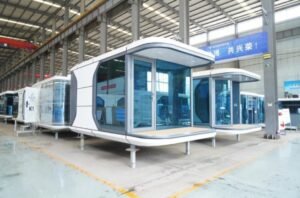
The development also illustrates how manufacturers affected by China’s property slowdown are adapting their production lines to new international markets.
For buyers, the attraction is relatively straightforward: factory production can reduce construction time, while China’s large supply chains and manufacturing capacity can help keep production costs competitive.
However, imported prefab homes still have to meet the building, electrical, environmental and planning regulations of the destination country. Shipping, foundations, installation and local approvals can also add substantially to the final cost.
For China’s manufacturers, the challenge will be maintaining overseas demand while surviving the fierce price competition at home. For now, the industry is betting that affordable, rapidly produced modular housing can find a growing market beyond China’s borders.