
International
Ecuadorean Court Sentences Former President Bucaram to Nine Years Over COVID Corruption Case

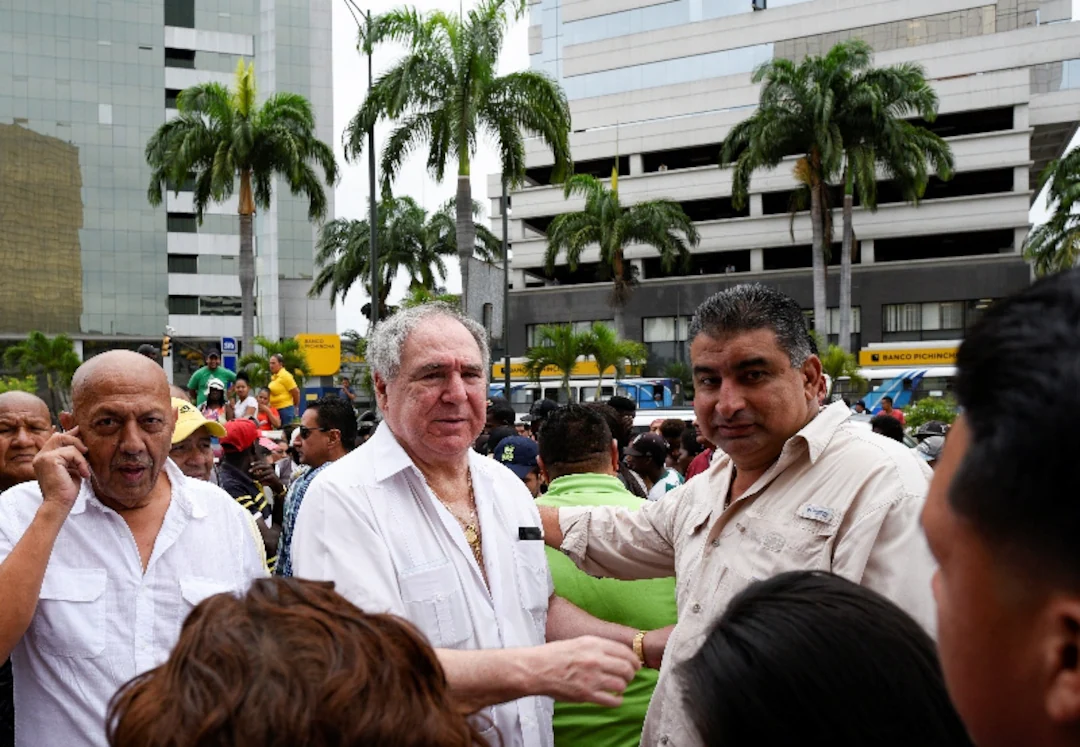
Former Ecuadorian President Abdalá Bucaram has been sentenced to nine years and four months in prison for his role in an organised-crime case involving the irregular sale of COVID-19 testing kits and other medical supplies during the coronavirus pandemic.
An Ecuadorian court convicted the 74-year-old former president and his son, Jacobo Bucaram, as collaborators in the scheme, which prosecutors said operated between March and August 2020, when Ecuador was experiencing one of the worst outbreaks of COVID-19 in Latin America.
The court’s ruling was delivered on Wednesday, September 9, after several previous attempts to hold the sentencing hearing had failed, partly because of Bucaram’s health problems.
The case centred on the alleged irregular negotiation and sale of approximately 21,000 rapid COVID-19 tests, along with other medical supplies, during the height of the pandemic.
Prosecutors accused Bucaram, his son and two other defendants of collaborating with a criminal structure that obtained financial benefits from the transactions.
Investigators alleged that the operation involved the movement of medical supplies with assistance from public officials.
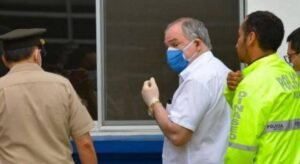
According to prosecutors, traffic officers provided security for foreigners transporting the supplies, at times allegedly posing as U.S. Drug Enforcement Administration agents or diplomats.
The case was formally opened in 2020 and eventually went to trial after years of delays.
Because Bucaram is 74 years old, he may be allowed to serve his sentence under house arrest under Ecuadorian law.
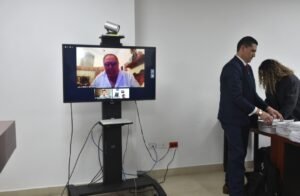
He attended the sentencing hearing by video link from a hospital in Guayaquil, where he had been receiving treatment for heart problems.
His health had previously caused several postponements of the proceedings. The court had also ordered authorities to ensure that he appeared to hear the judgment after multiple failed attempts to hold the hearing.
Bucaram’s lawyers did not immediately comment on the ruling, although he retains the right to appeal.
Bucaram’s son, Jacobo Bucaram, was also sentenced to nine years and four months after being found to have participated as a collaborator in the criminal organisation.
Two other defendants received different sentences.
Former Quito Metropolitan Transit Agency officer Leandro Berrones was sentenced to 13 years and four months in prison, while Israeli citizen Sheinman Oren received a reduced sentence of two years and eight months after cooperating with investigators.
The court also imposed financial penalties on the defendants.
Bucaram served as Ecuador’s president from August 1996 until February 1997, when he was removed from office after months of political turmoil.
The latest conviction represents the first criminal conviction against the former president after more than four decades in Ecuadorian politics, according to Ecuadorian media.
He had previously faced investigations involving other alleged offences, but those cases did not result in a criminal conviction.
His turbulent political career has included periods of exile and repeated legal battles.
The COVID-19 case, however, became one of the most prominent corruption investigations involving a former Ecuadorian head of state during the pandemic.
The case emerged at a time when Ecuador was struggling with overwhelmed hospitals, shortages of medical supplies and rapidly rising deaths from COVID-19.
The prosecution alleged that the defendants exploited the emergency to profit from the sale and movement of medical supplies.
One foreign associate connected to the case, identified as Shy D, was later murdered in prison in August 2020, shortly after providing testimony, according to prosecutors.
The murder added another disturbing dimension to an already complex investigation.
Despite the sentence, the case may not be over.
Bucaram’s defence can challenge the ruling through Ecuador’s judicial system, while questions surrounding how and where the former president will serve his sentence are also expected to be addressed.
For now, the conviction marks a major legal setback for one of Ecuador’s most controversial former presidents and closes a lengthy chapter in the investigation into the alleged misuse of the COVID-19 health emergency for financial gain.
The case also highlights the corruption risks that emerged in several countries during the pandemic, when governments were forced to procure medical equipment and supplies under extraordinary pressure and often with limited oversight.