
International
Iran Resumes Ballistic Missile Production Using Existing Components, WSJ Reports

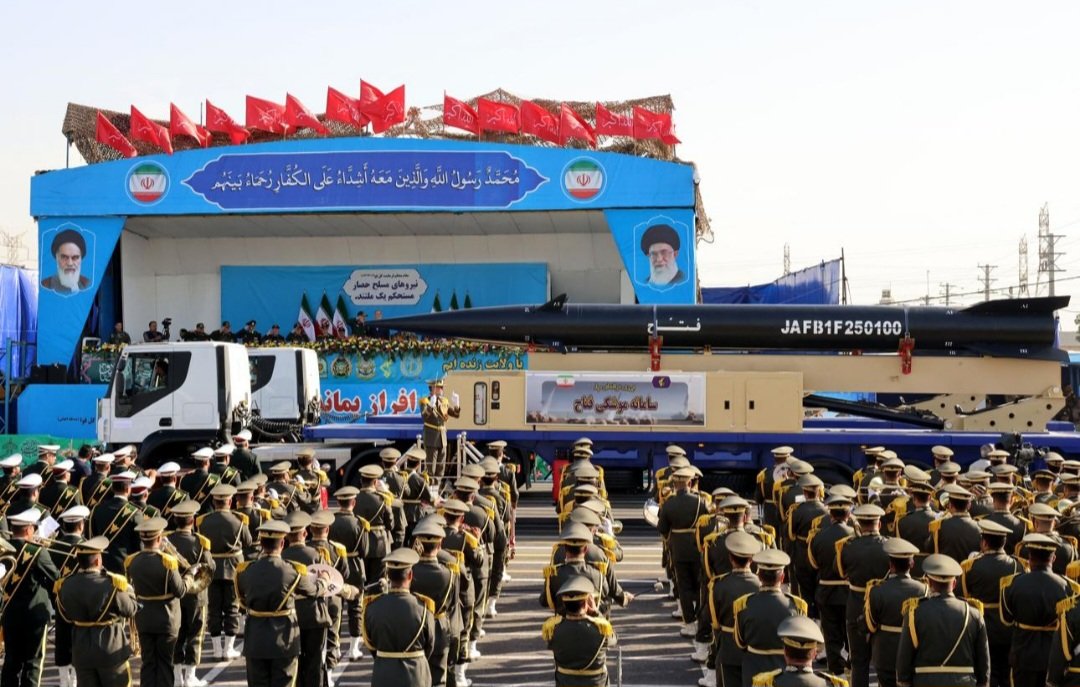
Iran has resumed producing ballistic missiles in limited quantities by assembling existing components stored before the war, according to a Wall Street Journal report cited by Reuters, suggesting that the country’s missile programme is recovering despite extensive damage from US and Israeli strikes.
The missiles are reportedly being assembled at underground facilities, with production levels significantly lower than before the conflict because of damage to manufacturing infrastructure and difficulties obtaining critical supplies.
The intelligence assessment is based on information from US and Middle Eastern sources, according to the reports. The details have not been independently verified publicly.
The development indicates that Iran has retained enough components to continue replenishing at least part of its missile arsenal, even after attacks targeted some of its most important weapons-production facilities.
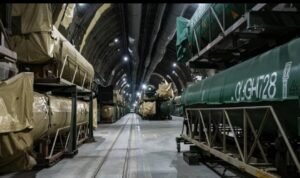
The Wall Street Journal reported that Iran is assembling both solid- and liquid-propellant missiles at underground locations, including the Khojir missile complex near Tehran. Iran is also building additional underground facilities that could make its production infrastructure more difficult to detect and destroy in future attacks.
Iran’s missile-production network suffered significant damage during the conflict. US and Israeli strikes targeted facilities involved in producing missile fuel, assembling weapons and manufacturing specialised components.
The Khojir, Parchin, Hakimiyeh and Shahroud complexes have all been identified as important parts of Iran’s ballistic-missile industrial network. Earlier satellite-imagery assessments indicatedi9 severe damage at several of the sites, with analysts initially warning that production of short- and medium-range ballistic missiles could be halted until damaged facilities were rebuilt.
However, analysts have increasingly pointed to the dispersed and partly underground nature of Iran’s missile infrastructure as a major factor in its ability to recover.
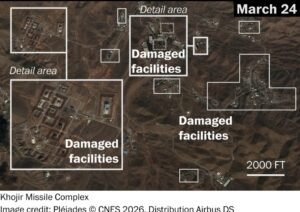
A recent analysis by the Hudson Institute noted that Iran’s missile-production system extends beyond individual factories and includes propellant production, rocket-motor integration, testing, storage and deployment infrastructure. Damage to one facility can therefore disrupt production without necessarily eliminating the broader industrial capability.
Iran’s use of underground facilities is not new, but their importance has grown as the country seeks to protect its missile programme from further airstrikes.
Iranian state media recently showed senior military officials visiting an underground weapons-production facility where industrial equipment associated with solid-fuel production was visible. The footage was presented as evidence that Tehran continues to maintain domestic weapons-production capabilities despite repeated attacks.
The WSJ report similarly indicates that Iran is expanding underground infrastructure, potentially allowing it to continue assembling weapons while reducing the vulnerability of production lines to air attacks.
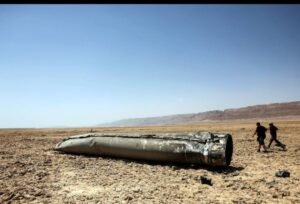
Despite the reported restart, Iran’s ability to manufacture missiles is not believed to have returned to pre-war levels.
The destruction of specialised machinery, production buildings and other infrastructure has created bottlenecks. Analysts say rebuilding the physical structures is only part of the challenge because Iran also needs specialised equipment, chemical inputs, skilled personnel and quality-control systems to produce missiles at scale.
Iran’s reliance on existing components also means that its current production rate could remain constrained until it restores a broader supply chain.
Still, the ability to assemble additional missiles from stockpiled parts could allow Tehran to maintain its capacity for continued strikes while it works to rebuild its industrial base.
The reported missile production comes amid renewed military exchanges between Iran and the United States and its regional allies.
Iran has continued launching missiles during the conflict, including attacks against US military positions in the Middle East. The country has also recently been accused of targeting US naval vessels in and around the Strait of Hormuz, while Iran-backed Houthi forces have escalated activity around the Red Sea.
The continued production of ballistic missiles could therefore complicate efforts by Washington and its allies to reduce Iran’s ability to sustain long-range attacks.
For the United States and Israel, the development could also challenge earlier assessments that military strikes had substantially degraded Iran’s missile capabilities.
Although Iran’s production remains limited compared with its pre-war capacity, the reported recovery demonstrates that destroying individual missile factories may not be enough to permanently eliminate Tehran’s ability to rebuild its arsenal.
The development is likely to increase concerns over the duration of the conflict and the possibility of further escalation across the Middle East, particularly as Iran continues to use its missile programme as a central element of its military strategy.