
International
Macron Faces Growing Pressure as Hundreds of Thousands Rally Across France

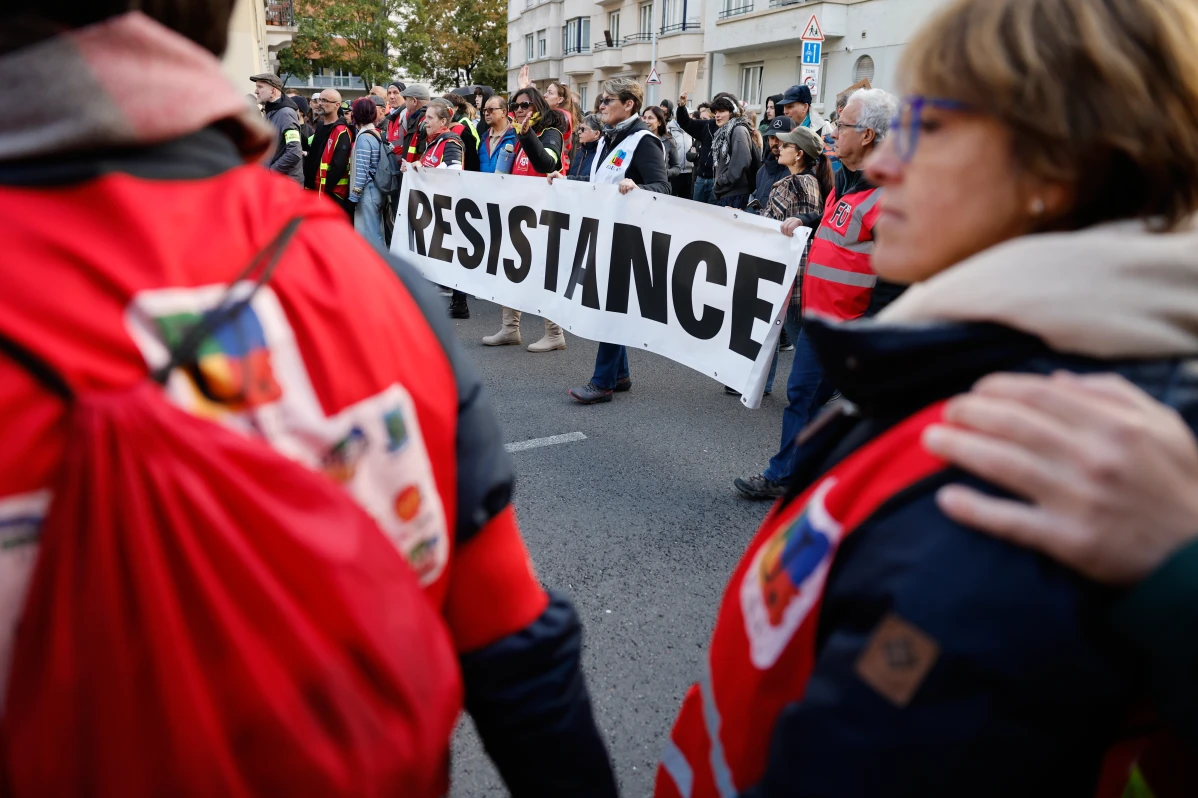
More than 400,000 people took to the streets across France on Saturday to protest rising living costs, concerns over school funding and deteriorating public services, in a fresh challenge to President Emmanuel Macron’s government. Clashes were reported in Paris and several other cities as authorities deployed tens of thousands of security personnel to prevent a repeat of the previous weekend’s violence.
France’s Interior Ministry estimated that 410,000 people participated in demonstrations nationwide, while the CGT trade union put the turnout at nearly 800,000. In Paris, police counted approximately 110,000 demonstrators, compared with the union’s estimate of 250,000.
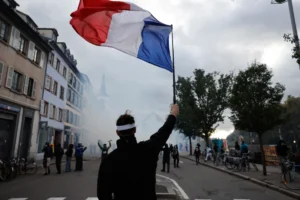
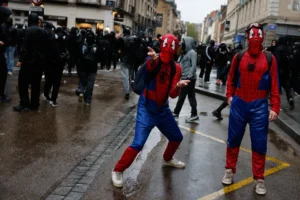
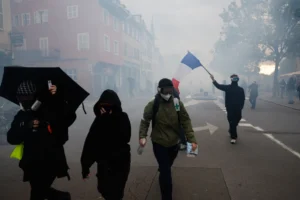
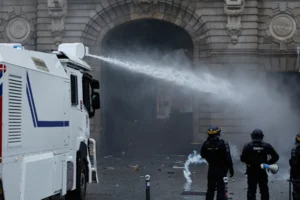
The Paris march began largely peacefully but clashes broke out around the end of the demonstration. Police used tear gas, while reports from other cities described further confrontations between security forces and demonstrators. Tear gas was reported in Lyon, Clermont-Ferrand and Strasbourg, while water cannon were used in Nice and Nantes. Clashes were also reported in Marseille and other urban centres.
Authorities said 64 people had been arrested in connection with the Paris demonstration, with 40 placed in police custody, according to reporting by the Associated Press. Police had also carried out thousands of identity checks as part of heightened security operations.
The demonstrations have grown from student-led protests over staffing shortages and conditions in schools into a broader movement involving teachers, workers, trade unions and other groups. Protesters are demanding improved school facilities, more teachers, better wages and pensions, and measures to address the rising cost of living.
The government deployed up to 70,000 police officers nationwide, supported by helicopters, armoured vehicles and water cannon. Security concerns also prompted the closure of major Paris cultural institutions, including the Louvre, the Musée d’Orsay, the Picasso Museum and the Grand Palais.
Tensions have increased following violent demonstrations the previous weekend, when rioting and looting damaged businesses and public buildings in several locations. Macron has blamed what he described as radical far-left groups and vandals for the unrest, while his government has imposed restrictions on demonstrations in parts of several cities.
The restrictions have drawn criticism from trade unions and protest organisers, who argue that limits on where people can march undermine the right to demonstrate. Authorities say the measures are necessary to protect residents, businesses and public property.
The protests present a further political challenge for Macron as France approaches its next presidential election in 2027. Opposition parties have sought to capitalise on public frustration over living costs and public services, while the government faces pressure to maintain order without escalating tensions with demonstrators.
Union representatives and protest groups have called for further mobilisation, suggesting that Saturday’s demonstrations may not be the end of the unrest.
The competing estimates of crowd size reflect the continuing disagreement between authorities and organisers over the scale of public opposition. However, both figures point to a substantial nationwide mobilisation driven by economic concerns, demands for better public services and growing discontent with the government’s response.