
International
Albania Protests: Police Clash With Students Demanding Prime Minister’s Resignation

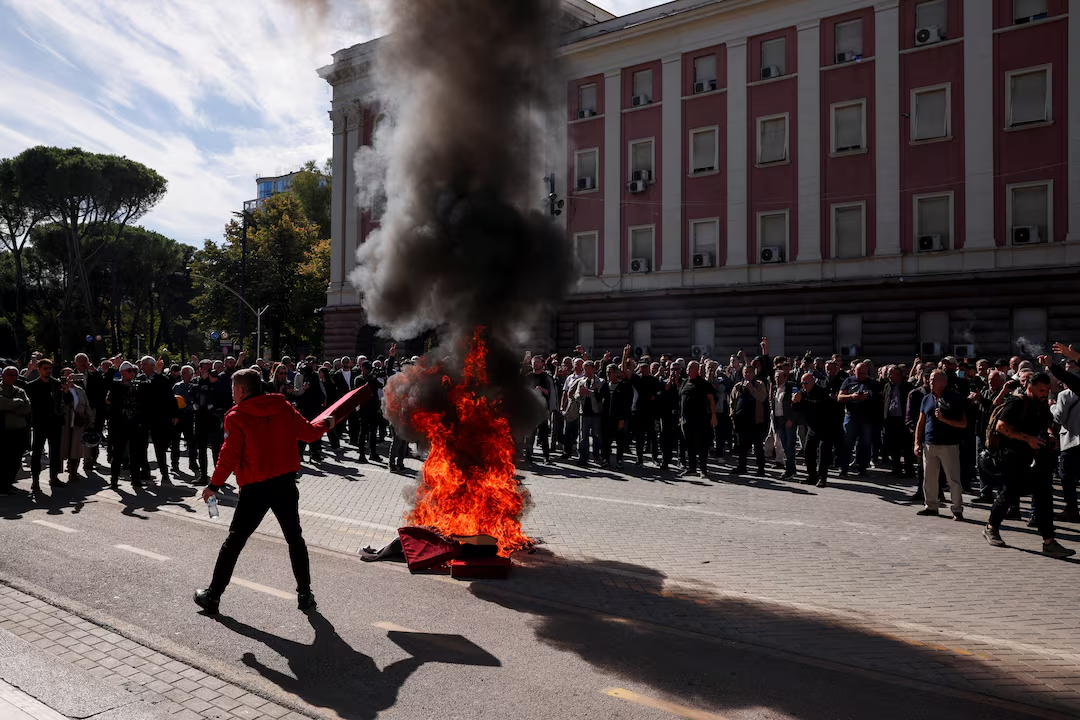
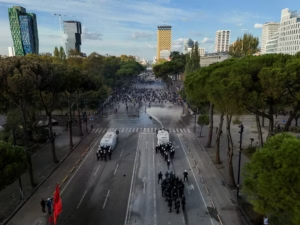
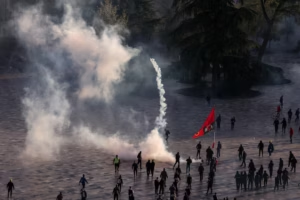
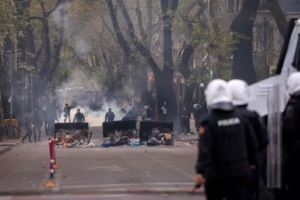
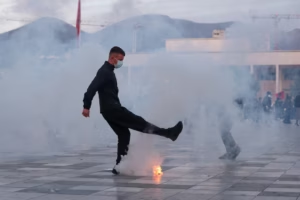
Albanian riot police fired tear gas, used water cannon and reportedly deployed rubber bullets on Saturday as student-led anti-government demonstrations escalated into violent clashes in the capital, Tirana.
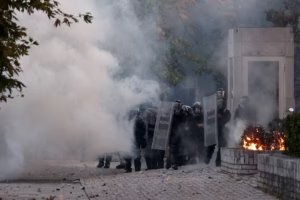
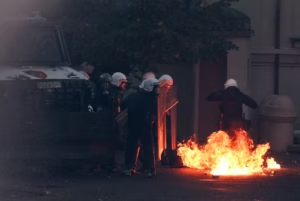
According to Reuters, demonstrators threw rocks at police officers and set fire to the entrance of the Agriculture Ministry as security forces moved to disperse the crowds. The protesters later scattered to different parts of the city following confrontations near the Education Ministry.
The demonstrations, which have spread to other Albanian cities this month, are being driven by public anger over alleged government corruption, unemployment, rising education costs and poor standards in the education system.
Students have demanded lower university tuition fees, increased government investment in education, better financial support and improved employment prospects after graduation. Their demands have also become part of a wider movement calling for the resignation of Prime Minister Edi Rama, who has been in power since 2013 and secured a fourth term following last year’s election.
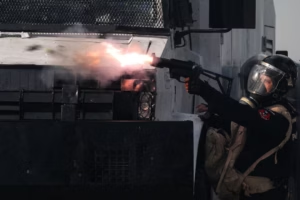
The latest unrest follows particularly violent demonstrations earlier this month, when protesters attacked government buildings, smashed shopfronts and set fire to a government ministry and two bank branches in Tirana. Police responded with tear gas and water cannon, while authorities reported injuries and arrests during the confrontations.
The protests have also been fuelled by opposition to a proposed luxury coastal development linked to an investment firm founded by Jared Kushner, the son-in-law of United States President Donald Trump. The project became a focus of earlier demonstrations over transparency, alleged political favouritism and concerns about the influence of wealthy investors.
Although the student movement has focused on education and opportunities for young people, its demands have increasingly merged with broader public frustration over living costs, housing, public services and allegations of corruption involving government figures.
Rama has condemned the violence, arguing that legitimate public grievances are being exploited by groups seeking to destabilise the country. His government has maintained that attacks on public institutions, police officers and private property cannot be justified by the right to protest.
However, the response by security forces has also attracted criticism. The European Union delegation in Albania previously expressed concern over the escalation of violence and allegations of excessive police force against demonstrators and journalists, calling for de-escalation and respect for fundamental rights.
The continuing unrest presents a significant challenge for Rama’s government as Albania pursues its ambition to join the European Union. The protests have raised questions about public confidence in state institutions, the treatment of demonstrators and the government’s ability to address concerns over corruption and economic opportunity.
With student groups and other protesters continuing to demand political change, it remains uncertain whether the government will respond with concessions or whether further demonstrations will lead to additional confrontations.