
International
177 More Flights Cancelled as Britain Struggles to Recover From Air Traffic Failure

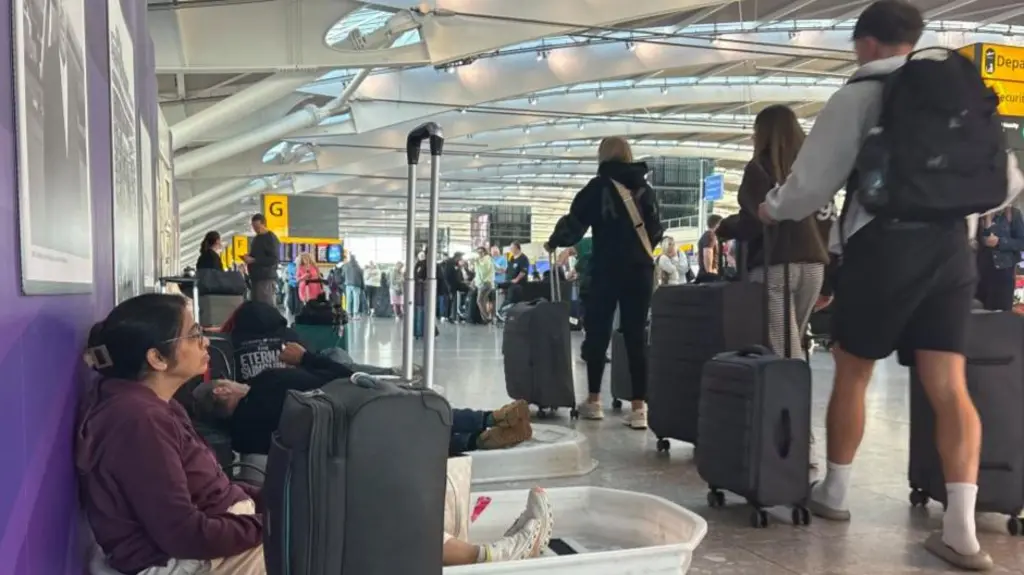
Britain’s aviation crisis entered a second day on Wednesday as more than 150 additional flights were cancelled following a major technical failure in the country’s air traffic control system, leaving thousands of passengers facing further delays and uncertainty.
Flight-tracking service FlightRadar24 reported that 177 flights scheduled for Wednesday had been cancelled, with almost all of the latest cancellations affecting London Heathrow, Britain’s busiest airport. The cancellations came after about 1,300 flights were scrapped on Tuesday, taking the disruption across two days to well over 1,400 flights by the Wednesday figures.
The problem originated within the flight data processing system operated by National Air Traffic Services (NATS), Britain’s air traffic control provider.
NATS said the technical problem had been resolved, but warned that restoring normal operations would take time because aircraft, crews and passengers had been left out of position across the aviation network.
Heathrow has been among the airports hardest hit by the disruption, with passengers reporting long waits, cancelled services and uncertainty over when they would be able to continue their journeys.
Other major airports, including Gatwick, Manchester and Stansted, were also affected by the initial system failure.
Airlines have been forced to cancel, delay and reroute services as they attempt to reposition aircraft and crews displaced by Tuesday’s shutdown.

Ryanair said tens of thousands of its passengers had been affected, while British Airways and other carriers also reported widespread disruption.
The crisis has put NATS chief executive Martin Rolfe under intense scrutiny.
Rolfe said the company had accepted responsibility for the disruption and promised a thorough investigation into what caused the failure.
He also said investigators had ruled out a cyberattack as the cause of the incident.
“We Won’t believe it was a cyberattack,” Rolfe told the BBC, while stressing that the investigation into the precise cause was still ongoing.
The UK’s Transport Secretary, Heidi Alexander, met with Rolfe as pressure mounted for an explanation of how a technical failure could cause such widespread disruption.
The government has given NATS one week to investigate and report on the failure, while the Civil Aviation Authority is also expected to conduct an independent review.
The disruption has triggered unusually strong criticism from airlines.
Ryanair has called for Rolfe to resign, while Wizz Air has demanded urgent reforms to the country’s air traffic control system.
Ryanair said around 150,000 of its passengers had been affected by delays of up to eight hours and that it had cancelled more than 200 flights during the wider disruption.
The latest incident has also revived concerns about the resilience of Britain’s aviation infrastructure, particularly because NATS has suffered other significant technical failures in recent years.
Reuters reported that the government is now demanding answers about whether sufficient contingency arrangements are in place to prevent another failure from bringing large parts of the country’s aviation network to a standstill.
Although flights have resumed, airports have warned passengers not to expect an immediate return to normality.
The knock-on effects of the outage mean airlines still have to reposition aircraft and crews, while thousands of passengers need to be rebooked.
Heathrow advised travellers to check their flight status before travelling to the airport, warning that disruption could continue even after the underlying NATS technical problem had been fixed.
The incident has become a major test for Britain’s aviation authorities, with the government now under pressure to ensure that the country’s air traffic control infrastructure can withstand technical failures without triggering another nationwide travel crisis.