Foreign
Record Diesel Prices Hit U.S. Farmers Hard, Stoking Fears of Higher Grocery Bills

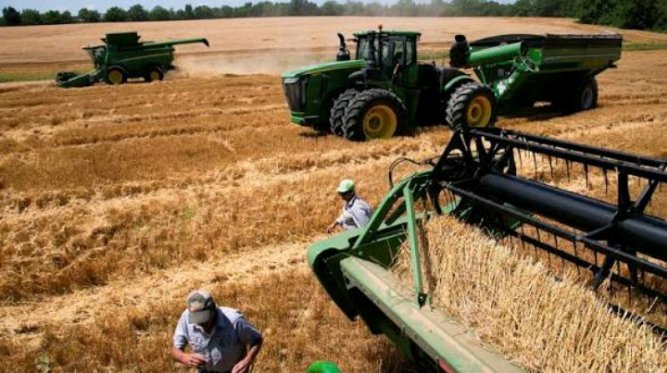
American farmers are grappling with record-high diesel prices at the peak of harvest season, a squeeze that economists warn could soon translate into higher prices at the grocery store.
The average U.S. diesel price hit a new record of $6.29 per gallon this week, up 68% from $3.74 a year ago, according to Energy Information Administration data cited by Reuters.
In northeast Missouri, farmer Addie Yoder runs two combines, three semi-trucks and several tractors from mid-September to late October.
With just one combine requiring 300 gallons of fuel, she said her only option is to curb other expenses.
In southeast South Dakota, farmer Drew Peterson expects to spend as much as $1,500 per day to fuel just one of his combines this season, double last year’s costs.
“You can’t just say, well, diesel is expensive, I’m not going to harvest,” Peterson said. “You’ve just got to make it work in your budget.”
The pain extends beyond the Midwest. Wayne Gularte, who grows vegetables on roughly 600 acres near Gonzales, California, said his fuel costs have risen about 40%, from roughly $5 a gallon to $7 a gallon.
To save money, he has put older gasoline-powered tractors from the 1950s back into service and parked one of his diesel pickups. “The only money we can make is the money we save,” Gularte said.
The price spike stems from global fuel supply disruptions linked to the U.S.-Israeli war on Iran and Ukrainian attacks on Russian refineries.
Higher diesel prices raise costs at every step of the food supply chain, from harvesting on farms to freight delivery that carries food to grocery stores, said David Ortega, an economist at Michigan State University. “The majority of our food moves on trucks and those trucks use diesel,” Ortega said.
Consumer food prices rose 2.7% year-on-year in August, according to the latest Consumer Price Index.
Ortega noted that the effects could take time to appear because retailers may absorb short-term increases, but items most vulnerable to hikes include produce, dairy and meat that require fuel-intensive refrigerated trucking.
Farm fuel costs are up $11 per acre from last year for corn and $7 per acre for soybeans, according to Michael Langemeier, an economist at Purdue University.
University of Illinois agricultural economist Nick Paulson warned that high fuel prices could raise costs next year for seed and fertilizer.
“The concern is that $6-plus per gallon diesel is going to start to put some inflationary pressures on everything else, and even to some of that better profitability potential,” Paulson said.
U.S. Senator Roger Marshall, a Republican from Kansas, asked Agriculture Secretary Brooke Rollins in a September 11 letter to provide temporary relief to farmers as they “absorb substantial unplanned fuel costs during one of the most diesel-intensive periods of the year.” A USDA spokesperson said the agency is “not leaving any stone unturned” on high diesel prices.
Jon Paul Driver, a hay farmer near Spokane, Washington, and second vice president of the Washington Farm Bureau, said many farmers have already tightened their belts, leaving little margin. “Any increase in fuel right now is additional debt for the farm,” Driver said.