
Sports
US Senate Advances Landmark College Sports Bill to Regulate Athlete Pay and Transfers

The US Senate has passed a sweeping bipartisan bill that would establish nationwide rules for college sports, including limits on athlete payments, restrictions on transfers and new protections for student-athletes.
The Protect College Sports Act passed the Senate 77-22 on September 28, marking the most significant congressional attempt so far to impose a federal framework on an industry transformed by athlete compensation, name, image and likeness (NIL) deals and frequent movement between schools.

The legislation was negotiated by Republican Senator Ted Cruz of Texas and Democratic Senator Maria Cantwell of Washington. Supporters say it would provide stability after years of court battles and uncertainty over the NCAA’s authority to regulate college athletics.

The bill would give the NCAA and its member institutions limited protection from antitrust lawsuits when enforcing rules covering athlete eligibility and transfers. It would also codify rules governing compensation and establish a national framework intended to replace the patchwork of state laws and court decisions that currently shape college sports.
One of the most significant provisions concerns how much schools could directly pay athletes. The legislation would preserve a $21.5 million revenue-sharing limit established following a 2025 antitrust settlement, while allowing schools to provide up to another $27.5 million through a retention fund. That would bring the potential direct compensation level to about $49 million for some schools.

The measure would also impose new restrictions on transfers. Athletes would generally be permitted one transfer between schools without having to sit out a season, while eligibility would be limited to five years under the proposed framework, subject to specified exceptions.

The legislation also addresses the movement of coaches and schools between conferences. Coaches would face restrictions on leaving their teams during the season, while schools moving between major conferences would have to spend three academic years as independents under the Senate version.
Conference membership would also be capped at 20 schools, a provision aimed at limiting further expansion of so-called super-conferences.
Beyond compensation and transfers, the bill contains provisions on athlete welfare. It would provide health and safety protections, scholarship guarantees and restrictions on agent fees, including a proposed 5% ceiling on compensation for agents handling NIL deals. It also seeks to preserve opportunities in women’s and Olympic sports by requiring schools to maintain certain scholarships and roster positions.
Supporters argue that the legislation is needed because the rapid growth of athlete payments and transfers has created financial and regulatory uncertainty for universities and conferences. Senator Cruz described the existing system as unsustainable, while Cantwell has argued that Congress needs to establish national rules rather than leave schools operating under differing legal standards.
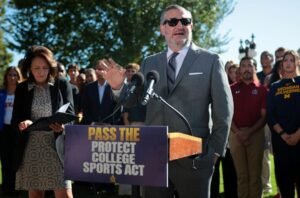
The bill has also faced opposition from lawmakers and athlete advocates who argue that it gives the NCAA and other powerful institutions greater control over college sports while placing limits on athletes’ ability to negotiate.
Senator Chris Murphy of Connecticut was among the critics, arguing that the legislation does not adequately address the financial power of colleges, conferences and coaches. Other opponents have raised concerns about the lack of collective bargaining rights and the bill’s treatment of athletes, particularly Black athletes who are heavily represented in major revenue-generating college sports.
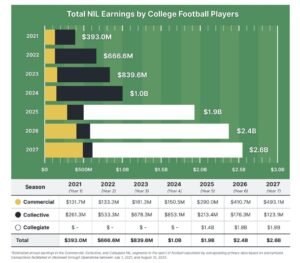
The debate comes after years of legal challenges that weakened the NCAA’s traditional restrictions on athlete compensation and transfers. A 2025 court settlement allowing colleges to directly share revenue with athletes accelerated the shift toward a system in which athletes can receive substantial payments while retaining their college eligibility.
The legislation now moves to the House of Representatives, which is currently in recess and is not expected to return until after the November elections. Its future remains uncertain, and significant changes in the House could require the Senate to consider the legislation again. If Congress does not approve the measure before the end of the year, lawmakers would have to begin the process again in the next Congress.
The Senate vote therefore represents a major step toward a national framework for college athletics, but it does not yet change the rules governing athletes. The legislation must clear the House and ultimately be signed into law before its proposed restrictions and protections take effect.