
Opinion
Market Forces or Economic Inequality? The Nigerian Oil Pricing Paradox

By Nick Agule
Zaki-Ibiam is one of Benue State’s largest yam markets. Yams are locally produced, and low purchasing power constrains demand. The interaction of supply and demand determines the local price of a tuber of yam at 500 naira.
Transport those yams to Lagos, and transportation costs, traders’ margins, and Lagos’s higher purchasing power influence the final price to 2,500 naira. That is how market forces work.

Now, let us introduce oil pricing into this analogy.
Suddenly, a major incident disrupts yam supplies to Lagos, causing prices there to surge to 5,000 naira per tuber.
Immediately TV screens begin displaying yams at 5,000 naira per tuber in the Lagos market, calls are made to Zaki-Ibiam traders to hike their prices of yams to 5,000 naira. The LG council insists that its residents must now pay 5,000 naira per tuber because that is the price in Lagos?
Is that what we call market forces? Which market forces?

A supply disruption in one market does not automatically justify imposing the same price on consumers in another market, irrespective of local production costs, purchasing power, or market conditions.
Yet, when it comes to crude oil, Nigerians are told that they must pay international prices, even when the resource is produced at home.
If the justification is that crude oil is globally traded, then let us interrogate the economics. International prices reflect global supply and demand, but domestic pricing also involves production costs, transportation, refining, taxes, exchange rates, and the structure of the domestic market.
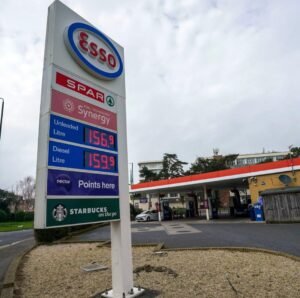
Why should global price movements automatically dictate domestic prices without a serious examination of these factors? Why is oil treated differently from other commodities?
And consider the profound inequality this creates.
A Nigerian earning the equivalent of £35 a month on minimum wage is expected to buy petroleum products priced against international benchmarks, while a UK minimum-wage earner earns £12.71 an hour under the figures cited here.

The UK worker earns in approximately 3 hours what the Nigerian worker earns in an entire month!
How can two consumers with such radically different purchasing power be subjected to the same global price benchmark without confronting the implications for affordability and economic welfare?
Nobody is arguing that economics should be suspended. The question is whether the principle of market pricing is being applied consistently, transparently, and with due regard to the realities of the domestic economy.
When government policy compels domestic consumers to absorb international price shocks, while their incomes remain far below international levels, we must ask whether this is simply the operation of market forces or a policy choice that transfers the burden of global market conditions disproportionately onto the domestic population.
This begins to resemble command economics dressed in the language of market forces.
The fundamental question remains: WHICH MARKET FORCES?
Conclusion:
Nigerian policymakers must develop an oil-pricing framework that balances global market realities with domestic production costs and citizens’ purchasing power. Our natural resources should deliver domestic benefits, not merely expose Nigerians to global price shocks.

The events in the Strait of Hormuz must be a catalyst for a paradigm shift in global oil pricing. It is time to challenge the assumption that oil must command the same globally benchmarked price regardless of where it is produced, the cost of production, or the purchasing power of consumers. We need a new pricing framework that recognises national economic realities and ensures that resource-producing countries and their citizens derive meaningful benefits from their natural resources.
_Nick Agule (nick.agule@yahoo.co.uk) is an energy expert._