General News
State Police: 24 States Approve Constitutional Amendment, Tinubu’s Assent Next


Nigeria has moved closer to establishing state police after 24 State Houses of Assembly approved a constitutional amendment paving the way for a decentralised policing system.
The Presidential Working Group on the National Policing Bill announced the development on Friday, saying the approvals had met the constitutional threshold required to advance the amendment.
The group, chaired by President Bola Tinubu’s Chief of Staff, Femi Gbajabiamila, said the Constitution (Sixth Alteration) Bill, 2026, had secured the endorsement of two thirds of the 36 state legislatures.
The amendment seeks to move policing from the Exclusive Legislative List to the Concurrent Legislative List, creating a constitutional basis for states to establish their own police formations alongside the Nigeria Police Force.
Under the proposed arrangement, federal and state police institutions would operate within defined constitutional and legal frameworks.

In a statement, the working group commended the state legislatures for approving the amendment and acknowledged the National Assembly for passing the bill through both chambers.
The group said the amendment could now be returned to the National Assembly for onward transmission to President Tinubu for assent.
“In line with Section 9 of the Constitution, the amendment can now be returned to the National Assembly for transmission to Mr President for assent,” the statement said.

However, the proposed state policing system is not yet operational, as the amendment must complete the remaining constitutional process before taking effect.
The working group said preparations for the accompanying National Policing Bill, 2026, and related legislative proposals were also progressing.
According to the statement, the Federal Ministry of Justice is reviewing and validating the draft bills and is expected to return them to the working group on or before October 30, 2026.
The group will subsequently conduct a final review before presenting the legislative package to the President for further consideration.
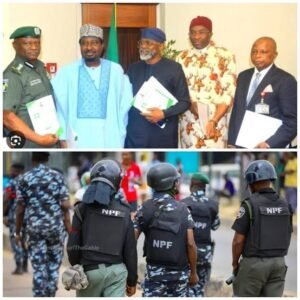
The proposed legislation is expected to provide the operational and legal framework for the planned dual policing system.
The working group urged political leaders, security agencies and other stakeholders to support an orderly transition, stressing the importance of establishing a policing structure capable of addressing Nigeria’s security challenges.
The development represents a significant step in the ongoing debate over policing reform, particularly calls for state-level security arrangements to complement the existing federal structure.