Politics
NDC Tackles Shettima Over Obi’s Statistics, Says Nigerians Worse Off Under Tinubu


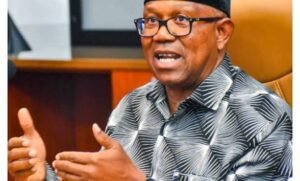
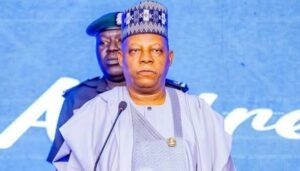
The Nigeria Democratic Congress (NDC) has criticised Vice-President Kashim Shettima and the All Progressives Congress (APC)-led Federal Government over their criticism of its presidential candidate, Peter Obi, for citing statistics on Nigeria’s economic and social conditions.
The party accused the government of attacking Obi instead of addressing the economic realities highlighted by the former Anambra State governor, insisting that statistical evidence should form the basis of public policy and governance.
In a statement issued on Thursday, November 12, 2026, and signed by its National Campaign Council spokesperson, Dr Chiogo Constance Ikokwu, the NDC described the government’s response to Obi’s use of statistics as troubling and revealing.
The party argued that statistics were not political weapons or insults but essential tools for measuring progress, exposing failures and guiding public policy.
It challenged the Federal Government to publish credible data, explain its methodology and provide evidence to counter Obi’s claims rather than resorting to personal attacks.
To illustrate the country’s economic challenges, the NDC compared the prices of essential commodities in May 2023 with their reported costs in 2026.
According to the party, petrol, which sold for an average of N238.11 per litre in May 2023, now costs between N1,300 and N1,435 per litre.
It also claimed that the price of a 50kg bag of rice had increased from between N35,000 and N40,000 in mid-2023 to between N50,000 and N90,000 or more in 2026, depending on the brand and market.
The statement further put the price of a 50kg bag of cement at between N10,500 and N15,000, compared with N4,010 to N5,300 in 2023.
Similarly, it said a loaf of bread that previously sold for between N500 and N700 now costs between N1,200 and N2,000, while urban house rents in major cities, including Lagos and Abuja, had increased by an estimated 80 to 120 per cent.
The opposition party also cited Bangladesh as an example of a developing country that had recorded significant progress in poverty reduction through deliberate economic policies.
It said Bangladesh lifted approximately 34 million people out of poverty between 2010 and 2022, reducing extreme poverty from 12.2 per cent to 5.6 per cent.
The NDC attributed the country’s progress to five major pillars: agricultural growth, export-oriented manufacturing, microfinance and non-governmental organisations, social safety nets, and investment in human capital and infrastructure.
It argued that Nigeria could achieve similar results by studying and adapting successful development strategies implemented in countries such as Bangladesh, Vietnam, Rwanda, Morocco and India.
The party, however, accused the APC administration of lacking the willingness and capacity to learn from other developing economies, alleging that its focus was more on political control and access to national resources than improving citizens’ welfare.
The NDC further claimed that Nigeria had a poverty rate of about 63 per cent, with more than 140 million people experiencing multidimensional poverty.

It also referenced a recent United Nations Development Programme (UNDP) report, which it said indicated that previous gains in poverty reduction in Nigeria had been reversed.
Describing the country’s poverty situation as unacceptable, the party argued that the government should take responsibility for the deteriorating living conditions.
“In a more organised society, the APC government should have resigned,” the statement said.
With the 2027 general election approaching, the NDC challenged the Tinubu administration to respond to Obi’s economic statistics with verifiable evidence rather than political attacks.
It also urged Nigerians to assess the government’s performance by examining whether living conditions, education, business opportunities, security and poverty levels had improved since the administration assumed office.
The party maintained that Nigeria needed leaders with the humility to learn, the competence to implement effective policies and the courage to be held accountable.
It said Obi’s call for evidence-based governance was an invitation to Nigerians to examine available data, compare development outcomes and demand better leadership.
The statement concluded with the assurance that a productive and prosperous Nigeria was achievable, declaring: “Nigeria will be OK.”