
Climate Change
World Leaders Demand Urgent Climate Action as UN Talks Expose Growing Gap Between Promises and Reality

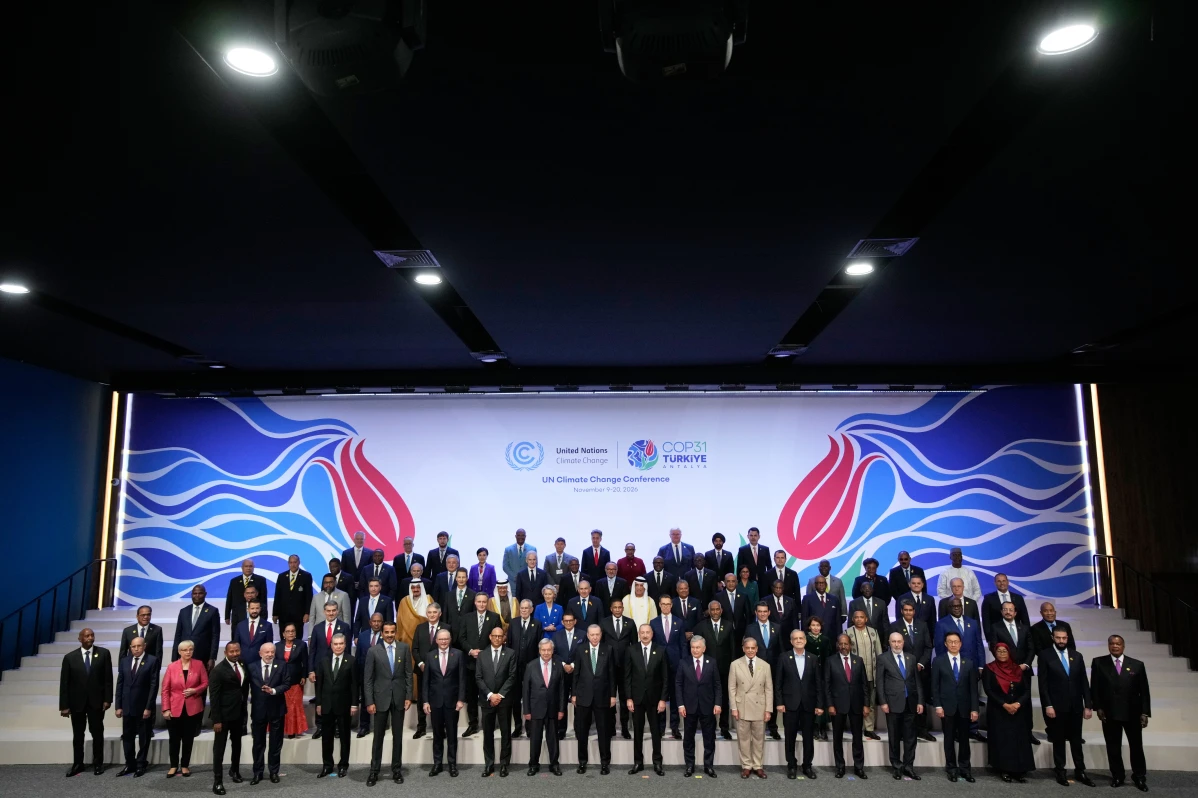
World leaders have called for stronger and faster international action against climate change as the United Nations Climate Conference, COP31, opened in Antalya, Turkey, amid growing concerns that governments are failing to respond adequately to the worsening global crisis.
The leaders warned that rising temperatures, devastating floods, extreme heatwaves and other climate-related disasters are increasingly threatening lives, livelihoods and vulnerable communities, particularly in developing countries.
Speaking at the conference on Wednesday, November 11, United Nations Secretary-General António Guterres urged governments to accelerate the transition away from fossil fuels, strengthen climate adaptation measures and increase financial assistance to poorer nations bearing the greatest consequences of global warming.
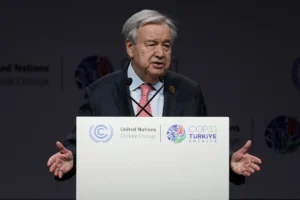
Guterres warned that the climate crisis was progressing faster than the international response, insisting that governments must move beyond repeated promises and take decisive action.
He also called for greater international cooperation, arguing that climate change cannot be addressed effectively without countries working together.
Barbados Prime Minister Mia Mottley also expressed concern over the inadequate response to global warming, saying the world had failed to make sufficient progress towards limiting temperature increases to 1.5 degrees Celsius above pre-industrial levels.
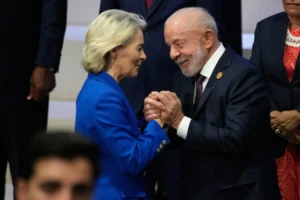
She described the expected overshoot of the target as a debt being passed on to future generations, warning that every additional fraction of a degree could destroy coral reefs, damage agricultural production and threaten entire communities.
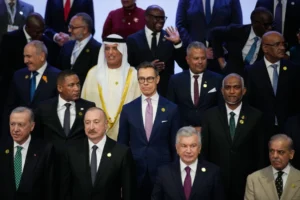
President of Palau, Surangel Whipps Jr., delivered another stark warning, comparing the destruction caused by climate change to an ongoing war against vulnerable nations that contributed little to the problem.
He said rising sea levels and environmental disasters were progressively threatening homes and livelihoods in island communities.
The conference comes after a year marked by devastating climate-related disasters, including deadly flooding and extreme heat in several parts of the world.
According to the International Organisation for Migration, climate change displaced nearly 30 million people in 2025, highlighting the growing humanitarian consequences of environmental degradation.
However, the absence of leaders from some of the world’s largest polluting nations has raised questions about the level of political commitment behind the negotiations.
The United States, China and India, which collectively account for more than half of global carbon dioxide emissions, did not send their top national leaders to the summit.
Climate campaigners criticised the absence, arguing that the countries with the greatest influence over global emissions should be taking a leading role in addressing the crisis.
A new climate performance assessment published by Germanwatch and the NewClimate Institute also highlighted a widening gap between countries’ climate commitments and their actual efforts to reduce emissions.
Turkey and Australia were among the countries identified as poor performers in cutting planet-warming emissions.
The talks are also taking place against the backdrop of geopolitical tensions and rising energy costs, which have complicated discussions about fossil fuel dependence and the transition to renewable energy.
Negotiators from nearly 200 countries are expected to discuss practical measures to accelerate electrification, reduce greenhouse gas emissions, improve climate resilience and strengthen financial support for vulnerable nations.
The two-week conference is expected to run until November 20, with international attention focused on whether governments can translate their climate commitments into measurable action.
As the negotiations continue, the central challenge remains whether world leaders can move beyond diplomatic assurances and deliver the urgent response scientists say is necessary to limit further environmental damage.