
International
Republicans Question Trump’s $50 Billion Plan To Overhaul US Air Traffic Control

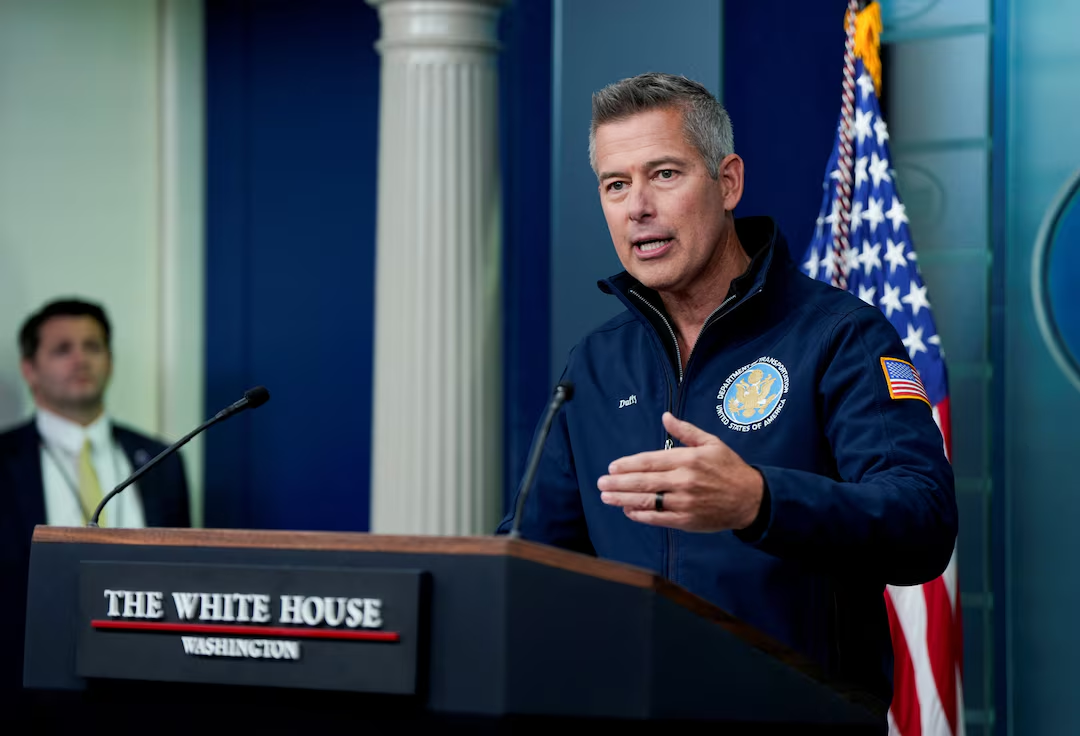
The administration of US President Donald Trump is facing growing resistance from Republican lawmakers over its request for $50 billion to modernise the country’s aviation infrastructure and air traffic control system.
Transportation Secretary Sean Duffy is leading the push for the additional funding, arguing that America’s ageing aviation technology requires urgent investment following a nationwide disruption that grounded flights and caused widespread travel chaos.

The funding request gained momentum after a nationwide Federal Aviation Administration (FAA) ground stop on Friday, November 13, triggered more than 18,000 flight cancellations and disrupted thousands of travellers.
Duffy has argued that the incident exposed serious weaknesses in the country’s ageing air traffic control infrastructure, insisting that a comprehensive upgrade is necessary to prevent similar disruptions and improve aviation safety.
However, the proposal has encountered resistance from members of Trump’s own Republican Party, who are questioning the sudden increase in the funding request and demanding a detailed explanation of how the money would be spent.
Congress had already approved $12.5 billion for air traffic control modernisation under legislation passed in 2025. However, lawmakers say a significant portion of that funding remains unspent.
Senate Majority Leader John Thune said approximately $8 billion from the previous allocation was still available, raising questions about why the administration was seeking another massive financial commitment.
Republican Senator Rick Scott of Florida also expressed reservations, arguing that the administration should provide a clear budget, implementation timeline and breakdown of the proposed expenditure before lawmakers approve additional funding.
Senator John Kennedy of Louisiana said he was willing to support investment in aviation infrastructure but wanted the administration to explain the technical problems and proposed solutions in language ordinary Americans could understand.
Senator Ted Cruz, chairman of the Senate Commerce, Science and Transportation Committee, also questioned whether the entire $50 billion proposal would receive congressional approval, arguing that some aspects of the request were not directly related to aviation safety.
Other lawmakers have suggested that airlines and other aviation industry operators should contribute towards some of the proposed improvements rather than placing the entire financial burden on taxpayers.

Duffy, however, has defended the funding request, maintaining that the modernisation programme involves more than replacing outdated equipment.
The proposed investment would cover improvements to air traffic control technology, telecommunications infrastructure, airport facilities and terminal systems, alongside the development of a more reliable digital network for managing aircraft movements.
The administration has also indicated that Congress could consider funding the programme in phases, prioritising the most urgent safety-related improvements.
Meanwhile, the FAA has taken immediate steps to prevent a repeat of the recent disruption by suspending the installation of certain Juniper routers linked to the communications problems.
The agency also disabled existing installations of the equipment and temporarily returned to older Cisco systems while investigations into the incident continue.
Officials have managed to reproduce the technical problem during testing but have yet to establish its precise root cause.
Democratic lawmakers have also criticised the administration’s handling of the situation, demanding greater accountability and a comprehensive investigation before additional funding is approved.
The controversy comes as Congress prepares to conclude its legislative business for the year, leaving uncertainty over whether the administration’s full funding request will receive approval.
Although there is broad agreement across party lines that America’s aviation infrastructure requires substantial investment, disagreements over spending priorities, accountability and the use of existing funds could complicate the proposed modernisation programme.
For millions of American air travellers, the debate carries significant implications for the safety, reliability and efficiency of the country’s aviation system.