
Opinion
FROM MY WINDOW: EDO ICONS (LEGACY SERIES) The Ohuoba of Benin: The Title Born From A Meeting Of Two Civilisations

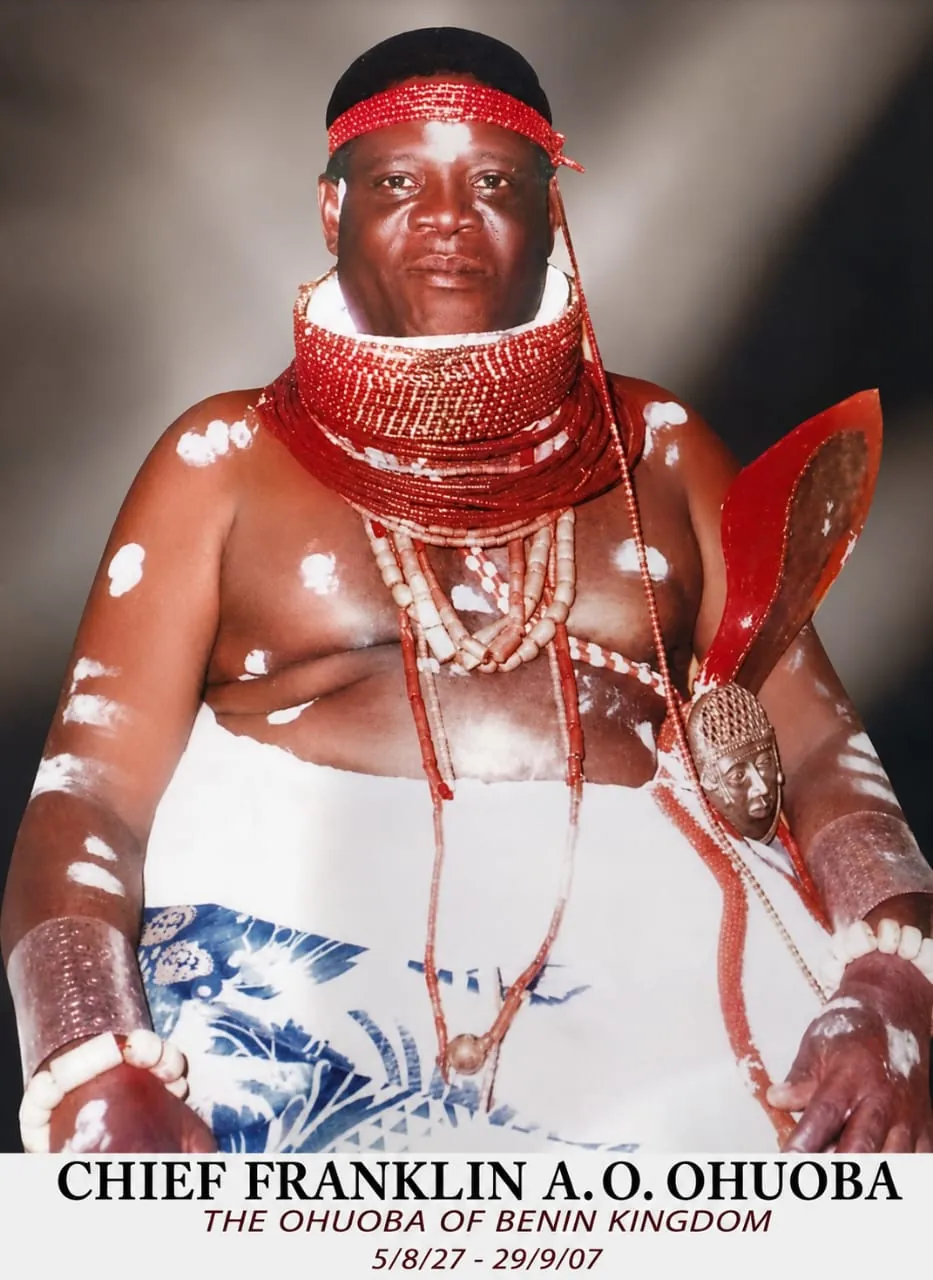
By Chris Osa Nehikhare
History often remembers kings.
It remembers warriors.
It remembers conquerors.
Yet sometimes the most fascinating stories are hidden in the institutions that quietly survive centuries after the people who created them have vanished.
One such institution is the title of Ohuoba of Benin.
To many today, it is simply one of the traditional titles within the ancient Benin Kingdom.
But behind that title lies an extraordinary story.
A story of diplomacy.
A story of faith.
A story of cultural adaptation.
And perhaps most remarkably, a story of how Benin transformed a foreign influence into an enduring part of its own identity.
To understand the Ohuoba, one must travel back more than five hundred years to the reign of one of Benin’s greatest monarchs, Oba Esigie.
The sixteenth century was a period of profound transformation.
The Portuguese had established contact with Benin.
Trade flourished.
Diplomatic relations deepened.
Ideas crossed oceans alongside merchants and explorers.
Among those ideas was Christianity.
Unlike many parts of Africa where European religious influence arrived through conquest, Christianity entered Benin first through diplomacy and mutual engagement.
Historical accounts indicate that Portuguese Roman Catholic priests became familiar figures within the kingdom.
So significant was this relationship that Christian worship reportedly found a place within the royal palace itself.
Tradition recalls that a Portuguese priest would visit the palace at dawn each morning to conduct prayers and administer the sacraments for the Oba.
What began as a religious routine would eventually evolve into something much greater.
The Benin Kingdom did what it had always done throughout its history.
It adapted.
It absorbed.
It transformed.
Rather than remaining a foreign ritual dependent on foreign priests, the practice became institutionalised within Benin’s own traditional structure.
From this process emerged the Ewua Guild and its leader, the Ohuoba of Benin.
The Ohuoba came to represent the role once performed by those early Catholic priests.
At dawn, members of the guild would proceed to the palace to perform the ceremonial duties associated with the beginning of the Oba’s day.
For generations, this ritual became part of palace life.
The day was not considered fully underway until these ceremonies had been observed.
What makes this remarkable is not simply its religious origin.
It is what it reveals about Benin civilisation.
The Benin Kingdom was never a passive recipient of foreign influences.
It was an active interpreter of them.
It accepted what it found useful.
It reshaped what it encountered.
And it integrated those elements into a cultural framework that remained unmistakably Benin.
The Ohuoba title stands as living evidence of that process.
Centuries have passed since Portuguese missionaries first walked the streets of Benin.
Empires have risen and fallen.
Governments have come and gone.
Yet the institution remains.
Not as a relic of Europe.
Not as an imported tradition.
But as an authentic part of Benin heritage.
It reminds us that history is rarely a story of cultures replacing one another.
More often, it is a story of cultures meeting, influencing each other, and creating something entirely new.
The Ohuoba represents one of those rare moments.
A meeting of Portugal and Benin.
Of Christianity and tradition.
Of foreign influence and indigenous genius.
And the result was an institution that has endured for over five centuries.
That is why the story of the Ohuoba deserves remembrance.
Not merely because it is old.
But because it demonstrates something fundamental about the Benin people.
Their confidence.
Their adaptability.
And their remarkable ability to preserve history by transforming it into tradition.
For in the end, the greatest institutions are not those that resist change.
They are those that survive it.
And few have survived it better than the Ohuoba of Benin.
“And so, as we conclude Volume One of Edo Icons: Legacy Series, we remember not only the man who bore the title, but the institution that outlived centuries. For the greatest tribute to history is to ensure that its stories are never forgotten.”