
Opinion
Trump’s Threats, U-turn on Hormuz Fees Further Undermine US Credibility

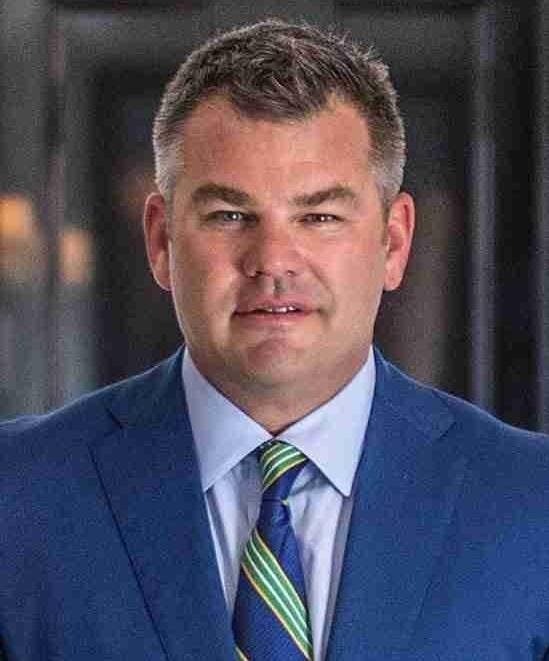
By Prof. Marc Weller
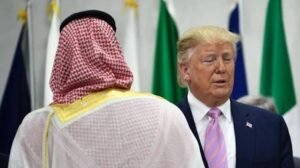
The Strait of Hormuz remains one of the world’s most strategically important maritime routes, making any policy affecting its navigation a matter of global concern. Against this backdrop, former United States President Donald Trump’s recent proposal to appoint the US as the “guardian” of the Strait and charge vessels a fee equivalent to 20 per cent of the value of their cargo has sparked widespread legal and diplomatic debate.
According to Prof. Marc Weller, Director of the Global Governance and Security Centre and the International Law Programme at Chatham House, international law does not permit any country to unilaterally assume the role of guardian over an international waterway and demand payment from vessels exercising their right of passage.

Weller argues that Trump’s July 13 announcement, which proposed charging what could amount to as much as $30 million for a large oil tanker transiting the Strait, was not only inconsistent with international law but also contradicted previous US positions defending free navigation through international straits.
Although Trump reversed the proposal the following day, suggesting instead that Gulf states would increase trade and investment with the United States rather than pay maritime fees, Weller contends that the damage to Washington’s credibility had already been done.
He maintains that the policy reversal undermined confidence in US diplomacy and raised questions about the consistency of American foreign policy in the Gulf region.
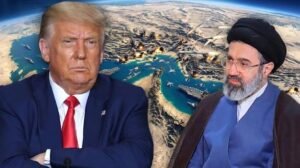
The article notes that the proposal came amid renewed tensions between the United States and Iran over navigation in the Strait of Hormuz following the collapse of earlier ceasefire arrangements.
According to Weller, while Iran has sought to justify collecting tolls based on its interpretation of sovereign rights over portions of the Strait, international law is clear that coastal states must allow uninterrupted passage through international straits used for global navigation.
He argues that neither Iran nor the United States has the legal authority to impose unilateral transit charges on international shipping.
Weller also points to the role of the International Maritime Organization (IMO), which established internationally recognised shipping lanes through the Strait decades ago. He notes that these routes cannot be altered unilaterally by any single state.
The legal expert reveals that negotiations hosted by Oman, with support from Qatar, European legal experts and other stakeholders, explored possible compromises, including a system similar to the Malacca Strait model where limited charges could be levied only for navigational services and safety assistance rather than for mere passage.
However, he says the talks ended without agreement as Iran maintained its position.
Weller further argues that Trump’s proposal would have imposed excessive financial burdens on international shipping while exposing vessels to continued security risks, making the plan commercially and practically unrealistic.
He believes the swift withdrawal of the proposal reflected strong opposition from Gulf states and concerns over its legal and economic implications.
In his assessment, restoring stability in the Strait of Hormuz will require renewed negotiations rather than unilateral actions.
He calls on regional and global powers, including China and European countries, to support diplomatic efforts aimed at preserving freedom of navigation and preventing further escalation in the Gulf.
Ultimately, Weller concludes that any lasting solution must respect international maritime law, reject unlawful tolls by any state and establish practical arrangements that guarantee safe, secure and uninterrupted passage through one of the world’s most vital energy corridors.
Prof. Marc Weller is Director of the Global Governance and Security Centre, International Law Programme, Chatham House. This opinion was first published by Chatham House on July 14, 2026.