
Opinion
NIGERIA NEED DELIBERATE ACTIONS TO RESTORE HER EVAPORATING NATIONAL CONSENSUS

By AVM (RTD) AKUGBE IYAMU MNSA fsi
There are 2 major instances where a nation build consensus around issues: disaster and breakthrough. Let us understand what national consensus is; National consensus refers to a general or widespread agreement among the population and political leaders of a country regarding fundamental values, national objectives, policies, or rules of governance.

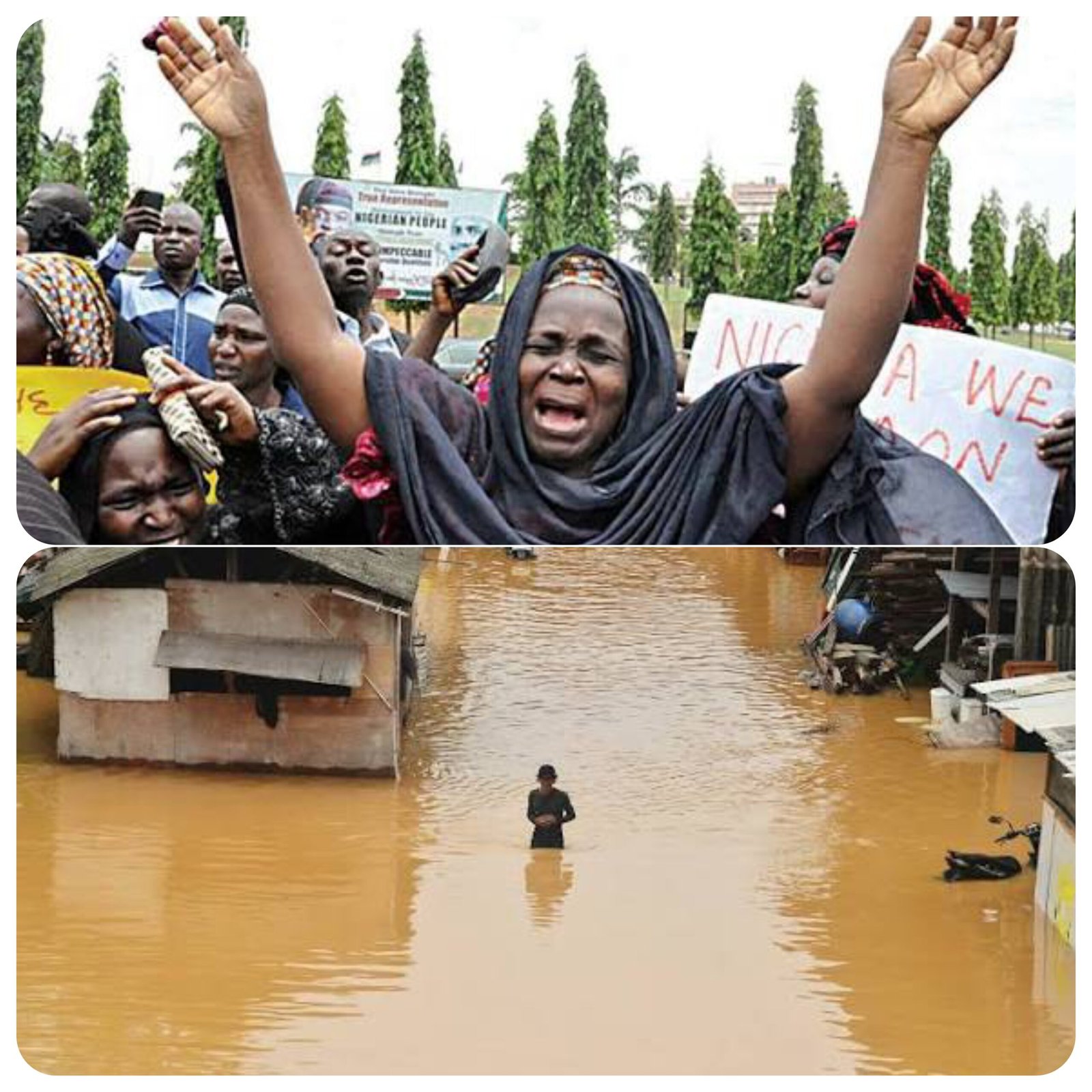
It signifies a collective unity on critical issues, such as national security or constitutional reforms. In Nigeria, national consensus should have occurred around insecurity and the Lagos unprecedented and existential flooding. This is because at every point in national development, leadership must enthrone transparency, accountability, inclusion, equity and equality. These are the broad agreement on which consensus are forged across the society on core principles, mutual restraint, and how conflicts over national issues should be managed, which is essential for a stable polity.

Nigeria need consensus around contending instances including the recent high-level town halls in Abuja that reflected a shifting national agreement toward implementing state police to address national security concerns. This is not different from the way consensus operate globally as a unanimous consent from leaders and citizens towards national aspirations and goals.

Against the global benchmark from successful countries in growth and prosperity it is obvious that consensus building in Nigeria is primarily hindered by deep-seated ethnic and religious divisions, pervasive political elite capture, unequal resource distribution, and widespread public distrust. These systemic barriers continuously undermine national cohesion, turning the process of forging a unified vision into a complex and often elusive goal. Widespread poverty, illiteracy, and a historical lack of government transparency mean citizens often lack confidence in the state.

Nigeria need to improve its consensus cardinals and focal points that are severely weakening the social contract and making public consent difficult to achieve during national debates. For instance widespread poverty, illiteracy, and a historical lack of government transparency mean citizens often lack confidence in the state. A condition that has severely weakened the social contract and makes public consent difficult to achieve during national debates.
Addiitionally, escalating security challenges across different regions is vastly deepening polarization. When basic safety is threatened, it hinders the ability of the populace and leaders to reach agreements on long-term national development goals.
Nigeria can overcome its consensus challenges whether at the political, economic, or national identity level by prioritizing inclusive dialogue, transparent democratic processes, and true power-sharing. Also, to bridge its deep-seated ethnic, religious, and political divides, the country must address these challenges through targeted, systemic shifts. Ordinary Nigerians must demonstrate a greater willingness to coexist peacefully.
Political leaders must abandon divisive, ethnic-based rhetoric and agree on a core, non-negotiable vision of equitable representation and economic opportunity for all citizens.
Finally, national consensus remains the most fundamental element for nation building without which Norway, Singapore, Malaysia, the UK and Canada could not achieve meaningful growth and development.
AVM (RTD) AKUGBE IYAMU MNSA fsi , PRESIDENT ASSOCIATION OF ENVIRONMENTAL PROTECTION AND CLIMATE CHANGE PRACTITIONERS AND CONSULTANT ON CLIMATE CHANGE AND ANALYST ON ENVIRONMENTAL POLICIES AND COMMENTATOR ON NATIONAL ISSUES.