
Opinion
Recent Remarks By The Nigerian First Lady On Grants For Small Businesses


By Hafiz Bakare
The recent remarks by Nigeria’s First Lady, Senator Oluremi Tinubu, suggesting that vulnerable citizens utilize Renewed Hope Initiative grants to start low-capital businesses like selling akara (bean cakes), roasted corn, and kuli-kuli, have sparked a deeply polarized national conversation.
Well-reasoned reactions from economic analysts, business commentators, and citizens can be divided into two main perspectives:
*A. The Critical Perspective: Elite Disconnect, Structural Deficit & Inflationary Realities*
Critics argue that the First Lady’s advice shows a significant disconnect from the harsh microeconomic realities currently facing everyday Nigerians and that the advice is a suboptimal solution to a systemic economic crisis. The core arguments include:
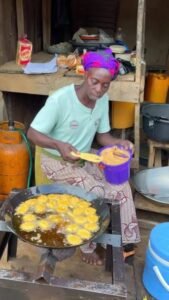
– *Inflation and Erosion of Low-Capital Assumptions*: Commentators note that due to hyperinflation, no business is truly “low-capital” anymore. The skyrocketing costs of basic inputs—such as beans, vegetable oil, charcoal, and cooking gas—mean that even starting a roadside akara stall requires substantial money that vulnerable people do not have. Many point out that even if the baseline setup capital for an akara stand is low, the running cost is exceptionally high, making these micro-businesses difficult to sustain or make profitable.
– *Diminishing Consumer Purchasing Power:* Analysts point out that even if a citizen manages to start an akara or corn-roasting business, the broader economic hardship means that the target customer base is cutting back on spending. If everyday citizens cannot afford snacks, these newly funded micro-traders face immediate collapse.

– *Demand-Side Failure:* If a large percentage of the population shifts to selling identical local snacks to survive, the market becomes oversaturated while consumer purchasing power remains dangerously low.
– *A Lack of High-Growth Vision*: Many young Nigerians argue that the government should be championing structural economic reforms, high-yield agricultural investments, technology, and manufacturing opportunities. Pushing informal, subsistence-level street trading is seen as a low-bar ambition that keeps the population trapped in poverty rather than fostering a modern SME sector.

– *The “Micro-Business” Ceiling*: Analysts emphasize that a nation cannot pull itself out of a severe macroeconomic slump by simply multiplying micro-retailers. Critics argue that the government should focus on structural solutions—like stable electricity, lower transportation costs, and large-scale industrialization—rather than directing youth toward survivalist trading.

*B. The Supportive Perspective: Pragmatism & The Dignity of Micro-Enterprises*
Conversely, defenders of the First Lady’s remarks claim her advice, which was directed at vulnerable citizens particularly women, is deeply pragmatic and rooted in the reality of Nigeria’s informal economy, which sustains millions of households. Practical business advocates view the First Lady’s remarks through a lens of realism and immediate poverty alleviation. Their supporting arguments point out:
– *Intended Demographic – A Targeted Safety Net for Vulnerable Women*: Proponents emphasize that the Renewed Hope Initiative is explicitly targeted at vulnerable women, widows, and marginalized demographic groups. It was never intended or presented as a comprehensive macroeconomic roadmap to solve nationwide unemployment across all industrial spheres. Viewing her advice as a blanket economic policy for the entire youth population or skilled professionals is a mischaracterization of a localized, gender-focused poverty alleviation program.
– *Illustrative Scope – Practical Examples Rather Than Rigid Mandates*: Defenders note that mentions of akara, roasted corn, and kuli-kuli were merely illustrative, culturally accessible examples of everyday small and medium-sized enterprises (SMEs). These fast-moving culinary trades were highlighted to show that even minimal skills can immediately generate a daily cash flow. The initiative funds a diverse array of petty trading, agricultural micro-processing, and local retail operations; the specific snacks mentioned were not an exclusive or restrictive funding list.
– *Lowering the Entry Barrier Via Grants Over Debt*: Financial pragmatists highlight that the First Lady explicitly mentioned providing non-repayable grants. Getting a cash grant to start an agile business—free from the burden of high-interest bank loans—is objectively better than being pushed into the predatory micro-loan traps that crash many small ventures.
– *Immediate Economic Survival Over Theory*: Supporters argue that in a severe economic climate, waiting for high-tech jobs or massive industrial projects is unrealistic for the most vulnerable citizens. Immediate, cash-flowing daily food businesses offer a fast lifeline to put food on the table. For a completely un-banked or highly vulnerable individual, receiving direct cash grants to start a quick-turnover food business is a highly practical way to secure daily food and basic income.
– *Proven Historical Mobility & Local Profitability*: Many defenders emphasize that the food sector remains resiliently profitable. Observers rightly argue that the local food sector is one of the most resilient spaces in the Nigerian informal economy. They note that generations of successful Nigerian professionals, doctors, and tech founders were sponsored through school by parents who built homes and livelihoods entirely from petty trading and selling local snacks which served as financial stepping stone for millions of Nigerian families.
– *Normalizing Local Production*: Supporters emphasize that there is dignity in honest labor and that scaling up small agricultural processing (like kuli-kuli or roasted corn) aligns with reducing dependence on imported goods.
*Balanced Take-away & The Economic Synthesis*
Ultimately, the debate exposes the tension between macroeconomic expectations and micro-survival strategies in Nigeria. While critics rightly point out that street food ventures cannot fix structural economic issues like fuel subsidy removal and inflation, supporters correctly note that for a family facing immediate hunger, an accessible cash grant for a fast-moving consumer trade provides a crucial shield against hunger.
The debate is not truly about the value of an akara business, which remains a legitimate and vital part of Nigeria’s informal economy. Rather, the friction stems from a clash of expectations: while some citizens and analysts are demanding macro-level policies that lower the overall cost of living and spark high-tech or industrial employment, the First Lady’s comments and those who align with her position view the grants as a grassroots, hyper-local safety net for the vulnerable.
Finally, there is *the institutional reality of independent advocacy over state policy*. From a governance perspective, the First Lady holds a ceremonial, non-constitutional position rather than an executive or legislative office. The resources distributed by her initiative do not draw directly from core state infrastructure funds or federal statutory allocations. Instead, she independently mobilizes these resources through public-private partnerships, philanthropy, and corporate social responsibility (CSR) channels. Her efforts act as a voluntary, complementary social cushion rather than a replacement for formal government economic reform.
Hafiz Bakare is a Former MD/CEO of Keystone Bank.