
Opinion
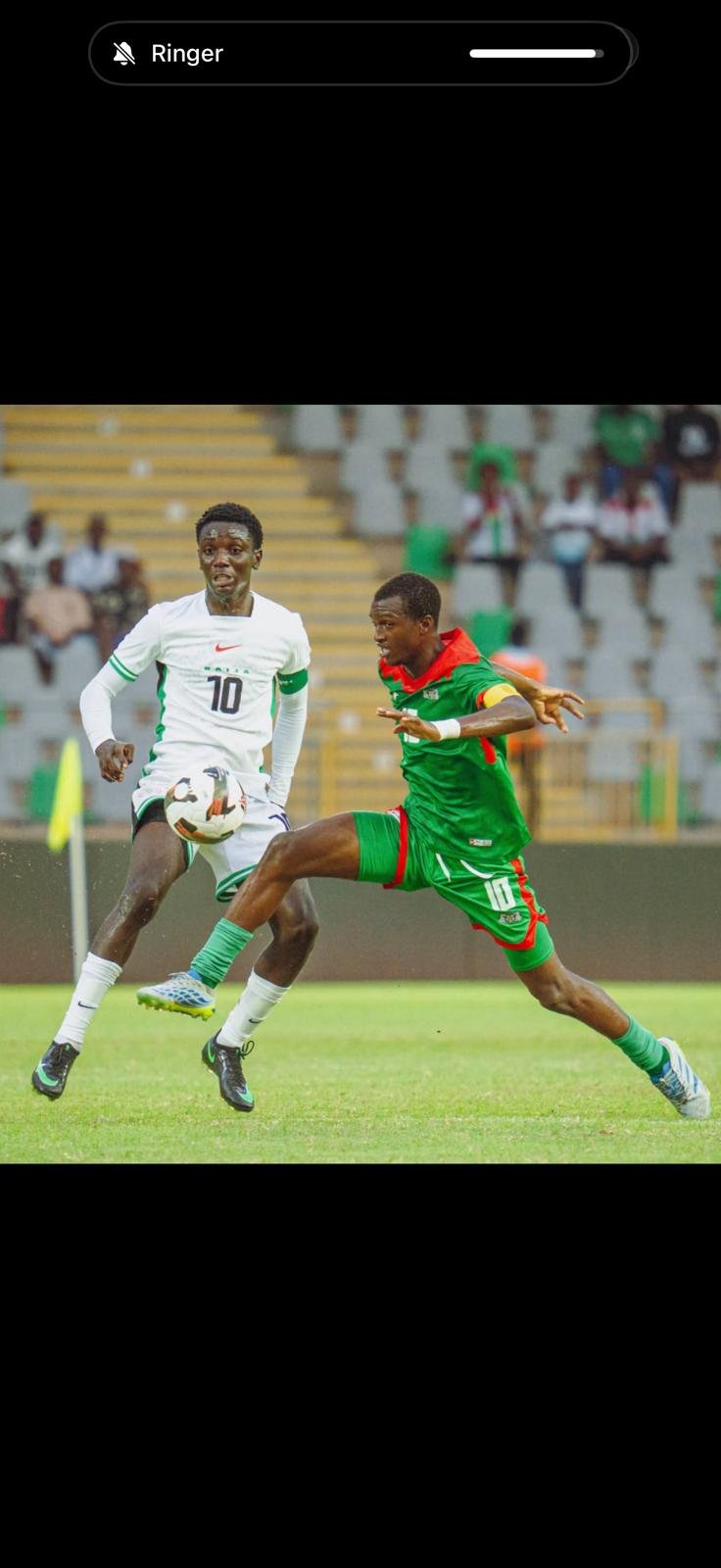
Nigeria 🇳🇬 Flying Eagles Surrender WAFU B Crown in 4–1 Defeat to Burkina Faso 🇧🇫

By Lucky Okoku
Nigeria’s youngsters suffer a painful final in Yamoussoukro as Burkina Faso beat them for the second time in the tournament—but one difficult final should not define their futures
About a week ago, Nigerian football had reasons to smile.
Within the same week, the Super Falcons and Flying Eagles gave Nigerians something to celebrate. There was excitement, optimism and that familiar feeling football can create when our national teams are doing well.
On Sunday, August 9, the emotions were painfully reversed.
The Super Falcons fell 1–0 to Cameroon in the quarter-finals of the Women’s Africa Cup of Nations in Morocco. Hours later in Yamoussoukro, Nigeria’s Flying Eagles were beaten 4–1 by Burkina Faso in the final of the 2026 WAFU B U-20 Championship.
It was, in football terms, a Black Sunday for Nigeria 🇳🇬.
There is no point pretending otherwise.
For supporters who stayed with these teams, celebrated their victories and expected another reason to rejoice, the disappointment is understandable. And for the Flying Eagles, particularly, the manner of the defeat was difficult to accept.
A 4–1 loss in a championship final hurts.
It was emphatic.
It was unexpected.
And, considering that Burkina Faso had already defeated Nigeria 2–0 earlier in the same tournament, it leaves legitimate football questions that must be asked.
But disappointment must not become despair.
And analysis must remain constructive.
These are young footballers. They must learn from what happened in Yamoussoukro, but one painful final should not be allowed to define their careers.
Ironically, both the Super Falcons and Flying Eagles entered their respective competitions as defending champions. That makes the disappointment of this Sunday even more pronounced—but it also reinforces why the response must now be about learning, rebuilding and preparing for what comes next.
THREE GOALS IN 15 MINUTES — A FINAL ALMOST OVER BEFORE IT BEGAN
Nigeria entered the final as defending WAFU B champions.
But before the Flying Eagles could properly settle into the contest at the Stade Charles Konan Banny, Burkina Faso had taken control.
Alassana Bagayogo struck in the fourth minute.
One minute later, Loukman Asharaf Tapsoba made it 2–0.
Then came Issouf Dabo in the 15th minute.
Burkina Faso 🇧🇫 3. Nigeria 🇳🇬 0.
Only 15 minutes had been played.
At any level of football, conceding three times that quickly is difficult to recover from.
In a final, it can be devastating.
The first goal should have been the alarm.
The second, coming almost immediately afterward, suggested that Nigeria had not emotionally or tactically recovered from the first setback.
By the time the third arrived, the entire complexion of the final had changed.
Burkina Faso no longer needed to chase Nigeria.
Nigeria had to chase Burkina Faso.
That distinction matters.
Once you are three goals behind, especially in a final, your original tactical plan is effectively gone. Players begin taking greater risks. Defenders move higher. Midfielders become more adventurous. Full-backs push forward. Spaces inevitably appear.
The opponent can then choose its moments.
Burkina Faso had earned the luxury of playing the match on its terms.
THE MOST TROUBLING QUESTION: WHAT DID WE LEARN FROM THE FIRST MEETING?
This, for me, is where the serious football analysis begins.
Burkina Faso did not arrive in Sunday’s final as an unknown opponent.
Nigeria had already played them.
And lost.
The Young Stallions defeated the Flying Eagles 2–0 in the group stage.
In tournament football, a second meeting can be an enormous opportunity for a coaching staff.
You have already seen the opponent.
You have experienced their pace.
You have seen how they build from the back.
You have seen where they press.
You know which players create danger.
You have seen how they defend.
You have video.
You have information.
And perhaps most importantly, you have already experienced what did not work the first time.
That should provide the foundation for adjustment.
Instead, Nigeria lost again.
And this time the margin grew from 2–0 to 4–1.
That deserves examination.
What did Burkina Faso identify in Nigeria’s structure during the first match?
What weaknesses did they see?
How did they exploit those weaknesses again?
And what adjustments did Nigeria make after the first defeat?
Those are legitimate questions that should form part of any serious post-tournament evaluation.
They are the same questions coaches routinely ask themselves when reviewing performances: What worked? What did not? What adjustments were made after the first meeting? And what could have been done differently when the same opponent was encountered again?
That process is not about assigning blame. It is about learning from the experience, identifying areas for improvement and ensuring that the lessons from this tournament contribute to the development of both the players and the technical team.
Because if an opponent beats you once, you study it.
If the same opponent beats you again—and more convincingly—the analysis has to go deeper.
CREDIT MUST GO TO BURKINA FASO 🇧🇫
Sometimes when Nigeria loses, our instinct is to discuss only what Nigeria did wrong.
That can prevent us from acknowledging what the opponent did right.
Burkina Faso deserve their flowers.
They beat Nigeria twice.
They did not sneak through the final.
They did not survive for 90 minutes and steal a late goal.
They attacked Nigeria early and decisively.
And when they recognised vulnerability, they exploited it.
That reflects not only the quality of their young footballers but also preparation by their coaching staff.
Something had clearly been learned from the first encounter.
Whether it involved Nigeria’s defensive positioning, transition moments, spacing, vulnerability immediately after losing possession or another tactical tendency, Burkina Faso appeared to understand where they could hurt the Flying Eagles.
And they executed.
That is coaching too.
The Young Stallions completed their tournament unbeaten and left Yamoussoukro as deserving WAFU B champions.
Congratulations to them.
ADELEKE GAVE NIGERIA 🇳🇬 A GLIMMER
Trailing 3–0 at halftime, Nigeria needed an extraordinary second half.
The Flying Eagles at least responded.
In the 53rd minute, Abdulmuiz Adeleke converted a penalty to make it 3–1.
For a brief period, there was something to chase.
Another Nigerian goal could have changed the psychology of the final.
At 3–2, pressure would suddenly have moved toward Burkina Faso.
Football has produced stranger comebacks.
But the second Nigerian goal never came.
Burkina Faso maintained their composure, protected their advantage and waited.
Then, deep into stoppage time, Fadil Barro scored the fourth.
Burkina Faso 4–1 Nigeria.
The defending champions had been dethroned.
SUPPORTERS HAVE EVERY RIGHT TO BE DISAPPOINTED
We should not dismiss the feelings of Nigerian supporters.
The disappointment is real. Some are angry, and many expected much better from a Nigerian team playing in a championship final. That reaction is understandable.
Nigeria is not a small football nation, particularly at youth level. We have a proud history, and with that history come expectations. When one of our national teams reaches a final, Nigerians expect it to compete and give a strong account of itself.
Losing is part of football. Every team loses. But a 4–1 defeat in a final, after conceding three goals within the opening 15 minutes, will naturally raise difficult questions.
Supporters therefore have every right to express their disappointment and to ask what went wrong. The important thing is to keep the discussion constructive and in perspective.
There is a difference between acknowledging that the performance fell below expectations and allowing one result to define the ability or potential of these young players. In the same way, questioning the tactical preparation and decisions surrounding the match should be part of a proper football evaluation, not a final judgment on the coaching staff.
The objective of serious analysis is to understand what happened. What could have been done differently? What lessons can be taken from the defeat? And how can those lessons help the players and coaches become better?
Those are the questions that should follow a result like this.
The disappointment should be acknowledged. The performance should be examined honestly. But ultimately, the purpose of that examination should be improvement.
For these young players especially, this difficult experience should become part of their development—not the definition of their future.
THESE YOUNG MEN ALSO KNOW THEY LOST 4–1
Sometimes we talk about players after a defeat as though they do not understand what happened.
They know.
They were on the field.
They wanted that trophy.
They imagined lifting it.
They wanted the photographs.
They wanted the medals.
They wanted to return home as champions.
Instead, they had to watch Burkina Faso celebrate.
That hurts.
And for young players, learning how to process that experience is itself part of development.
They should not run away from the match.
Watch it again.
Study it.
Where was I when the first goal developed?
What happened immediately afterward?
Was communication good enough?
Did we lose our shape?
Could I have covered my teammate?
Could we have slowed the match down after conceding?
These are uncomfortable questions.
But uncomfortable questions can produce better footballers.
SOMETIMES, AFTER CONCEDING, THE NEXT JOB IS SIMPLY NOT TO CONCEDE AGAIN
One lesson from those opening minutes deserves particular attention.
Nigeria conceded in the fourth minute.
Then in the fifth.
At 1–0, sometimes the immediate objective should not be to equalise.
It should be to stabilise.
Keep the ball.
Make the simple pass.
Communicate.
Restore the defensive shape.
Take the emotion out of the moment.
Make the opponent work for the next opportunity.
At 2–0 after five minutes, that responsibility becomes even greater.
The match was still young.
There were approximately 85 minutes remaining.
There was time.
But when the third goal arrived in the 15th minute, Nigeria’s mountain became considerably steeper.
Learning how to manage those moments is part of becoming an international footballer.
Talent matters.
Technique matters.
Speed matters.
But game management matters too.
DO NOT ERASE THE ROAD TO THE FINAL
Sunday’s scoreline should be analysed honestly, but it should not erase everything these young men accomplished before the final.
Nigeria began the tournament with an impressive 4–2 victory over Ghana 🇬🇭.
They followed it with a 3–0 victory over Togo 🇹🇬.
Then came the 2–0 loss to Burkina Faso 🇧🇫.
The Flying Eagles responded by reaching the semi-final against host nation Côte d’Ivoire.
That became one of the most dramatic matches of their campaign.
Nigeria fought through 120 minutes.
The match finished 2–2.
Then came penalties.
Goalkeeper Clinton Lawani saved two spot kicks as the Flying Eagles won the shootout 4–3 and reached the final.
We celebrated them then.
That matters now.
We cannot celebrate young footballers when they win and completely abandon them four days later when they lose.
THE REAL TEST BEGINS AFTER THE TOURNAMENT
The trophy is gone.
But what happens to these players now?
That question should concern Nigerian football.
Youth football cannot simply be about assembling players for tournaments, celebrating them when they win and forgetting them when the competition ends.
We often hear the call for grassroots development in Nigerian football. Grassroots, grassroots, grassroots. We say we want to discover young players, develop them and create a pathway toward the senior national team.
Well, this is what development looks like.
These young Flying Eagles are part of that process. They are not finished products. They are learning how to compete internationally, how to deal with pressure, how to respond to victory and defeat, and how to correct mistakes against quality opposition.
Yes, we wanted them to win the trophy. They wanted it too. Winning matters when you wear the Nigerian jersey.
But if our commitment to youth development disappears the moment a youth team loses, then we have misunderstood the meaning of development.
We cannot demand grassroots football on one hand and demand instant results from developing players on the other. Development requires patience, continuity, coaching, competition and opportunities to learn from difficult experiences—including defeat.
So perhaps the question after this 4–1 loss should not only be, “Why didn’t they win?”
We should also be asking, “Who among these young players have we discovered, and what are we going to do with them next?”
Who will be monitored?
Who will continue developing?
Who needs more tactical education?
Who needs regular club football?
Who needs strength and conditioning?
Which players have demonstrated the potential to progress eventually toward the Super Eagles?
Where will these young men be in six months?
Where will they be in two years?
That is how a genuine football development system should think.
We should not pay lip service to grassroots development only when it is convenient. This is grassroots development in motion. The objective must be to take promising young footballers through the pathway—from youth football, through continued development and, for those good enough, ultimately toward the Super Eagles.
The bigger failure would not be losing 4–1 to Burkina Faso.
The bigger failure would be allowing the lessons, experience and talent from this group to disappear simply because the tournament is over.
THE FLYING EAGLES: WHEN DEVELOPMENT BECAME A PATHWAY
There is precedent in Nigerian football for what can happen when a promising youth team is treated not as the end of a journey, but as the beginning of one.
And our generation was not the beginning of that pathway.
Before us, in the late 1970s and early 1980s, Nigerian youth football had already produced players who progressed from the Flying Eagles environment into the senior national team. Players such as Stephen Keshi, Henry Nwosu, Charles Attila Kanu, Olumide “Schemer” Banjo, Wakilu Oyenuga, Sylvanus Okpala and Franklin Howard demonstrated that the youth national team could serve as a genuine pathway toward the Green Eagles.
Our 1982/83 Flying Eagles generation continued that tradition.
Our 1982/83 Flying Eagles generation continued that tradition, and I was fortunate to be part of that journey.
Coach Christopher Udemezue began assembling our Flying Eagles team in 1982, eventually taking us to the 1983 FIFA World Youth Championship in Mexico—Nigeria’s first appearance at a FIFA World Cup at any level.
But perhaps one of the greatest measures of that generation was not simply what we accomplished together as a youth team. It was how many players eventually progressed into the senior national-team structure.
Eight players from that generation went on to represent Nigeria at senior international level: Wilfred Agbonavbare, Paul Okoku, Chibuzor Ehilegbu, Isa Shofoluwe, Humphrey Edobor, Dahiru Sadi, Tarila Okorowanta and Dehinde Akinlotan.
One experience in 1983 illustrates just how real that pathway was.
We were back at Bembo Games Village in Ibadan, preparing with the Flying Eagles for the WAFU Nations tournament later that year. At the same time, Coach Adegboye Onigbinde and the Green Eagles were preparing for a decisive 1984 Africa Cup of Nations qualifier against Morocco.
The first leg, played on Sunday, August 14, 1983, at the Samuel Ogbemudia Stadium in Benin City, had ended 0–0.
The decisive return leg was played at the Prince Moulay Abdellah Stadium in Rabat, Morocco, on Sunday, August 28, 1983. After another 0–0 draw, Nigeria prevailed 4–3 on penalties to secure qualification for the 1984 Africa Cup of Nations.
It was enemy territory, and Nigeria needed a result.
Although we were still Flying Eagles players and had not yet become permanent members of the Green Eagles, we were training within that environment at Bembo Games Village.
Then, only a few days before that pivotal qualifier, Coach Onigbinde reached into the youth team.
Three of us—Paul Okoku, Chibuzor Ehilegbu and Isa Shofoluwe—were called up.
That moment said something important about the depth of that Flying Eagles team and, more importantly, about the pathway that existed between the youth and senior national teams.
We went from preparing with the Flying Eagles to suddenly being needed for one of Nigeria’s most important senior international matches of the year.
Within days, we were travelling from Ibadan and heading for Rabat.
I will never forget the date: Sunday, August 28, 1983.
Nigeria battled Morocco to another 0–0 draw. The qualification tie went to penalties.
Nigeria prevailed 4–3.
We had gone into Morocco and helped Nigeria secure qualification for the 1984 Africa Cup of Nations in Côte d’Ivoire.
But our story did not suddenly end with the Flying Eagles simply because we had been called into the senior team.
We returned to Ibadan and were reassigned to the Flying Eagles.
There was still work to do.
We resumed preparation for the WAFU Nations tournament later that year and went on to win the competition.
Afterward, the progression continued.
Players from that Flying Eagles generation increasingly became part of the senior national-team structure.
And by the 1984 Africa Cup of Nations in Côte d’Ivoire, six players from that generation—Wilfred Agbonavbare, Paul Okoku, Chibuzor Ehilegbu, Isa Shofoluwe, Humphrey Edobor and Tarila Okorowanta—were part of the Nigerian squad that reached the AFCON final and returned home with silver medals.
That is development.
That is why I look at today’s Flying Eagles beyond one 4–1 defeat.
Of course results matter.
Of course trophies matter.
When you wear Nigeria’s colours, you want to win. We wanted to win in our generation just as these young men wanted to lift the trophy in Yamoussoukro.
But youth development must ultimately answer a bigger question:
What happens to these players next?
How many players from this present Flying Eagles team can make the transition?
Two?
Four?
Six?
Who among them could eventually become a Super Eagle?
That should be one of the lasting measurements of this team.
When Nigerians call for grassroots and youth development, this is what we should mean: identify them, develop them, test them, correct them, challenge them and create a pathway for the best among them to move upward.
Sometimes development comes through victories.
Sometimes it comes through painful defeats.
Both can teach a young footballer.
The generations before ours demonstrated the pathway.
Our generation experienced it.
The challenge now is to make sure today’s young players have that same opportunity.
The Flying Eagles should never be the final destination. For those good enough to make the journey, it should be a bridge to the Super Eagles.
FROM CELEBRATION TO A BLACK SUNDAY
Football can humble you very quickly.
About a week ago, Nigerians were celebrating.
The Super Falcons were carrying expectations in Morocco.
The Flying Eagles were beginning their WAFU B title defence with promise.
This weekend ended very differently.
Cameroon stopped the Falcons.
Burkina Faso stopped the Flying Eagles.
Two defeats.
Two competitions.
One difficult Sunday.
A Black Sunday for Nigerian football.
But black Sunday does not mean a black future.
That distinction is important.
HOLD YOUR HEADS UP — AND LEARN
To these young Flying Eagles, there should be no attempt to hide what happened.
You were beaten.
The score was 4–1.
Burkina Faso were better on the day.
They beat you twice during this tournament.
Accept that.
Respect them.
Then learn from them.
That is football.
Do not allow anybody to convince you that one result determines your future.
Some of the greatest footballers have experienced humiliating defeats.
Some of the greatest teams have been dismantled.
The question is never simply whether you fall.
The question is what you learn while getting back up.
So hold your heads up, young men.
Take responsibility where responsibility is required.
Listen.
Study.
Improve.
Remember the feeling of watching someone else lift the trophy you wanted.
Use it.
Because today’s disappointment can become tomorrow’s motivation.
Nigerians are hurting tonight.
You are probably hurting even more.
But all hope is not lost.
The trophy is gone. The lessons remain. And your football journey continues.
Share Note:
If this story resonates with you, please share it. Together, we can keep the conversation about Nigerian football and the development of our young players going.