
Opinion
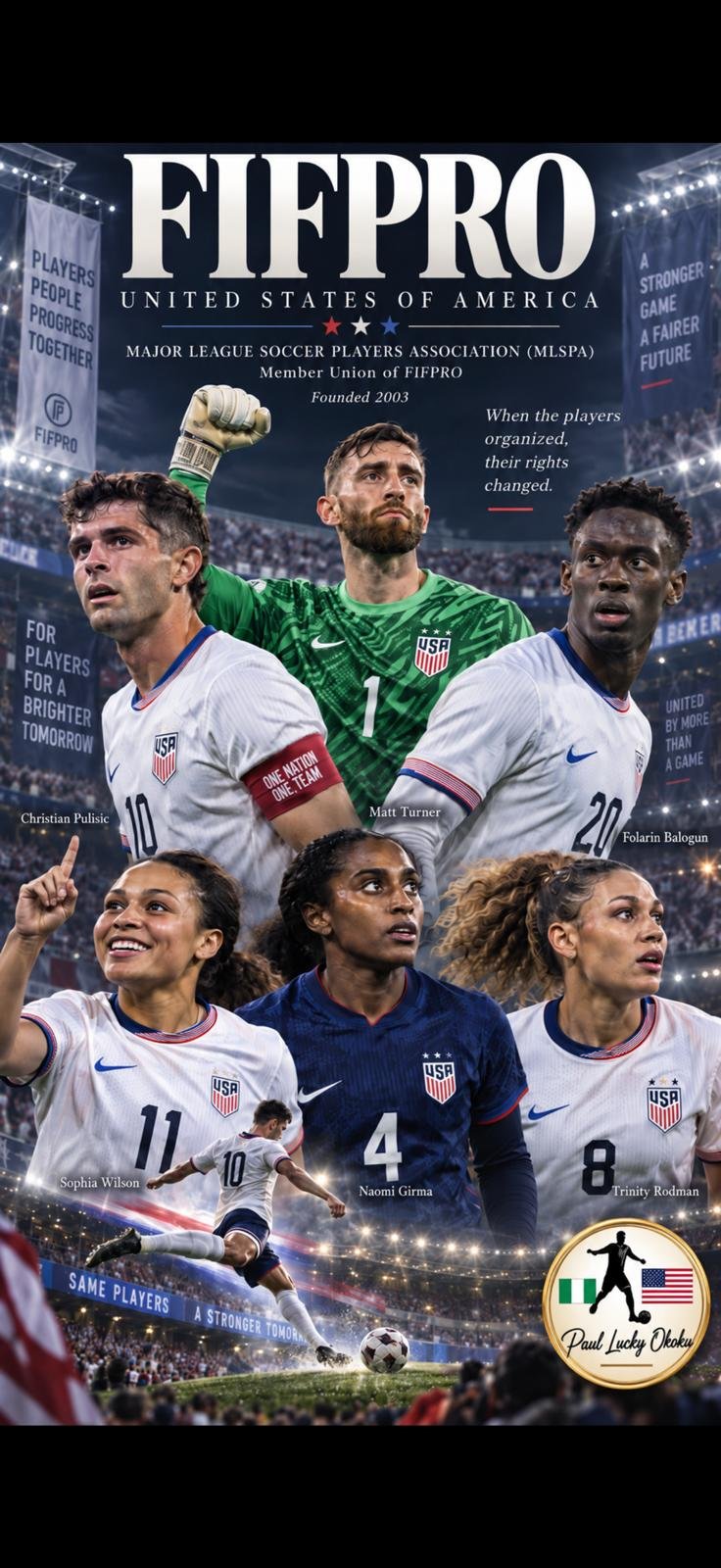
United States of America: The Price of Non-FIFPRO Membership — From Limited Rights to Collective Power: When The Players Organised, Their Riggts Changed

𝐁𝐲 𝐏𝐚𝐮𝐥 𝐋𝐮𝐜𝐤𝐲 𝐎𝐤𝐨𝐤𝐮
𝐅𝐫𝐨𝐦 𝐚 𝐥𝐞𝐚𝐠𝐮𝐞 𝐰𝐡𝐞𝐫𝐞 𝐬𝐨𝐦𝐞 𝐟𝐨𝐨𝐭𝐛𝐚𝐥𝐥𝐞𝐫𝐬 𝐫𝐞𝐩𝐨𝐫𝐭𝐞𝐝𝐥𝐲 𝐞𝐚𝐫𝐧𝐞𝐝 $𝟗𝟓𝟎 𝐚 𝐦𝐨𝐧𝐭𝐡 𝐰𝐢𝐭𝐡 𝐟𝐞𝐰 𝐞𝐦𝐩𝐥𝐨𝐲𝐦𝐞𝐧𝐭 𝐩𝐫𝐨𝐭𝐞𝐜𝐭𝐢𝐨𝐧𝐬 𝐭𝐨 𝐜𝐨𝐥𝐥𝐞𝐜𝐭𝐢𝐯𝐞 𝐛𝐚𝐫𝐠𝐚𝐢𝐧𝐢𝐧𝐠, 𝐫𝐞𝐭𝐢𝐫𝐞𝐦𝐞𝐧𝐭 𝐛𝐞𝐧𝐞𝐟𝐢𝐭𝐬, 𝐟𝐫𝐞𝐞 𝐚𝐠𝐞𝐧𝐜𝐲 𝐚𝐧𝐝 𝐚𝐧 𝐢𝐧𝐭𝐞𝐫𝐧𝐚𝐭𝐢𝐨𝐧𝐚𝐥 𝐯𝐨𝐢𝐜𝐞, 𝐭𝐡𝐞 𝐀𝐦𝐞𝐫𝐢𝐜𝐚𝐧 𝐞𝐱𝐩𝐞𝐫𝐢𝐞𝐧𝐜𝐞 𝐬𝐡𝐨𝐰𝐬 𝐰𝐡𝐚𝐭 𝐜𝐚𝐧 𝐡𝐚𝐩𝐩𝐞𝐧 𝐰𝐡𝐞𝐧 𝐩𝐥𝐚𝐲𝐞𝐫𝐬 𝐨𝐫𝐠𝐚𝐧𝐢𝐳𝐞 𝐚𝐫𝐨𝐮𝐧𝐝 𝐭𝐡𝐞𝐢𝐫 𝐨𝐰𝐧 𝐦𝐚𝐧𝐝𝐚𝐭𝐞.
A professional league does not automatically create professional rights.
Major League Soccer (MLS) began play in 1996. The clubs existed. Contracts existed. Management existed.
But the players did not yet possess the collective power they would later build.
That is where the American story belongs in a series about FIFPRO.
It is not primarily about stadiums, expansion or famous imports.

It is about what happened when footballers with limited rights organized themselves, established legitimate representation and began negotiating collectively.
The transformation was not handed to them.
𝐓𝐡𝐞𝐲 𝐛𝐮𝐢𝐥𝐭 𝐢𝐭.
𝐓𝐇𝐄 𝐋𝐄𝐀𝐆𝐔𝐄 𝐂𝐀𝐌𝐄 𝐁𝐄𝐅𝐎𝐑𝐄 𝐓𝐇𝐄 𝐂𝐎𝐋𝐋𝐄𝐂𝐓𝐈𝐕𝐄 𝐕𝐎𝐈𝐂𝐄
America had already learned that famous players alone could not sustain professional football.
Pelé joined the New York Cosmos in 1975. Franz Beckenbauer, Carlos Alberto and other international stars followed.
The old North American Soccer League (NASL) generated attention but disappeared after its final season in 1984.
MLS represented another attempt.
But while the new league had an organizational structure, the players initially had little collective power inside it.
FIFPRO’s account of the early MLS years says the players were not represented when the league was created.
Some reportedly earned just $950 a month. The senior minimum salary stood at $24,000. Some players needed second jobs.
There was no established grievance and arbitration system.
No retirement plan.
Contracts were not necessarily guaranteed.
And if a contract was terminated, league rules could still restrict the player’s ability to move elsewhere within MLS.
The league had been created.
𝐓𝐡𝐞 𝐩𝐥𝐚𝐲𝐞𝐫𝐬 𝐬𝐭𝐢𝐥𝐥 𝐡𝐚𝐝 𝐭𝐨 𝐜𝐫𝐞𝐚𝐭𝐞 𝐭𝐡𝐞𝐢𝐫 𝐥𝐞𝐯𝐞𝐫𝐚𝐠𝐞.
𝐓𝐇𝐄 𝐌𝐀𝐍𝐃𝐀𝐓𝐄 𝐂𝐀𝐌𝐄 𝐅𝐑𝐎𝐌 𝐓𝐇𝐄 𝐏𝐋𝐀𝐘𝐄𝐑𝐒
After an antitrust case involving MLS players concluded, players moved toward collective organization.
On April 17, 2003, the MLS Players Union was recognized as the exclusive collective bargaining representative of MLS players.
The sequence matters.
Players identified the need.
Players organized.
Players created the representative structure.
And the representative structure negotiated on their behalf.
The Major League Soccer Players Association (MLSPA) today describes itself as a democratic organization run by and for players. Players on each team elect representatives by secret ballot, and ultimate control of the union rests with the players themselves.
That principle also aligns with FIFPRO’s stated approach to player representation. FIFPRO has emphasized that legitimate representation must be built from the players upward, through independent and accountable structures carrying a genuine player mandate.
𝐓𝐡𝐞 𝐦𝐚𝐧𝐝𝐚𝐭𝐞 𝐜𝐚𝐦𝐞 𝐟𝐫𝐨𝐦 𝐭𝐡𝐞 𝐩𝐥𝐚𝐲𝐞𝐫𝐬.
𝐓𝐡𝐞 𝐮𝐧𝐢𝐨𝐧 𝐜𝐚𝐫𝐫𝐢𝐞𝐝 𝐭𝐡𝐚𝐭 𝐦𝐚𝐧𝐝𝐚𝐭𝐞.
𝐓𝐡𝐞 𝐩𝐥𝐚𝐲𝐞𝐫𝐬 𝐚𝐮𝐭𝐡𝐨𝐫𝐢𝐳𝐞𝐝 𝐭𝐡𝐞 𝐫𝐞𝐩𝐫𝐞𝐬𝐞𝐧𝐭𝐚𝐭𝐢𝐨𝐧.
𝐓𝐡𝐞 𝐚𝐮𝐭𝐡𝐨𝐫𝐢𝐭𝐲 𝐟𝐥𝐨𝐰𝐞𝐝 𝐟𝐫𝐨𝐦 𝐭𝐡𝐞 𝐩𝐥𝐚𝐲𝐞𝐫𝐬 𝐭𝐨 𝐭𝐡𝐞 𝐮𝐧𝐢𝐨𝐧, 𝐧𝐨𝐭 𝐭𝐡𝐞 𝐨𝐭𝐡𝐞𝐫 𝐰𝐚𝐲 𝐚𝐫𝐨𝐮𝐧𝐝.
The principle can be stated plainly:
𝐓𝐡𝐞 𝐩𝐥𝐚𝐲𝐞𝐫𝐬’ 𝐮𝐧𝐢𝐨𝐧 𝐝𝐨𝐞𝐬 𝐧𝐨𝐭 𝐠𝐢𝐯𝐞 𝐭𝐡𝐞 𝐚𝐜𝐭𝐢𝐯𝐞 𝐩𝐥𝐚𝐲𝐞𝐫𝐬 𝐭𝐡𝐞𝐢𝐫 𝐦𝐚𝐧𝐝𝐚𝐭𝐞.
𝐓𝐡𝐞 𝐚𝐜𝐭𝐢𝐯𝐞 𝐩𝐥𝐚𝐲𝐞𝐫𝐬 𝐠𝐢𝐯𝐞 𝐭𝐡𝐞 𝐩𝐥𝐚𝐲𝐞𝐫𝐬’ 𝐮𝐧𝐢𝐨𝐧 𝐢𝐭𝐬 𝐦𝐚𝐧𝐝𝐚𝐭𝐞.
𝐓𝐇𝐄 𝐅𝐈𝐑𝐒𝐓 𝐂𝐁𝐀 𝐂𝐇𝐀𝐍𝐆𝐄𝐃 𝐃𝐀𝐈𝐋𝐘 𝐋𝐈𝐅𝐄
Recognition alone did not create rights.
The players still had to bargain for them.
The first MLS collective bargaining agreement (CBA) was signed on December 1, 2004.
It increased the minimum salary and incentive bonuses, guaranteed fully paid health insurance, created MLS’s first grievance and arbitration system and established a 401(k) retirement plan — the American form of an employer-supported retirement or pension arrangement.
Those were not ceremonial achievements.
They changed how players lived and worked.
A footballer who previously had little collective protection now belonged to a workforce capable of bargaining over income, health care, retirement and workplace disputes.

And the protections continued to develop.
Today, MLSPA health resources include access to medical second opinions and workers’ compensation assistance. Active players also have access to the MLS Substance Abuse & Behavioral Health Program, including confidential 24-hour support for mental-health and substance-abuse concerns. Former MLS players can access additional mental-health resources through the association.
Collective representation therefore reached far beyond salary.
It reached the player’s body.
The player’s health.
The player’s future.
𝐑𝐈𝐆𝐇𝐓𝐒 𝐆𝐑𝐄𝐖 𝐀𝐆𝐑𝐄𝐄𝐌𝐄𝐍𝐓 𝐁𝐘 𝐀𝐆𝐑𝐄𝐄𝐌𝐄𝐍𝐓
The first CBA was a beginning, not an endpoint.
The second agreement in 2010 increased guaranteed contracts, limited certain contract options, improved economic terms and expanded opportunities for players to move within the league.
In 2015, another CBA introduced restricted free agency for qualifying players for the first time in MLS history.
Players who met the original age and service requirements could finally choose among MLS clubs when negotiating a new contract.
The current MLS CBA runs through January 2028, and the MLSPA says each successive agreement has substantially improved player position and working conditions.
The pattern is more important than any single provision.
𝐏𝐥𝐚𝐲𝐞𝐫𝐬 𝐨𝐫𝐠𝐚𝐧𝐢𝐳𝐞𝐝.
𝐏𝐥𝐚𝐲𝐞𝐫𝐬 𝐛𝐚𝐫𝐠𝐚𝐢𝐧𝐞𝐝.
𝐑𝐢𝐠𝐡𝐭𝐬 𝐚𝐜𝐜𝐮𝐦𝐮𝐥𝐚𝐭𝐞𝐝.
One agreement created a floor.
The next pushed it higher.
𝐓𝐇𝐄 𝐖𝐎𝐌𝐄𝐍 𝐏𝐔𝐒𝐇𝐄𝐃 𝐓𝐇𝐄 𝐏𝐑𝐈𝐍𝐂𝐈𝐏𝐋𝐄 𝐅𝐔𝐑𝐓𝐇𝐄𝐑
The National Women’s Soccer League Players Association (NWSLPA) demonstrates the same principle from another direction.
Its first collective bargaining agreement was ratified in 2022.
Then the players pushed further.
The 2024–2030 agreement eliminated the draft, established free agency for all players, prohibited trades without player consent, guaranteed contracts, introduced workload protections and established revenue sharing.
That changed something fundamental.
𝐖𝐡𝐨 𝐝𝐞𝐜𝐢𝐝𝐞𝐬 𝐰𝐡𝐞𝐫𝐞 𝐭𝐡𝐞 𝐩𝐥𝐚𝐲𝐞𝐫 𝐰𝐨𝐫𝐤𝐬?
Under the new system, the answer shifted significantly toward the player.
FIFPRO described the agreement as historic. NWSLPA Executive Director Meghann Burke wrote that eliminating the draft and securing full free agency moved American women’s football toward rights that players in several major football countries had enjoyed for decades.
Again, the significance is not simply that a union existed.
𝐓𝐡𝐞 𝐩𝐥𝐚𝐲𝐞𝐫𝐬 𝐮𝐬𝐞𝐝 𝐜𝐨𝐥𝐥𝐞𝐜𝐭𝐢𝐯𝐞 𝐨𝐫𝐠𝐚𝐧𝐢𝐳𝐚𝐭𝐢𝐨𝐧 𝐭𝐨 𝐜𝐡𝐚𝐧𝐠𝐞 𝐭𝐡𝐞 𝐜𝐨𝐧𝐝𝐢𝐭𝐢𝐨𝐧𝐬 𝐠𝐨𝐯𝐞𝐫𝐧𝐢𝐧𝐠 𝐭𝐡𝐞𝐢𝐫 𝐜𝐚𝐫𝐞𝐞𝐫𝐬.
𝐖𝐇𝐀𝐓 𝐅𝐈𝐅𝐏𝐑𝐎 𝐀𝐃𝐃𝐒
FIFPRO did not negotiate every MLS or NWSL contractual right.
The domestic unions and the players themselves did that work.
FIFPRO adds another layer.
It connects national player organizations to an international network dealing with employment rights, legal protection, health, workload, player data and football governance.
And that international voice became considerably stronger in June 2026.
FIFA formally recognized FIFPRO as the global representative body for professional footballers and as the social partner representing players as employees.
Their agreement established a Global Social Dialogue Platform, bringing representatives of players, leagues and clubs into structured discussions covering the transfer system, domestic employment frameworks, player welfare, occupational health and safety.
That progression is important.
A player’s voice begins with the player.
Organization turns individual voices into collective strength.
A domestic union carries that mandate into negotiations.
𝐅𝐈𝐅𝐏𝐑𝐎 𝐜𝐨𝐧𝐧𝐞𝐜𝐭𝐬 𝐭𝐡𝐨𝐬𝐞 𝐨𝐫𝐠𝐚𝐧𝐢𝐳𝐞𝐝 𝐯𝐨𝐢𝐜𝐞𝐬 𝐭𝐨 𝐭𝐡𝐞 𝐢𝐧𝐭𝐞𝐫𝐧𝐚𝐭𝐢𝐨𝐧𝐚𝐥 𝐠𝐚𝐦𝐞.
𝐓𝐇𝐄 𝐏𝐋𝐀𝐘𝐄𝐑 𝐈𝐒 𝐍𝐎𝐓 𝐀𝐍 𝐀𝐅𝐓𝐄𝐑𝐓𝐇𝐎𝐔𝐆𝐇𝐓
Before collective organization, MLS already had clubs, owners, contracts and management.
What players gradually built was bargaining power.
Salary became negotiable.
Health insurance became negotiable.
Retirement contributions became negotiable.
Medical protections became part of the professional structure.
Mental-health and substance-abuse support became part of player welfare.
Grievance and arbitration rights were established.
Guaranteed contracts expanded.
Movement rights improved.
Free agency followed.
No single agreement delivered everything.
The gains accumulated because players remained organized and returned to negotiations with a mandate from the people the union existed to represent.
That is the principle at the center of the American experience:
𝐏𝐥𝐚𝐲𝐞𝐫𝐬 𝐚𝐫𝐞 𝐧𝐨𝐭 𝐚𝐬𝐬𝐞𝐦𝐛𝐥𝐞𝐝 𝐚𝐫𝐨𝐮𝐧𝐝 𝐚 𝐮𝐧𝐢𝐨𝐧 𝐬𝐨 𝐭𝐡𝐞 𝐮𝐧𝐢𝐨𝐧 𝐜𝐚𝐧 𝐜𝐥𝐚𝐢𝐦 𝐭𝐡𝐞𝐦.
𝐓𝐡𝐞 𝐮𝐧𝐢𝐨𝐧 𝐞𝐱𝐢𝐬𝐭𝐬 𝐛𝐞𝐜𝐚𝐮𝐬𝐞 𝐭𝐡𝐞 𝐩𝐥𝐚𝐲𝐞𝐫𝐬 𝐠𝐢𝐯𝐞 𝐢𝐭 𝐚𝐮𝐭𝐡𝐨𝐫𝐢𝐭𝐲 𝐭𝐨 𝐫𝐞𝐩𝐫𝐞𝐬𝐞𝐧𝐭 𝐭𝐡𝐞𝐦.
𝐂𝐎𝐍𝐂𝐋𝐔𝐒𝐈𝐎𝐍: 𝐖𝐇𝐄𝐍 𝐓𝐇𝐄 𝐏𝐋𝐀𝐘𝐄𝐑𝐒 𝐎𝐑𝐆𝐀𝐍𝐈𝐙𝐄𝐃, 𝐓𝐇𝐄𝐈𝐑 𝐑𝐈𝐆𝐇𝐓𝐒 𝐂𝐇𝐀𝐍𝐆𝐄𝐃
The American football story can easily be told through Pelé, the collapse of the North American Soccer League (NASL), the birth of Major League Soccer (MLS) and the arrival of Lionel Messi.
But the transformation examined here happened away from the spotlight.
Players entered a new professional league with limited collective rights.
They organized.
They chose representation.
They bargained.
Health insurance came.
Retirement benefits came.
Dispute protection came.
Contract security improved.
Movement rights expanded.
Free agency followed.
Women players took the same principle further, demanding greater control over where they worked and under what conditions.
And through FIFPRO, organized American players became connected to a global structure built around the proposition that professional footballers should have a legitimate voice in decisions affecting their work.
That is the crescendo of the American example.
Not merely from 10 clubs to 30.
Not merely from Pelé to Messi.
But from limited rights to collective power.
𝐓𝐡𝐞 𝐥𝐞𝐚𝐠𝐮𝐞 𝐠𝐫𝐞𝐰.
𝐓𝐡𝐞 𝐩𝐥𝐚𝐲𝐞𝐫𝐬 𝐨𝐫𝐠𝐚𝐧𝐢𝐳𝐞𝐝.
𝐓𝐡𝐞 𝐦𝐚𝐧𝐝𝐚𝐭𝐞 𝐜𝐚𝐦𝐞 𝐟𝐫𝐨𝐦 𝐭𝐡𝐞 𝐩𝐥𝐚𝐲𝐞𝐫𝐬.
𝐀𝐧𝐝 𝐰𝐡𝐞𝐧 𝐭𝐡𝐞 𝐩𝐥𝐚𝐲𝐞𝐫𝐬 𝐨𝐫𝐠𝐚𝐧𝐢𝐳𝐞𝐝, 𝐭𝐡𝐞𝐢𝐫 𝐫𝐢𝐠𝐡𝐭𝐬 𝐜𝐡𝐚𝐧𝐠𝐞𝐝.