Opinion
A NATION AND HER BURDEN OF DWINDLING INFRASTRUCTURE AND DECLINING SOCIAL SECURITY

By AVM (RTD) AKUGBE IYAMU MNSA fsi


I just came back from Canada, a journey that took me through Qatar and for the first time I saw how backward Nigeria is in infrastructural development. Nigeria’s compounding underdevelopment stems from chronic infrastructure deficits and a fragile social security framework, which cost the economy billions through power grid collapses, violent insecurity, and low revenue-to-GDP performance. I want to focus only on the monumental transition of Qatar though with the same natural resources but are generation apart in development.

In Qatar, AI has almost taken over every aspect of human existence climaxed in the high end operations in her airport. The interesting part is Qatar is disrupting old assumptions with expatriates compared to Nigeria which human resources in abundance. Nigeria is a country of almost 250 million people compared with Qatar’s population which is estimated to be approximately 3.16 million people. Despite the constant in population, the
country has experienced rapid demographic growth in recent years, largely driven by a substantial expatriate workforce, which comprises the vast majority of the total residents. A case of using their resources to crowd source knowledge, skill and competence.
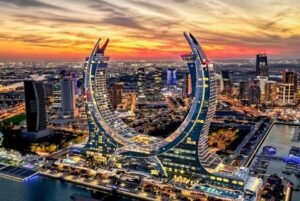
Qatar
For instance, the national carrier the Qatar Airways operates an active fleet of 271 aircraft, consisting of a mix of narrow-body and wide-body passenger jets, dedicated cargo freighters, and executive business jets and Qatar airport the Hamad International Airport is becoming the main hub in the region. For one moment, just imagine what a national carrier of 250 aircraft and the west Africa hub will do to Nigeria economy. It will be unimaginable.
Take another aspect, the electricity industry. I never saw the light blinked for even a second giving way to all round economy of the MSMEs and the informed sector with the greatest multiple impact. The informal sector thrive optimally in the night and keep the banking sectors busy during the day. A situation that lead to high economic growth with a consequential employment boom.
The Qatar electricity has been on the progressive trajectory no matter the government in power.
Let us consider the progress over the years with the country’s electricity production capacity with million kilowatts. Historically, the average for Qatar from 1980 to 2023 is 4.33 million kilowatts. The minimum value, 0.69 million kilowatts, was reached in 1980 while the maximum of 11.4 million kilowatts was recorded in 2022. In contrast, Nigeria’s installed electricity generation capacity is about 14,000 megawatts for 250 million people, but transmission infrastructure can carry only around 7,000 megawatts which has never be achieved under any circumstances due to Transmission inefficiencies of between 4000 to 5000 megawatts
are costing the sector an estimated N5 billion to N8 billion monthly, according to the Nigerian Independent System Operator.
These entire positive and progressive economic disruptions are possible due to Qatar’s proven crude oil reserves which stand at 25.2 billion barrels, which at a benchmark price of $70 to $80 per barrel translates to an in-ground valuation of approximately $1.76 trillion to $2.02 trillion. On the otherhand Nigeria’s official proven petroleum reserves stand at 37.01 billion barrels of crude oil and condensate, alongside 215.19 trillion cubic feet of natural gas. Evaluated at a benchmark price of roughly $70 to $80 per barrel, the in-ground crude value mathematically equates to approximately $2.59 to $2.96 trillion, though the exact market worth fluctuates continuously with global crude oil prices.
Despite these extensive underground assets, reports—such as those from the Nigerian Association of Petroleum Explorationists (NAPE)—indicate that a significant portion remains locked in undeveloped fields and idle blocks. The value of this untapped, dormant hydrocarbon wealth alone is estimated to be over N341 trillion Naira.
The difference lies in the priorities each country placed on the proceeds from their natural resources. For instance, Qatar’s has one of the world’s highly advanced and integrated public transport network that features the automated Doha Metro with three lines (Red, Green, Gold), the Lusail Tram, electric Karwa Buses, and ride-hailing apps like Uber. Standard metro journeys cost 2 QAR ($0.55) per trip with a 6 QAR ($1.65) daily cap. Qater fully automated network of transport system connect major city districts, Hamad International Airport, and Education City via the Red, Green, and Gold lines. Interchange happens at the central Msheireb Station.
When contrasted, Nigeria have one of the most challenging transportation systems in the world with roughly 200,000 km of roads exist, but only 15% are paved. The network is divided between Federal (10%), State (16%), and Local Governments (66%).
All these infrastructure projects will be meaningless without a comprehensive social security systems that prioritize the citizens. That is why the Qatar’s social protection system, managed primarily by the Ministry of Social Development and Family, provides comprehensive pensions, housing assistance, and social security aid exclusively to Qatari citizens, while integrating targeted international frameworks and specialized NGOs. Additionally, core state welfare is reserved for citizens, international programs (such as those partnered with the ILO) which focuses on labor reforms, heat stress protection, and access to dispute resolution mechanisms for the large expatriate workforce.
Comparably, Nigeria’s social security system has very limited effectiveness, characterized by deep coverage gaps, low public awareness, administrative inefficiencies, and poor funding. While formal sector workers benefit from the Pension Reform Act and the Employees’ Compensation Act managed by the Nigeria Social Insurance Trust Fund, over 80% of the workforce in the informal sector lacks adequate social protection.
The situation is not hopeless but demands accountability, honesty, courage and integrity. The starting point is for a concerted commitment to
correct her dwindling infrastructure by sincerely and aggressively expanding Public-Private Partnerships (PPPs), enforcing routine maintenance over new construction, mobilizing domestic pension funds, and tackling regulatory bottlenecks to unlock the estimated $3 trillion needed to bridge the national deficit. Also, the country must transition away from the costly norm of abandoning assets until they require total rehabilitation, prioritizing cost-effective routine maintenance. All these can only come to fruition if the country align fiscal planning with execution by addressing overlapping budget calendars and delayed capital project releases to ensure swift, non-politicized project delivery. Finally, Nigeria need to Strictly implement the revised National Integrated Infrastructure Master Plan (NIIMP) to prioritize high-impact sectors like energy and regional transportation.
AVM (RTD) AKUGBE IYAMU MNSA fsi
PRESIDENT ASSOCIATION OF ENVIRONMENTAL PROTECTION AND CLIMATE CHANGE PRACTITIONERS
CONSULTANT ON CLIMATE CHANGE AND ANALYST ON ENVIRONMENTAL POLICIES