
Opinion
Decades of Economic Bad Manners And Nigeria Damascus Moment

AVM RTD AKUGBE IYAMU MNSA fsi


PRESIDENT ASSOCIATION OF ENVIRONMENTAL PROTECTION AND CLIMATE CHANGE PRACTITIONERS
CONSULTANT ON CLIMATE CHANGE AND ANALYST ON ENVIRONMENTAL POLICIES AND COMMENTATOR ON NATIONAL ISSUES.
Good policies belong ultimately to those who come after us and not those that have the loudest story or greatest propaganda. For the sake of vulnerable citizens we owe policies accuracy. For the sake of the living, we owe it honesty and most importantly, for generations yet unborn, we need policies they can trust.
Economic claims must be tested against evidence, we must embrace good policies without fabricating evidence.
Before the face-off between Iran and the United States, some economic crisis were already in plain sight but Nigerians glossed over their realities due to the emotions of the time. In my previous articles on the Reforms, I highlighted the need for Nigeria to remove the laziness from the crude oil and begin to explore other areas that build a virile economy. A successful reform represents the one with elaborate safety nets and pragmatic enough to reduce poverty and hunger; they harbour massive poverty alleviation.
The current energy crisis blamed on the war in the middle east present an increasing chance to review the ongoing economic reforms. #1500/ltr is unprecedented and the outcome is no longer hard to predict because we are getting close to existential consequences. In Nigeria monoculture economy and complex economic reforms, the major dilemma are more visible in the oil sector and the implications for the economy. Each of these sectors are driven by different sentiments and emotions. While no sector has yet the capacity to determine economic success, there is the overwhelming evidence that energy influences their survivability as energy is clearly pronounced across the various sectors.
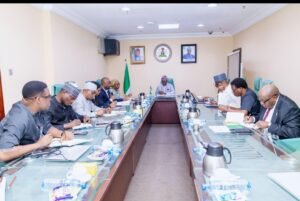
Although most of the sectors took shape long before the energy crisis and have evolved over time in shaping the economy; agriculture, manufacturing, tourism, solid minerals and services, crisis in the energy industry is unsettling the entire spectrum. Those countries who manage their energy efficiently and masterfully will end up with a stable polity and economy. Citizens want socioeconomic benefits, they want Nigeria to develop like Canada, Indonesia, Singapore, Thailand, Taiwan and other countries.
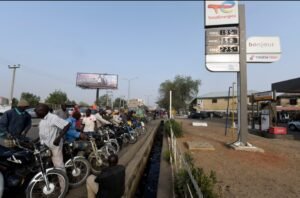
There is no doubt that oil has been in the game of national development since independence but the middle east war has completely shown the vulnerability. The consistency of oil in the last six months in determining the direction of Nigeria economy clearly showed that the country’s economic environment is not strong enough to provide baseline shock absorbers for stability.

Oil prices were calm on the entire economic dashboard but since 2023, this important trigger and enabler has been pushed off. The consequences revealed that the impact of energy sovereignty can be divergent but it is largely shaped by affordability. For instance by 2023, there were between 40 and 43 million SMEs in Nigeria but this figure has been drastically reduced to about 17 million due to the high cost of energy and other harsh economic environment.
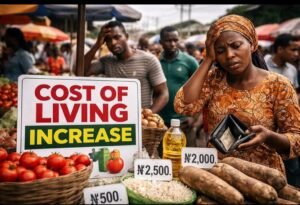
We are all losers and just one thing was missing, energy affordability and sustainability. I was in absolute shock on Monday 14 September 2026 when I saw the pump price of Petrol jumped to #1430/ltr. Holding a critical reform together requires continuous thinking, temperament needed to make a complicated process work. The reforms have sparked controversy and debates and need to be reviewed. It shows the challenges of turning series of measures into microeconomic benefits must be continuous work in progress.

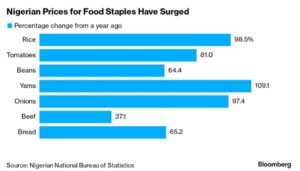
Reforms are not won by by pronouncements alone, but frequently requires data, research, discipline, strategic engagement, communications and rapid response to poverty and hunger. This is because control of macroeconomic factors is not control of citizens benefits. Each has its own fault lines and building a common threads of macro and micro need more intentionality and engagement than sloganeering.
This is the most consequential part of a reform. This is the most consequential part of of perseverance because the stakes are higher.