
Opinion
WHEN POLITICS BECOMES VIOLENCE: A WARNING TO NIGERIA’S POLITICAL ACTORS

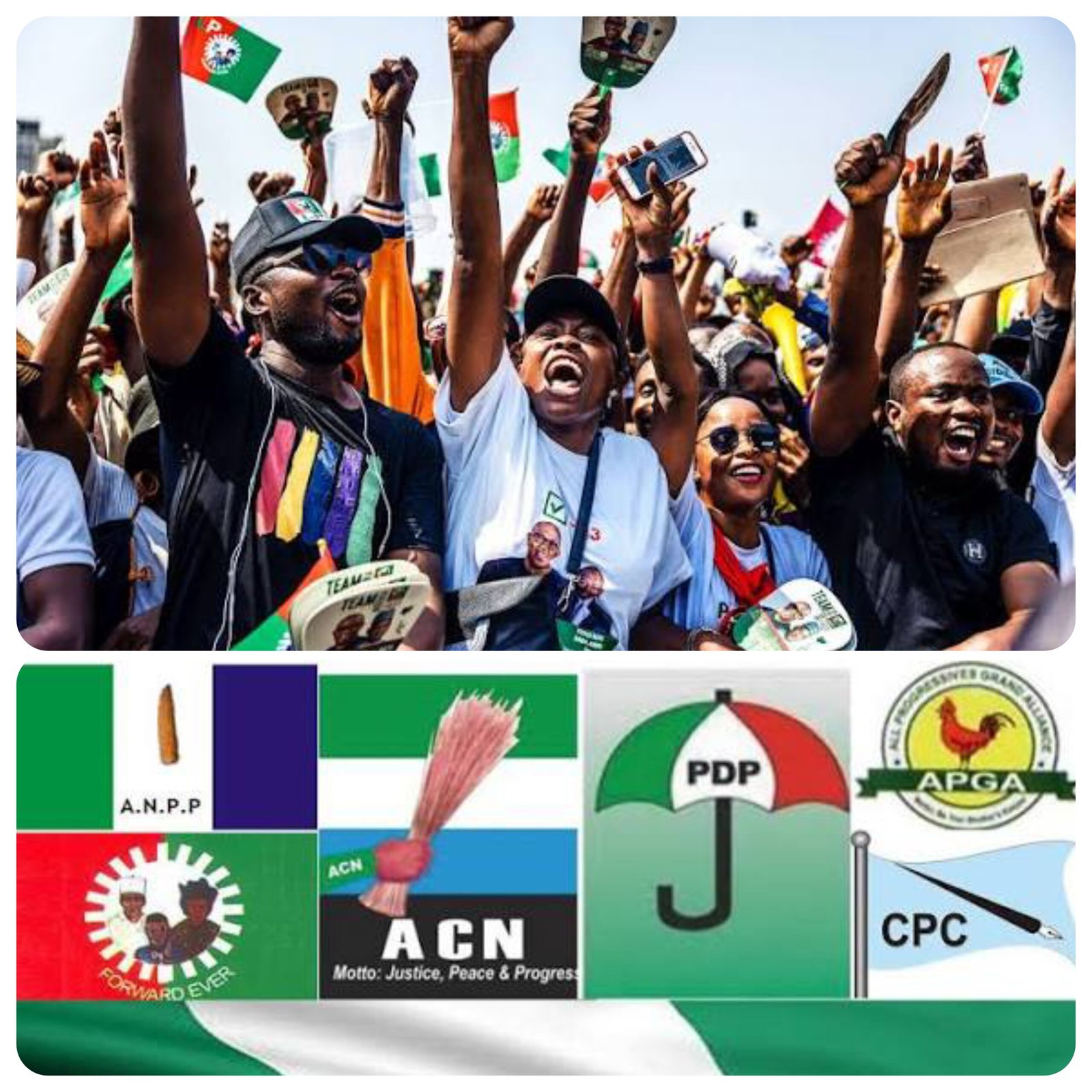
By Chris Okobah PhD
Nigeria is drifting toward a frightening political culture in which violence, intimidation and political thuggery are gradually becoming instruments of political competition.
Today, some governors are accused of using political thugs to prevent opponents from campaigning freely in their states. Some local government chairmen behave as though their councils are private kingdoms, allegedly mobilising gangs to intimidate opponents, disrupt political meetings, attack supporters and prevent lawful campaigns.

This trajectory is dangerous, unconstitutional and potentially criminal.
Nigeria belongs to every Nigerian. No governor owns a state. No chairman owns a local government. No political party has exclusive ownership of any community.
The Constitution is clear. Section 33 protects the right to life. Section 39 guarantees freedom of expression. Section 40 protects peaceful assembly and association, while section 41 guarantees Nigerian citizens freedom of movement throughout the country.
Even more directly, section 227 of the Constitution prohibits an association from retaining, organising, training or equipping persons for the use or display of physical force or coercion in pursuit of a political objective. That provision speaks directly to the dangerous culture of political thuggery.

The Electoral Act 2026 is equally explicit. Under section 95(4), a registered political party, aspirant or candidate must not be prevented from holding rallies, processions or meetings for lawful constitutional political purposes. Section 96(5) prohibits political parties, aspirants and candidates from retaining, organising, training or equipping persons for the use of force or coercion for political purposes. Section 96(6) further prohibits the use of armed private security organisations, vanguards or similar groups during campaigns, rallies, processions or elections.
And section 97 of the Electoral Act 2026 expressly prohibits a party, candidate, aspirant or any person from directly or indirectly threatening another person with force or violence during a political campaign in order to compel political support or prevent support for an opponent.

The law even goes further. Under section 78 of the Electoral Act 2026, a person who aids or abets a political party in contravening section 227 of the Constitution can, upon conviction, face a fine of ₦5 million, imprisonment for up to five years, or both.
Therefore, anybody who believes political violence is simply “politics as usual” should reconsider.
THERE IS ALSO INTERNATIONAL CRIMINAL LAW
Nigeria is a State Party to the Rome Statute of the International Criminal Court, having deposited its instrument of ratification on 27 September 2001.
This is where political actors must understand the difference between ordinary electoral violence and conduct capable of attracting international criminal responsibility.
Article 7(1) of the Rome Statute defines crimes against humanity to include specified acts committed as part of a widespread or systematic attack directed against a civilian population, with knowledge of the attack. Those acts include murder under Article 7(1)(a), imprisonment or severe deprivation of liberty under Article 7(1)(e), torture under Article 7(1)(f), persecution on political and other prohibited grounds under Article 7(1)(h), enforced disappearance under Article 7(1)(i), and certain other inhumane acts under Article 7(1)(k).
This does not mean that every fight at a political rally, every assault by thugs or every obstruction of a campaign immediately becomes a crime against humanity.
The threshold is much higher.
But suppose political violence ceases to be isolated and becomes an organised pattern: opponents are repeatedly attacked across communities; civilians are murdered, unlawfully detained, tortured or persecuted because of political affiliation; and evidence demonstrates that such attacks form part of a widespread or systematic course of conduct pursuant to or in furtherance of a State or organisational policy. At that point, depending upon the evidence, international criminal-law questions can arise under Article 7. The ICC’s Elements of Crimes specifically require this broader context and the perpetrator’s knowledge of it.
And the person who actually pulls the trigger is not necessarily the only person who can become criminally responsible.
Article 25(3) of the Rome Statute provides for individual criminal responsibility not only for the person who personally commits an international crime, but also, where the statutory requirements are satisfied, for a person who orders, solicits or induces its commission, aids or abets it, provides the means for it, or intentionally contributes to crimes committed by a group acting with a common purpose.
That provision should concern any politician who believes he can sit comfortably in Government House, a council headquarters or a private residence, give instructions to others and later claim: “I was not physically there.”
International criminal responsibility is capable of reaching beyond the hand that commits the violence to those who order or materially facilitate qualifying crimes, provided the legal elements and evidence are established.
There is also Article 28, concerning responsibility of commanders and other superiors. In specified circumstances, a superior with effective authority and control may incur responsibility for crimes committed by subordinates where the superior knew, or consciously disregarded clear information, that such crimes were being or were about to be committed and failed to take necessary and reasonable measures to prevent, repress or submit them for investigation and prosecution.
Then comes perhaps one of the most important warnings to political officeholders.
Article 27 of the Rome Statute — “Irrelevance of official capacity” — provides that official status as a Head of State or Government, member of government or parliament, elected representative or government official does not, by itself, exempt a person from criminal responsibility before the ICC.
A governor should therefore never confuse temporary political power with permanent immunity.
Nigeria’s section 308 constitutional immunity protects a serving President, Vice-President, Governor or Deputy Governor from certain domestic civil and criminal proceedings while in office. But that protection is tied to the period of office; it is not a declaration that alleged crimes never happened or can never subsequently be investigated or prosecuted.
And international crimes under ICC jurisdiction carry another serious consequence.
Article 29 of the Rome Statute provides that crimes within the jurisdiction of the ICC are not subject to a statute of limitations. In other words, where conduct actually qualifies as a Rome Statute crime, the mere passage of years does not automatically erase potential ICC responsibility.
That is why photographs matter.
Videos matter.
Orders matter.
Telephone records matter.
Financial trails matter.
Witness statements matter.
Evidence of who recruited, transported, armed, financed or directed perpetrators may matter.
Political power passes. Evidence can remain.
And nobody should casually assume that travelling abroad will always provide safety where an ICC case genuinely exists. Article 58 permits the ICC Pre-Trial Chamber, upon the statutory conditions being satisfied, to issue a warrant of arrest where there are reasonable grounds to believe that an individual committed a crime within the Court’s jurisdiction and arrest is necessary for specified purposes.
Under Article 89, the Court may request a State on whose territory the wanted person is found to arrest and surrender that individual, and States Parties are required, subject to the Statute and their national procedures, to cooperate with such requests.
So the legally accurate warning is not that every politician accused of violence will automatically be arrested whenever he travels abroad.
The warning is far more serious:
If conduct reaches the threshold of an international crime, if individual responsibility can be established, if the ICC validly exercises jurisdiction and if a warrant is issued, international travel can eventually expose an accused person to arrest and surrender.
And the ICC is a court of last resort. Under the principle of complementarity in Article 17, national authorities ordinarily bear the primary responsibility to investigate and prosecute; ICC intervention generally arises where the relevant national system is unwilling or unable genuinely to deal with an admissible case of sufficient gravity.
Therefore, governors, political leaders, council chairmen, party officials and their agents should understand that political power is temporary, but accountability may come much later.
A governor will eventually leave Government House.
A chairman will eventually leave the council secretariat.
Commissioners will leave office.
Security details will disappear.
Political godfathers will lose influence.
But evidence may remain.
And what exactly are Nigerians being violently prevented from campaigning about?
Our roads have become death traps.
Hospitals too often resemble waiting rooms for tragedy.
Public schools struggle with deteriorating infrastructure.
Millions live without reliable electricity while businesses spend fortunes generating their own power.
Security agencies struggle with inadequate resources while kidnapping, banditry and violent crime terrorise citizens.
Farmers watch their livelihoods destroyed while effective enforcement frequently remains inadequate.
Yet instead of competing over who can provide better roads, hospitals, schools, electricity, security and jobs, politicians increasingly appear determined to prove who controls more thugs.
What kind of democracy is that?
A democracy in which an opposition candidate cannot enter a community without being attacked is becoming something dangerously different from democracy.
Politics must be a contest of ideas, competence and service—not a contest of guns, machetes, intimidation and bloodshed.
Those who loot public resources while educating their children abroad, seeking medical treatment overseas and transferring wealth outside the country should understand the cruelty of abandoning ordinary Nigerians to institutions that political leadership has allowed to decay.
You cannot impoverish a population, abandon its hospitals, neglect its roads, weaken its schools and fail to secure its communities—and then unleash violence upon the same citizens when they demand political alternatives.
There must be consequences.
Nigeria must not continue normalising political violence until murder becomes campaign strategy and thuggery becomes political ideology.
Security agencies must protect every lawful political party equally. Those who sponsor violence must be investigated without regard to party affiliation. Political thugs themselves should remember that the politician who hands them money today may deny ever knowing them tomorrow.
And politicians must understand:
No office is permanent enough to justify spilling Nigerian blood.
If we continue down this trajectory, elections may cease to be contests for votes and become battles for territorial control.
That would not merely weaken democracy.
It would eventually destroy it.
Political disagreement must never become a death sentence.
Nigeria belongs to all of us.
No governor owns a state.
No chairman owns a local government.
No political party owns Nigeria.
And nobody—absolutely nobody—has a constitutional licence to convert political power into violence.
Today you may have the thugs. Today you may control the machinery of government. Today people may be afraid to challenge you. But political office expires. Evidence does not necessarily expire. And where violence ever crosses the demanding threshold into crimes against humanity, international criminal law was deliberately constructed on one fundamental principle: even powerful individuals can ultimately be called to account.
Chris Okobah PhD
Award winning author