
Opinion
Africa at The Table Not on The Menu: The Long Road to Security Council Reform

By Kenneth Eze
_Global Lead Director, Speak Out Africa Initiative (SOAI)_
Guterres’ final-year push for African representation is welcome, but Africa must judge the record by action, leverage and results — not rhetoric
Abuja – Africa’s demand for permanent representation on the United Nations Security Council (UNSC) is neither new nor unreasonable. It is a longstanding question of international legitimacy, historical justice and the credibility of the multilateral system itself.
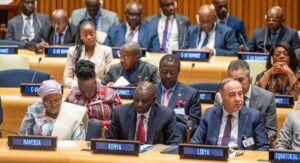
As United Nations Secretary-General António Guterres approaches the end of his second and final five-year term on 31 December 2026, he has once again placed Africa’s exclusion from the permanent membership of the Security Council prominently on the international agenda. His message is clear: the absence of permanent African representation is no longer defensible.
That position deserves support. But Africa must also ask a difficult question: after almost ten years in the highest administrative office of the United Nations, where is the measurable breakthrough?
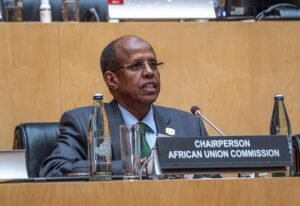
It is important to establish the facts fairly. Shortly after assuming office in 2017, he acknowledged the imbalance in Africa’s representation and recognized the need for Security Council reform. In 2023, he described Africa’s absence from the permanent membership as one of the biggest injustices in the Council. In 2024, he again called for correcting what he described as a historical injustice. In 2025, he strongly advocated permanent African seats, including support for the African Union’s position. And in February 2026, he told African leaders: “This is 2026 — not 1946,” describing the absence of permanent African seats as indefensible.
Therefore, the appropriate criticism is not that Guterres never advocated for Africa. He did – The real issue is the gap between advocacy and achievement.
A Secretary-General does not possess the legal authority to create a permanent Security Council seat by executive decision. Article 108 of the UN Charter requires a Charter amendment to secure a two-thirds General Assembly vote and ratification by two-thirds of UN Member States, including all five existing permanent members of the Security Council.
That constitutional reality matters. It would be unfair to attribute the absence of reform solely to the Secretary-General. But it would be equally wrong to pretend that the Secretary-General is without influence.
The office carries extraordinary diplomatic convening power. It can mobilize Member States, build political coalitions, elevate issues, facilitate negotiations, engage the permanent members and create sustained international momentum around reform. The question for Africa, therefore, is not whether Guterres could personally grant Africa a permanent seat. He could not. The question is whether, during his decade at the helm, his advocacy generated sufficient political momentum, negotiated commitments and institutional progress to move the issue substantially closer to realization – That is where Africa must demand evidence.
What concrete diplomatic milestones were achieved? What commitments were secured from the permanent members? What obstacles were systematically confronted? What negotiating framework was strengthened? What institutional mechanism is being handed to the incoming Secretary-General to ensure that the campaign does not simply restart with another speech?
These questions are not disrespectful. They are the minimum questions of accountability that should accompany any major international reform agenda.
Through the Ezulwini Consensus and Sirte Declaration, the African Union has articulated a Common African Position calling for at least two permanent seats and five non-permanent seats for Africa in a reformed Security Council. The continent has therefore not lacked a position, a mandate or diplomatic language. What Africa has lacked is the final political breakthrough. And this is precisely why African leaders should resist the temptation to celebrate every new expression of sympathy as though it were itself reform.
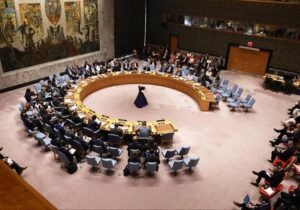
The Security Council remains composed of five permanent members — China, France, Russia, the United Kingdom and the United States — alongside ten elected members. Africa remains without a permanent seat, despite the continent’s central importance to the international peace and security agenda.
This is particularly difficult to justify when Africa is so deeply represented among the issues confronting the Council. Guterres himself has acknowledged the disproportionate presence of African conflicts and crises on the Council’s agenda.
The contradiction is therefore profound: Africa is frequently a subject of international peace and security decisions, yet Africans have no permanent seat in the institution where some of those decisions are made. This is not merely an African complaint. It is a structural problem for the legitimacy of global governance.
The world of 2026 is not the world of 1945. The United Nations has expanded dramatically in membership, while global economic, demographic and political realities have transformed. Yet the fundamental architecture of the Security Council continues to reflect the power arrangements of the post-Second World War era.
If the United Nations wants to remain credible as a universal institution, its most powerful decision-making organ cannot indefinitely operate as though the world has not changed. The UN chief is right about that.But being right about the problem is not the same as solving it.
As his tenure approaches its conclusion, Africans should therefore welcome his continued advocacy without surrendering their critical judgment. His speeches should be measured against the diplomatic progress made during his tenure, not simply the strength of his words at the end of it. Africa should not be looking for a farewell declaration. Africa should be looking for a transition plan.
What precisely is the status of the reform negotiations? What commitments exist? Which governments are prepared to support the African position? What obstacles remain? What diplomatic strategy should the next Secretary-General inherit? What measurable milestones should African governments demand over the next five years? – These questions turn rhetoric into accountability.
The African continent must also avoid personalizing this struggle. This is bigger than António Guterres. His term will end, but Africa’s claim will remain. The next Secretary-General should inherit not merely a collection of speeches, but a clearly defined diplomatic pathway capable of producing institutional change. Africa should neither reject genuine international support nor be dazzled by it.
The appropriate position is simple: welcome the advocacy, examine the record, demand the evidence and insist on results. The era when Africa could be satisfied with sympathetic language from powerful international institutions should be over.
Africa does not need pity. It does not need ceremonial recognition. It does not need another declaration that its exclusion is unjust. It needs representation.
The permanent exclusion of Africa from the Security Council is increasingly difficult to reconcile with the principles of equality, inclusion and representative multilateralism that the United Nations itself professes. The world must therefore move beyond acknowledging the injustice and begin delivering the reform.
Guterres has helped keep the issue alive. That contribution should be acknowledged. But after almost a decade of advocacy, the historical judgment must ultimately distinguish between raising the right issue and delivering the institutional change required to resolve it.
Africa should not be deceived by words, but neither should it dismiss them. It should convert them into commitments. The time for another promise is running out. The time for measurable action has arrived.
Africa deserves a permanent seat at the United Nations Security Council. Not because the world is doing Africa a favour, but because a global institution cannot credibly claim to represent the world while permanently excluding an entire continent of 54 countries from its highest chamber of international peace and security.