
Opinion
ETTA “BLACK CAT” EGBE (ENYI BROS): The Story Of A Boy Who Returned to The GoalPosts in Hope Waddell

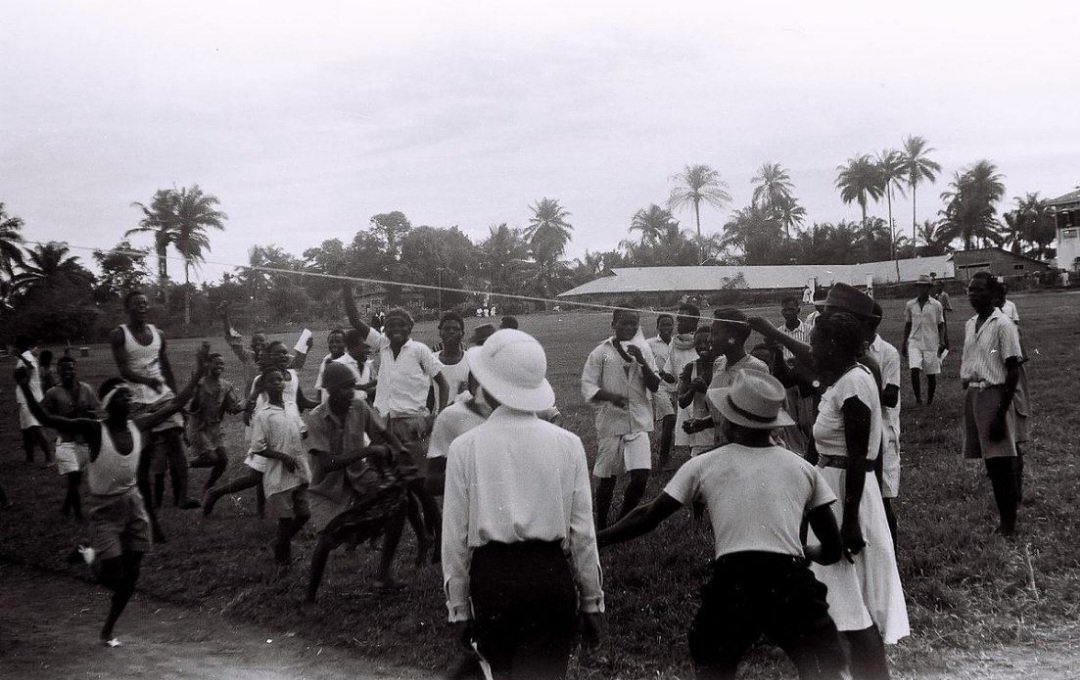
Every generation of Hope Waddell Hall has its unforgettable personalities—young men whose names, long after the school bell has fallen silent, continue to echo through reunions, old photographs, and cherished memories. For the Hope Waddell of ’73, one such name is Etta “Enyi Bros” Egbe. To his classmates, he was simply Enyi Bros; to football lovers across Nigeria, he became the legendary “Black Cat,” the fearless goalkeeper whose spectacular saves earned him a place among the country’s finest custodians. Between those two names lies the story of a Hope Waddell boy whose destiny was discovered almost by accident.
Long before he entered Hope Waddell, Egbe had already shown remarkable promise as a goalkeeper. Yet, on arriving at the school, he quietly abandoned the position and chose instead to play as a defender. He would later confess, with characteristic humour, that frightening stories of the thunderous shots of the legendary Nigerian striker, Teslim “Thunder” Balogun, had convinced him that life was much safer away from the goalposts.

But destiny has a way of finding those it has chosen.
In 1974, Hope Waddell faced the West African People’s Institute (WAPI) in an Under-13 football competition. Although the school boasted a talented side, it had one glaring weakness—it had no dependable goalkeeper. As concern spread among the team, one of Egbe’s former primary schoolmates quietly informed the coach that the lanky defender had once been an outstanding goalkeeper.
Without hesitation, the coach ordered him into the goal.

Egbe would later laugh about the incident, saying he thought he was being punished. Yet what seemed like punishment became providence.
Standing between the posts once again, he produced a breathtaking display of courage, agility, and instinct. Save after save, he frustrated the opposition and inspired Hope Waddell to victory. By the final whistle, a goalkeeper had been reborn. None present could have imagined that the reluctant schoolboy in goal would one day become one of Nigeria’s most celebrated goalkeepers.
Leaving Hope Waddell did not diminish his rise—it accelerated it. He joined Calabar Rovers, then one of Nigeria’s most formidable football clubs, where his commanding performances quickly established him as a fan favourite. From there, he moved to Rubber Board FC in Benin before cementing his reputation with Bendel Insurance. His football journey later took him to El-Kanemi Warriors and Iwuanyanwu Nationale (now Heartland FC), proving that the brilliance first witnessed on the Hope Waddell football field was no mere schoolboy fairytale.

His consistency earned him national recognition. Egbe was invited to the Flying Eagles under the renowned Yugoslav coach Tihomir “Father Tiko” Jelisavčić, before receiving a call-up to the Green Eagles, Nigeria’s senior national team. He represented the country at the Economic Commission for Africa Championship in Ethiopia in 1983 and later featured in the President’s Cup in South Korea, proudly wearing Nigeria’s colours on the international stage.
His achievements extended beyond club and international football. Representing Cross River State at the National Sports Festival at Oluyole ’79, he claimed gold with Bendel at Bendel ’81, accomplishments that firmly established him among the elite goalkeepers of his generation.

It was during these glorious years that the nickname “Black Cat” became part of Nigerian football folklore. Blessed with extraordinary reflexes, fearless courage, impeccable positioning, and an uncanny ability to pull off impossible saves, Egbe became a nightmare for opposing strikers. His calm authority inside the penalty area inspired confidence in teammates and admiration from spectators wherever he played.
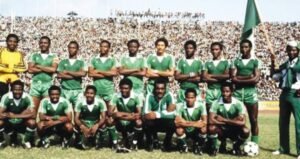
Behind the applause, however, was a story of resilience. Egbe later revealed that his father, a senior police officer, strongly opposed his ambition to become a footballer. He endured punishment, stern discipline, and repeated discouragement for pursuing the game he loved. Ironically, it was only after his invitation to the Flying Eagles was announced on national television that his father’s opposition gave way to pride and acceptance.
Retirement from active football in 1986 marked not the end of his contribution but the beginning of another chapter. He devoted himself to developing the game as a goalkeeping trainer, served on the technical crew of Nigeria’s Under-15 national team, and later returned to his beloved Calabar Rovers as Technical Director. He has also remained an unwavering advocate for the revival of football in Cross River State and the restoration of Calabar Rovers to its rightful place in Nigerian football.
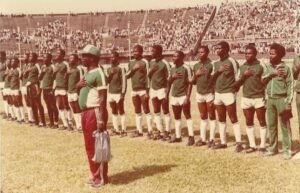
Yet, for Howadians, trophies, medals, and international appearances tell only part of the story. They remember Enyi Bros—the familiar face on campus, the classmate whose laughter filled the dormitories, whose dreams took shape on the school field, and whose extraordinary journey began with an unexpected call to stand between the goalposts. To them, he remains not merely a celebrated football icon but one of their own.
Today, whenever old Howadians gather and conversations drift back to the golden years of school life, the name Enyi Bros still evokes warm smiles and treasured memories. To the football world, he will forever be Black Cat.
This is something to remember.