
World News
Germany Blames Russia for Attempted Drone Attack at Leipzig Airport

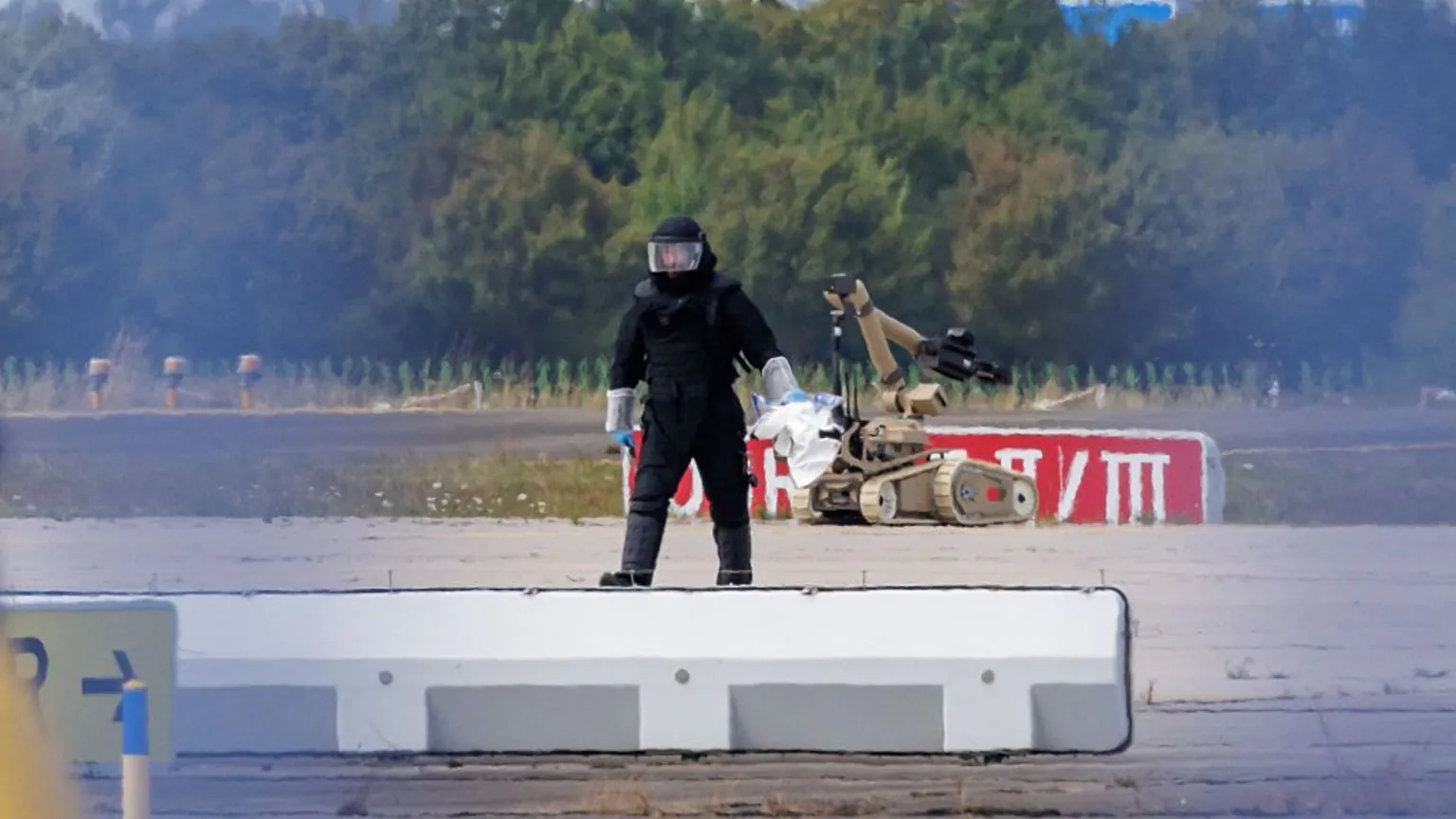
The German government has formally accused Russia of being behind an attempted drone attack at Leipzig/Halle Airport, escalating tensions between Berlin and Moscow and prompting Germany to announce new diplomatic measures against Russia.
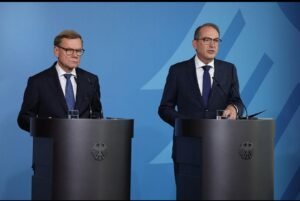
German Interior Minister Alexander Dobrindt said on Tuesday that an assessment of police investigations, intelligence findings and the methods used in the operation had led authorities to conclude that Russia was responsible for the attempted attack on August 4.
The incident involved an explosive-laden drone discovered in a restricted area of the airport near a Ukrainian Antonov cargo aircraft. German authorities were able to neutralise the device, and the incident disrupted airport operations.

Dobrindt said the incident was consistent with a broader pattern of what Germany describes as Russian hybrid operations targeting critical infrastructure, defence companies and countries supporting Ukraine.
Foreign Minister Johann Wadephul said Germany did not regard the Leipzig incident as an isolated event, arguing that it fitted into a wider campaign designed to create insecurity and undermine European support for Ukraine.
German officials said investigators had identified indications that individuals involved in the operation were acting on behalf of Russian state agencies.

The airport is particularly sensitive because Leipzig/Halle serves as an important logistics hub and has been used in support of Ukraine.
In response to the incident, Germany announced that it would close Russia’s consulate general in Bonn and terminate its agreement with the Russian House cultural centre in Berlin.
Berlin also said it would push for additional European Union sanctions and travel restrictions targeting Russian nationals and increase pressure on Russia’s so-called shadow fleet of oil tankers.
Wadephul said Germany would continue supporting Ukraine despite what he described as attempts to intimidate and divide German society.
Moscow has rejected Germany’s allegations.
Russian Foreign Ministry spokeswoman Maria Zakharova said Russia would respond to what she described as Berlin’s anti-Russian measures. The Russian Embassy had previously dismissed accusations of Russian involvement as fabricated.
The latest dispute threatens to further deteriorate already strained relations between Berlin and Moscow, which have been severely damaged by Russia’s invasion of Ukraine.
Germany’s accusation has drawn support from several European governments and institutions.
European Commission President Ursula von der Leyen said she would discuss the incident with NATO Secretary-General Mark Rutte, while EU foreign ministers were expected to consider a coordinated response.
Polish Foreign Minister Radosław Sikorski also expressed solidarity with Germany, saying European countries needed to work together against hybrid threats.
French President Emmanuel Macron similarly called for European unity in responding to hybrid attacks.
The Leipzig incident comes amid growing European concern over sabotage, cyberattacks, espionage and other covert operations allegedly linked to Russia.

Germany has warned that critical infrastructure, defence facilities and organisations supporting Ukraine could increasingly become targets.
On the same day Berlin announced its findings on the Leipzig incident, German authorities were also investigating a separate sabotage attack against a power substation in Brandenburg, where explosive devices and improvised rockets were reportedly used against electricity infrastructure. Officials have not established who was responsible for that attack.
The developments have intensified concerns about Europe’s vulnerability to attacks below the threshold of conventional warfare.
For Germany, however, the Leipzig investigation has now produced a firm conclusion: Berlin believes the attempted airport attack was part of a Russian-backed hybrid operation, a claim Moscow strongly rejects.