
World News
Trump Open to Joint Meeting With Xi, Putin as Nuclear Talks Loom

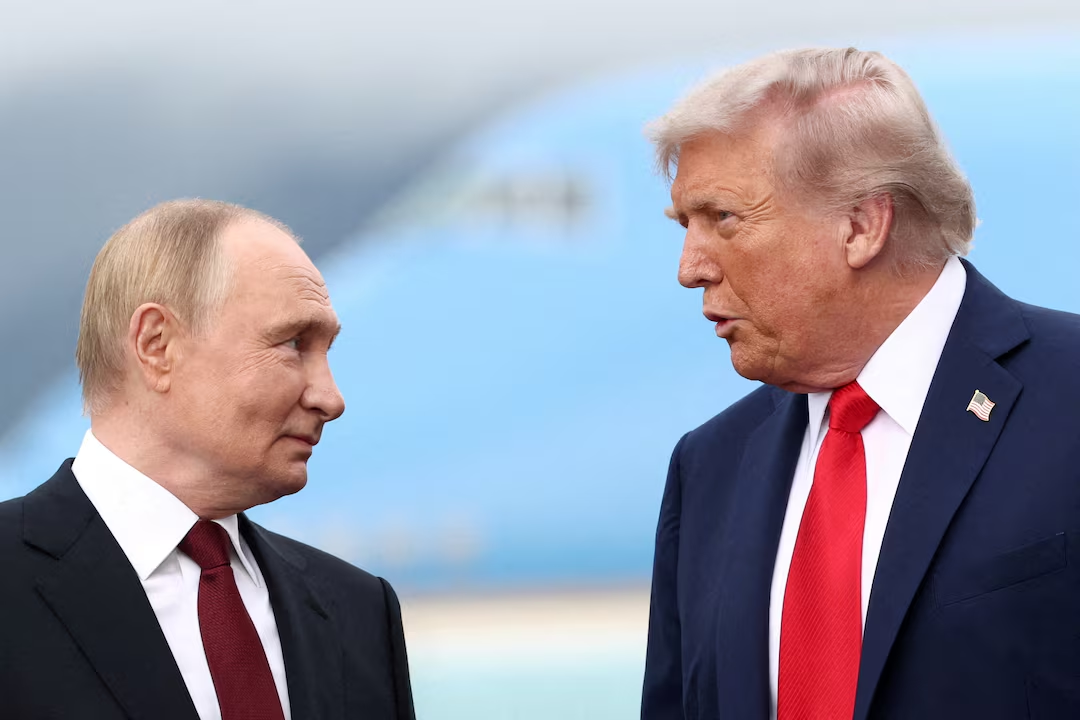
US President Donald Trump has said he is open to a joint meeting with Chinese President Xi Jinping and Russian President Vladimir Putin as early as November, raising the prospect of an unprecedented three-way summit involving the leaders of the world’s three major nuclear powers.
Trump told reporters outside the White House on Monday that he would be willing to participate if Xi supported the proposal. He said the talks would focus on nuclear weapons and denuclearisation, although trade could also feature on the agenda.
The proposed meeting could take place on the sidelines of the Asia-Pacific Economic Cooperation (APEC) summit scheduled for November 18–19 in Shenzhen, China. However, no formal agreement has been reached, and the precise format and agenda remain uncertain.
According to Reuters, the idea emerged during discussions between Trump and Putin, with the Russian leader reportedly proposing a trilateral summit to discuss an end to the war in Ukraine on terms favourable to Moscow. Kremlin spokesman Dmitry Peskov confirmed that the possibility had been raised but stressed that the discussions remained hypothetical.
The proposal comes as Washington seeks to improve relations with both Moscow and Beijing amid growing strategic competition and international security concerns.
Trump has recently taken steps to ease tensions with Russia, including a deal involving Russian diesel supplies and an executive order waiving key sanctions. These moves have drawn criticism from Ukrainian President Volodymyr Zelensky, who warned that easing pressure on Moscow could strengthen Putin’s position while Russian attacks on Ukraine continue.
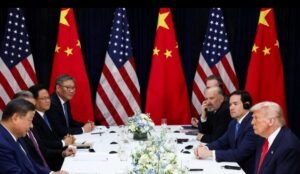
Trump, however, indicated that ending the war in Ukraine would not necessarily be the principal purpose of the proposed three-way meeting. He suggested that a different negotiator might be needed to represent Ukraine, prompting concerns about the possibility of major powers discussing the country’s future without direct Ukrainian participation.
US Secretary of State Marco Rubio confirmed that a potential meeting had been discussed but said it had not been finalised. He reiterated Washington’s position that Russia and Ukraine should focus on ending the conflict, warning that the war carries risks of escalation beyond the two countries.
Nuclear arms control is another major consideration. Russia and the United States possess the world’s largest nuclear arsenals, while China has been expanding its nuclear capabilities. The expiration of the New START treaty earlier this year has added urgency to discussions about future limits on strategic weapons.
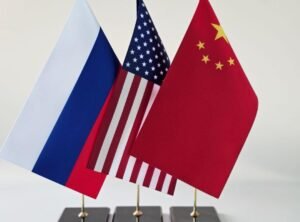
Beijing has previously argued that its nuclear capabilities remain substantially below those of Washington and Moscow, making trilateral nuclear disarmament negotiations unfair or unrealistic at this stage. China’s participation in any formal arms-control process could therefore prove difficult to secure.
A meeting between Trump, Xi and Putin would carry significant diplomatic implications. Supporters could view it as an opportunity to reduce tensions, encourage nuclear restraint and explore avenues for ending the war in Ukraine. Critics, however, may worry that an agreement reached by the three powers could sideline smaller countries and undermine existing international alliances.
For now, the proposal remains at an exploratory stage. Whether the three leaders will meet in November will depend on further diplomatic consultations, agreement on the agenda and confirmation from all three governments.