
International
ICE to Equip Every Field Officer With Body Camera by End of August Amid Accountability Debate


U.S. Immigration and Customs Enforcement (ICE) says it expects to equip every officer and agent working in the field with a body-worn camera by the end of August, accelerating a long-delayed nationwide rollout amid growing scrutiny of the agency’s immigration enforcement operations.
Acting ICE Director David Venturella said the agency is on track to complete the deployment by the end of the month, ahead of its previous schedule. The expansion is expected to create a much larger visual record of arrests, encounters and other immigration-enforcement activities across the United States.
But the announcement comes with a significant caveat: putting cameras on agents does not necessarily mean the public will automatically see the footage.
ICE’s policy gives agency leadership discretion over the release of recordings, particularly footage involving serious injuries or deaths, creating a fresh debate over whether the new technology will deliver the level of transparency critics are demanding.

Venturella said ICE was “on track” to equip every field officer and agent with a body-worn camera by the end of August.
Reuters reported that the accelerated timetable comes ahead of the agency’s original schedule. The announcement marks a major expansion from ICE’s earlier, more limited deployments.
ICE began experimenting with body cameras several years ago. In March 2024, the agency announced an initial deployment of 1,600 cameras to its two principal law-enforcement components; Homeland Security Investigations (HSI) and Enforcement and Removal Operations (ERO), in Baltimore, Buffalo, Detroit, Philadelphia and Washington, D.C.
The agency’s 2024 directive said nationwide implementation would depend on available funding.
The current push represents a much broader effort to put cameras into the hands of agents throughout the country.
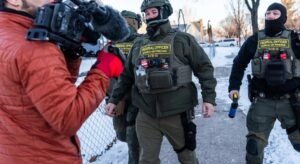
Body cameras are intended to provide an independent record of encounters between immigration officers and members of the public.
ICE’s own policy says body-worn cameras can help document events, actions and statements while promoting public trust, accountability and transparency. Officers are generally required to activate cameras at the beginning of enforcement activities, or as soon as safely practicable.
The cameras could potentially provide evidence in disputes over what happened during arrests, vehicle stops, searches and other enforcement encounters.
They can also protect officers against false allegations by providing a contemporaneous record of their actions.
For immigrant communities and civil-rights advocates, however, the significance is different: footage could potentially provide evidence when an individual alleges excessive force, unlawful conduct or mistreatment.
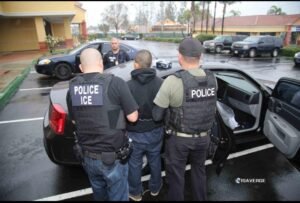
The expansion comes at a particularly sensitive time for ICE.
The agency has faced increased scrutiny following several fatal shootings involving its officers.
Reuters reported that two fatal shootings occurred during immigration enforcement operations in July; one in Maine and another in Texas, prompting protests and renewed questions about why ICE officers involved did not have body cameras recording the encounters.
The Associated Press reported that the July shootings were among the incidents that intensified pressure on the agency to accelerate its body-camera programme.
The absence of body-camera footage in such cases has made independent reconstruction of events more difficult, leaving investigators and the public dependent on other evidence, including witness accounts, surveillance footage and cellphone recordings.

The move follows earlier efforts by the Trump administration to expand the use of body cameras among immigration officers.
Former Homeland Security Secretary Kristi Noem announced in February that immigration agents would begin using body cameras in Minneapolis, with plans for broader deployment as funding became available.
Border czar Tom Homan subsequently said ICE officers would be required to record vehicle stops with at least one body camera.
Congress also provided additional funding for the programme, according to Axios, which reported that lawmakers allocated $20 million in April specifically for ICE body cameras.
The combination of congressional funding, political pressure and public controversy has helped push the programme toward nationwide implementation.
The most contentious aspect of the rollout is not whether cameras will be worn, but who controls the recordings once they exist.
ICE has defended its policy after questions were raised about provisions governing the release of footage following serious injuries or deaths.
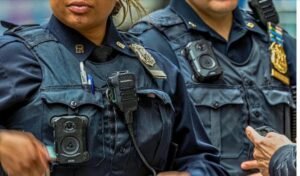
Venturella said the agency can release footage quickly when appropriate but may withhold or delay recordings when releasing them could compromise an investigation or violate privacy protections. He also accused an AP report of mischaracterising the policy by conflating one provision with ICE’s broader authority over the release of body-camera footage.
The AP, however, said its report specifically examined the policy governing some of the most consequential encounters; those involving serious injury or death, rather than claiming that every release of ICE body-camera footage was subject to the same provision.
That distinction is likely to remain central to the transparency debate.
ICE’s body-camera directive requires officers to activate cameras during enforcement activities at the start of the activity or as soon as safely possible.
If an officer fails to activate a camera when required, the officer must provide an explanation, according to the 2025 policy.
Officers must also document interruptions in recordings, including situations in which a camera is deactivated or malfunctions.
The policy also contains restrictions on recording.
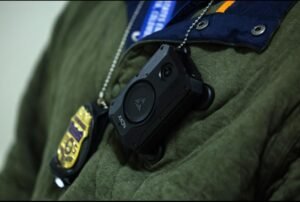
For example, officers are not supposed to activate cameras solely to record people engaged in activities protected by the First Amendment, such as lawful protests or demonstrations. The restriction does not prevent recording when a situation becomes violent, dangerous or otherwise requires law-enforcement action.
The cameras could become particularly important in cases where accounts of an encounter differ.
An officer’s recording could potentially show what an agent saw, heard and did during an interaction, while also capturing the conduct of people being detained or questioned.
However, the footage will not necessarily provide a complete picture.
Body cameras are generally worn on the chest or upper body and may not capture everything happening outside the camera’s field of view. Recordings can also be affected by obstruction, lighting, camera position and activation delays.
ICE’s 2025 policy says its cameras are configured to capture at least 30 seconds of video before activation, providing some additional context before an officer turns the camera on.
ICE’s current nationwide rollout is not a completely new initiative.
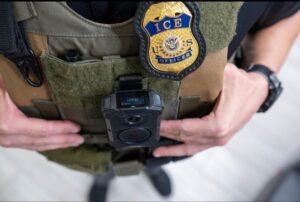
The agency first piloted body cameras in 2021. In 2024, it moved to an initial 1,600-camera deployment, with the eventual objective of expanding the programme nationwide.
The 2024 policy stated that full implementation depended on appropriated resources, which became a significant factor in how quickly ICE could expand the programme.
By March 2026, Axios reported that ICE had about 3,000 cameras among roughly 13,000 agents, with thousands more expected.
The current August target would therefore represent a substantial acceleration in deployment.
ICE carries out some of the most controversial law-enforcement activities in the United States, including arrests and removals of people suspected of violating immigration laws.
Unlike ordinary local police encounters, immigration enforcement can involve federal agents operating across jurisdictions and interacting with people who may be unfamiliar with their legal rights.
The availability of body-camera recordings could therefore affect investigations, court proceedings, internal reviews and public debates over ICE operations.
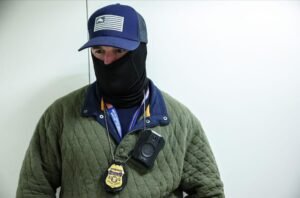
It could also create a large new archive of footage involving immigrants, families, bystanders, officers and private property, raising questions about privacy and how long recordings should be retained.
Civil-rights advocates have welcomed the expansion of cameras in principle but have questioned whether the programme will deliver meaningful accountability if ICE retains broad control over the release of footage.
Their concern is straightforward: a camera is only useful for public oversight if the recording is preserved, properly reviewed and made available when appropriate.
The debate has therefore shifted from simply asking whether ICE officers will wear cameras to asking how the agency will handle the recordings.
The controversy surrounding ICE’s release policy is likely to continue as more cameras become operational.
Venturella has insisted that the agency is committed to transparency and accountability.
He said ICE’s policies are designed to protect legitimate investigations and individuals’ privacy while allowing footage to be released when appropriate.
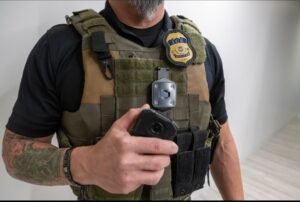
For the agency, the nationwide rollout represents an important modernisation of immigration enforcement.
For critics, the real test will come when an ICE encounter results in serious injury or death and the public wants to know exactly what happened.
If ICE meets its August target, virtually every field officer and agent will have access to a body-worn camera.
That would dramatically change the evidentiary landscape surrounding immigration enforcement in the United States.
But the technology alone will not settle the broader debate over ICE.
The effectiveness of the programme will ultimately depend on whether officers consistently activate their cameras, whether recordings are securely preserved, whether violations of camera policy are addressed and whether footage is made available when legitimate public-interest concerns arise.
For now, ICE says the cameras will be in place by the end of August.
The next question will be whether the recordings become a genuine tool for accountability, or primarily an internal record controlled by the agency itself.