
International
New York City Bans Generative AI for Students Through 8th Grade, Mamdani Says Human Connection Must Come First

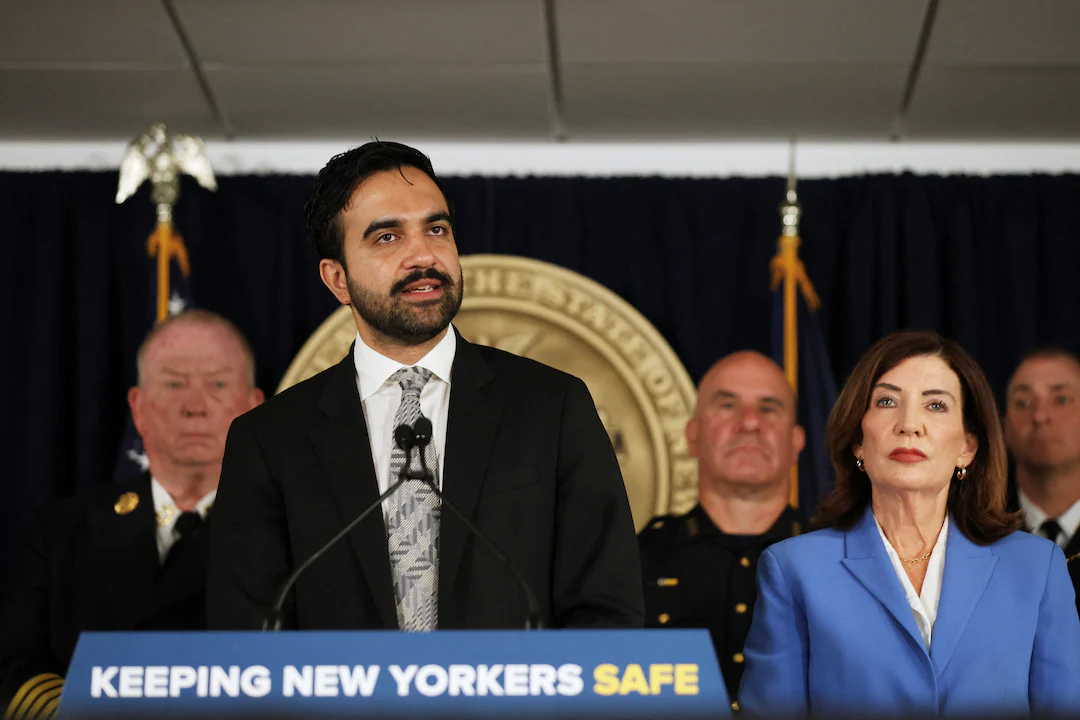
New York City has imposed a one-year moratorium on student-facing generative artificial intelligence in public schools from 2-K through eighth grade, affecting nearly 600,000 students as the city takes a more cautious approach to the rapidly expanding role of AI in education.
Mayor Zohran Mamdani and Schools Chancellor Kamar Samuels announced the policy on Wednesday, saying the restrictions are intended to protect children’s development while city officials study how AI affects learning. The moratorium will apply throughout the 2026–27 school year.
Mamdani said the policy was based on a simple principle: children need teachers and human interaction to learn and grow.

“Children need their teachers and human connection in order to learn and in order to grow,” Mamdani said.
He argued that young students should have opportunities to work through difficult problems themselves, interact with classmates and develop relationships with teachers rather than relying on machines to provide answers.
The new policy is one of the broadest student-facing AI restrictions announced by a U.S. school system.
It prohibits students from using software that incorporates student-facing generative AI from 2-K through eighth grade. Companion chatbots will also be prohibited across all grades.
City officials said the policy affects approximately 600,000 public-school students, roughly two-thirds of New York City’s public-school enrollment.
The move comes as schools around the United States grapple with the rapid adoption of AI tools capable of generating essays, answering questions, tutoring students and assisting with assignments.
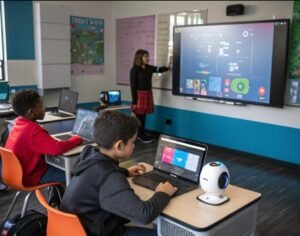
New York City had previously introduced a more permissive AI framework, but the new administration has opted to pause much of that student-facing technology while examining its educational impact.
The policy does not amount to a total rejection of artificial intelligence.
High school students will receive AI literacy lessons twice a year, designed to teach them about the technology’s risks, biases, opportunities and limitations.
The city will also conduct limited pilots involving five vetted AI educational programs in selected high schools. Students participating in the pilots will use the technology under direct teacher supervision, with use limited to 45 minutes per week.
AI may also be used by students in certain career-readiness programs, including computer science, and exceptions will be made for some students with disabilities and multilingual learners where technology provides necessary support.
Teachers will likewise still be allowed to use AI for tasks such as instructional planning and certain operational duties, although they will face restrictions on how the technology can be used.
The AI restrictions are part of a broader effort by the Mamdani administration to reduce children’s dependence on screens.
Students in second grade and below will face restrictions on one-to-one screen use, while the city recommends daily screen-time limits of 30 minutes for grades 3–5 and 45 minutes for grades 6–8.
City officials also said more than 38 previously approved educational technology programs containing AI components will either have those features disabled or be discontinued if they do not meet the city’s new safety and oversight requirements.
Mamdani acknowledged that AI will increasingly become part of everyday life, particularly for today’s teenagers.

But he said schools should distinguish between preparing young people for that future and exposing children to technology before there is enough evidence that it benefits their development.
The mayor compared AI to other skills that children learn at different stages of development, arguing that some technologies may be appropriate for teenagers but not for very young children.
The city plans to use the coming academic year to assess the impact of the policy, gathering feedback from teachers, parents, students, education experts and other stakeholders before deciding what happens after the one-year moratorium.
New York’s decision comes amid a wider debate over whether artificial intelligence is becoming too deeply embedded in classrooms.
Supporters of restrictions argue that excessive reliance on AI could undermine critical thinking, creativity and the productive struggle involved in learning. Critics, meanwhile, warn that keeping students away from AI could leave them less prepared for workplaces where the technology is becoming increasingly important.
New York City is therefore taking a middle-ground approach: restrict AI for younger students while introducing older students to the technology under controlled conditions.
For Mamdani, however, the central message is clear, technological progress should not come at the expense of the relationship between a child and a teacher.